
Phuket property boom pushes Bang Tao and Layan prices to Bangkok levels



Phuket’s housing market is becoming increasingly competitive as major developers shift from Bangkok, with supply rising faster than demand and prices in Bang Tao and Layan reaching Bangkok prime-area levels.
- Major property developers are shifting investment from Bangkok to Phuket, fueling a competitive real estate boom driven by foreign buyers and the island's transformation into a global residential city.
- The influx of investment and high demand have pushed property prices in prime Phuket locations, specifically Bang Tao and Layan, to levels comparable with Bangkok's prime areas.
- Bang Tao now has the highest average condominium price at 283,975 baht per square metre, while Layan leads the luxury villa market with an average price of 285 million baht per unit.
- This price surge is attributed to the increasing scarcity of seaside land on the west coast, coupled with strong, concentrated demand from international investors and long-stay residents.
Bangkok’s residential market is under pressure from slower purchasing power, accumulated unsold stock and tighter lending conditions, prompting many major property developers to shift investment towards Phuket.
The island has become a magnet for global investors, but the inflow of major capital is also turning the market into an increasingly fierce battleground. Supply is growing faster than demand, while residential prices in some locations have climbed to levels comparable with Bangkok’s prime areas.
Nattha Kahapana, partner and managing director of Knight Frank Chartered (Thailand), said that over the past two to three years, major developers from Bangkok had accelerated efforts to diversify away from the capital, where the recovery has remained uneven.
A large share of that capital has flowed into Phuket.
The key reason is not only the recovery of tourism, but also Phuket’s transformation from a tourist destination into a “global residential city”. The island continues to attract long-stay residents, digital nomads, foreign investors and second-home buyers.
This trend has encouraged developers to launch a large number of luxury condominium, villa and branded-residence projects. As many major players enter the market at the same time, competition has intensified.
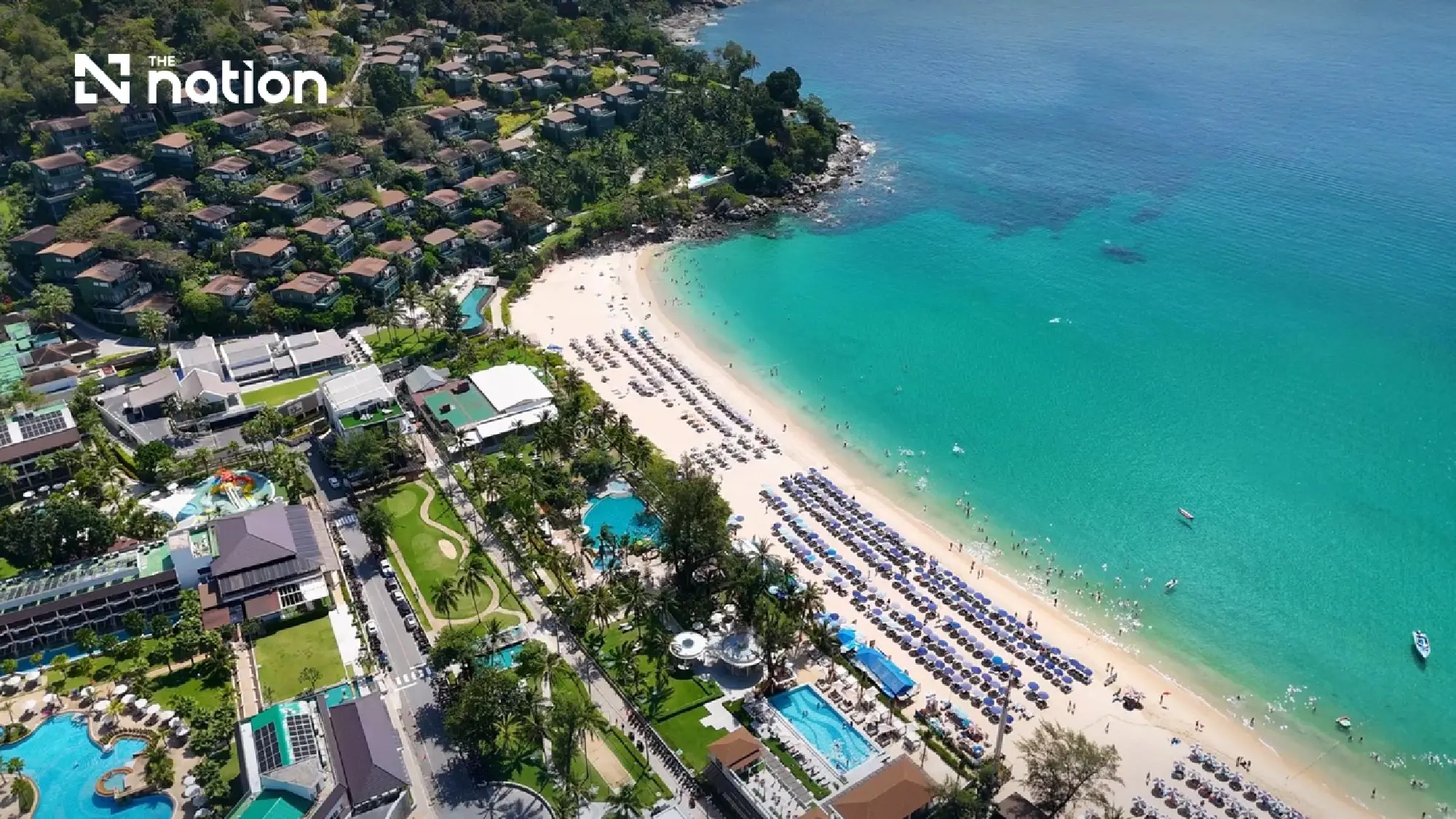
From tourist island to global investment destination
Five years ago, many still viewed Phuket mainly as a major tourist island driven by hotels, restaurants and international visitors.
Today, Phuket is fully transforming from a “tourism city” into an “international real-estate investment destination”.
The return of foreign tourists, the growth of long-stay residents and the rise of digital nomads who can live and work from anywhere are reshaping property demand on the island.
As a result, premium condominiums, luxury villas and branded residences have become assets of interest to both investors and foreign buyers.
However, the influx of major developers from Bangkok and overseas is also pushing Phuket into one of its most competitive periods in recent history.
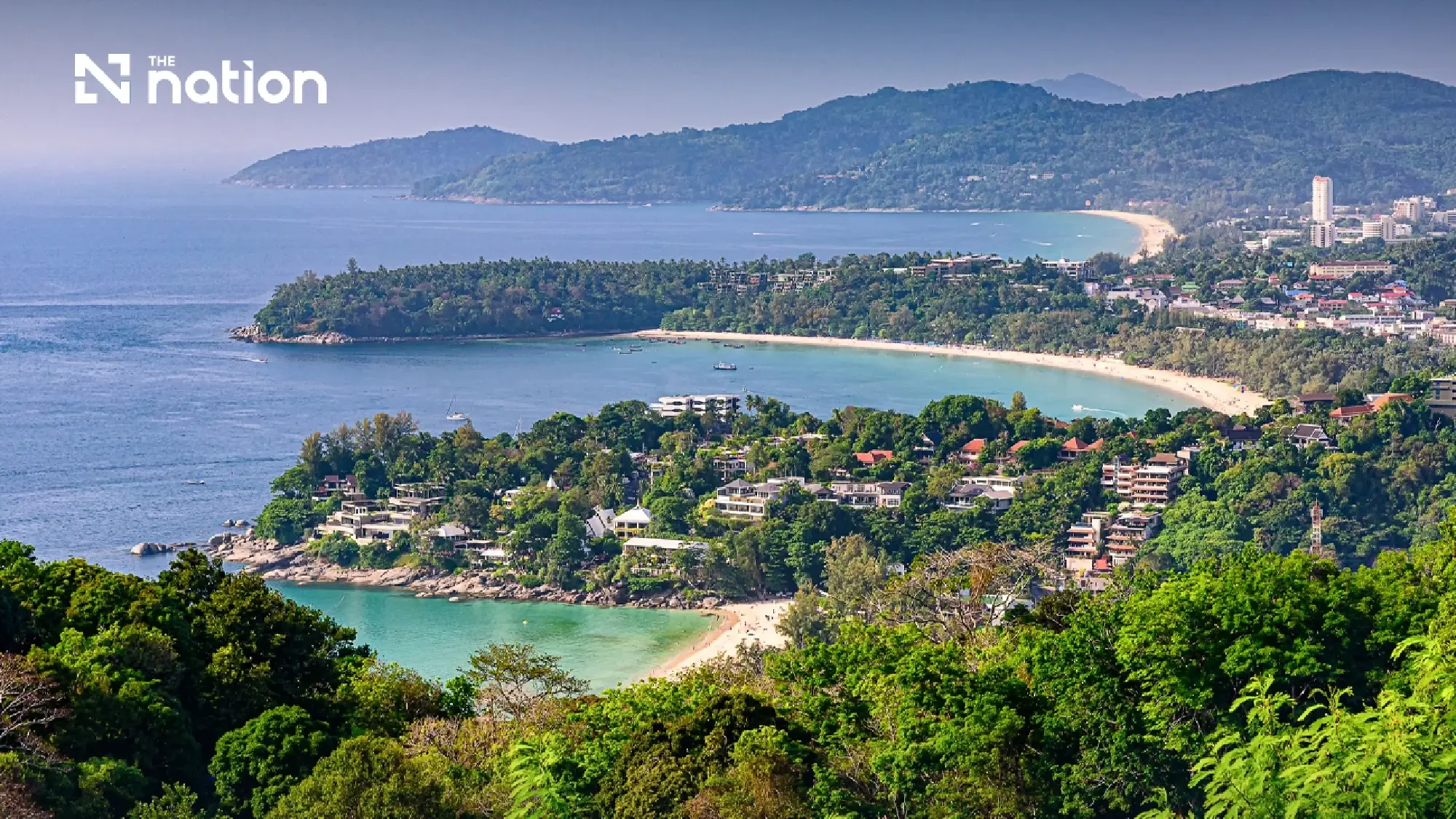
Supply still rising but showing signs of slowing
In 2025, Phuket had accumulated condominium supply of 42,061 units. Although new projects continued to enter the market, new units launched for sale totalled 5,073, down 51.7% from the previous year.
“Developers have become more cautious after several years of rapid project launches to meet the sharp rise in foreign demand,” Nattha said.
By location, Bang Tao remained the most popular area, accounting for 30.8% of all new condominium supply. It was followed by Karon at 21.1% and Rawai at 15.6%.
This clearly shows that demand remains concentrated along the west coast, which caters to investors, long-stay residents and the luxury market.
Luxury villas grow but expand beyond traditional locations
In the villa market, Phuket had accumulated supply of 7,789 units. New villa launches in 2025 totalled 774 units, down 48.2% from the previous year.
What stands out is not only the decline in project numbers, but also the shift in locations.
Sri Sunthon accounted for the largest share of new villa supply at 18.1%, followed by Thalang at 17.8% and Bang Jo at 16.3%.
This shows developers are moving away from traditional beachfront areas towards outer locations where land costs are more suitable.
Meanwhile, areas such as Choeng Thale, Layan and Nai Harn remain highly popular, but limited land availability and continuously rising prices have made new development more difficult.
Demand slows but remains strong in prime areas
Although new supply has declined, purchasing demand remains high.
In 2025, condominium sales totalled 4,455 units, down 24.8% from the previous year. This may appear to signal a market slowdown, but a closer look shows that demand remains concentrated in high-potential locations.
Bang Tao accounted for the largest share of condominium sales at 32.7%, followed by Karon at 17.9% and Kamala at 9.4%.
All three areas are strong tourism locations with good facilities, attracting both residential buyers and rental investors.
The villa market shows a different picture. Villa sales in 2025 reached 631 units, up 12.9%.
Choeng Thale was the best-selling villa location, accounting for 19.9% of total sales, followed by Pa Khlok at 13.9% and Bang Jo at 13.4%.
This reflects continued support from high-net-worth buyers seeking holiday homes and long-term investment assets.
Bang Tao becomes Phuket’s prime hotspot
One of the most striking figures is condominium pricing.
The average selling price of condominiums in Phuket currently ranges from 125,000 to 160,000 baht per square metre, but some locations have already exceeded 180,000 baht per square metre.
Bang Tao recorded the highest average price at 283,975 baht per square metre, followed by Layan at 197,000 baht per square metre and Kamala at 182,375 baht per square metre.
These prices reflect the scarcity of seaside land, which is becoming more limited each year. As land becomes harder to find, selling prices for new projects are being pushed higher.
Ultra-luxury market sets new records
Layan currently has the highest villa prices in Phuket, averaging 285 million baht per unit.
It is followed by Bang Tao at 255.8 million baht per unit and Kamala at 234.3 million baht per unit.
These figures show that Phuket is no longer competing only with domestic property markets. It is increasingly competing for foreign investors with global resort destinations such as Bali, Dubai and Koh Samui.
“Behind this growth is the arrival of branded residences and luxury pool villas linked to global hotel brands, which have become increasingly important assets for high-purchasing-power buyers,” Nattha said.
Although Phuket’s property outlook remains positive, 2026 may not be easy for every project.
The main reason is intensifying competition in the off-plan market, after a large number of projects were launched over the past three to four years.
Developers are increasingly competing on prices, promotions and payment terms. Projects in secondary locations, or those without clear selling points, may face longer sales periods.
Buyers are also becoming more selective, favouring projects with strong brands, good management and real rental-return potential.
New airport could reshape the market
Another factor being closely watched by investors is infrastructure development in the South, including the idea of a new airport in Phang Nga.
If the project becomes reality, it could open new investment areas north of Phuket and in Phang Nga, including Mai Khao, Nai Yang, Thai Mueang and Natai.
These locations could become the next wave of property development over the next five to 10 years, similar to how Bang Tao evolved from a secondary area into a standout location.
What has not changed is that Phuket’s property market remains driven mainly by foreign purchasing power.
Buyers from Russia, China, Europe, India and the Middle East no longer see Phuket merely as a holiday destination. They increasingly view it as a long-term residence, an investment asset and a source of rental income.
Returns remain attractive compared with other Thai tourist destinations, even though the market still fluctuates according to tourism seasons.
Nattha said Phuket’s property market is entering a major transition.
Developers are expanding into new areas to manage costs, while buyers continue to value coastal locations and areas with strong tourism ecosystems.
What is happening is not a decline in demand, but a result of limited land availability in key locations, especially on the island’s west coast.
In the long term, new areas may play a greater role as infrastructure develops.
However, Bang Tao, Layan, Choeng Thale and Kamala, where land is limited and demand from global buyers remains strong, will continue to be rare assets with long-term value-creation potential.
This makes Phuket one of the most closely watched property markets in Thailand.
