
Thailand keeps higher-use household power rates steady amid review
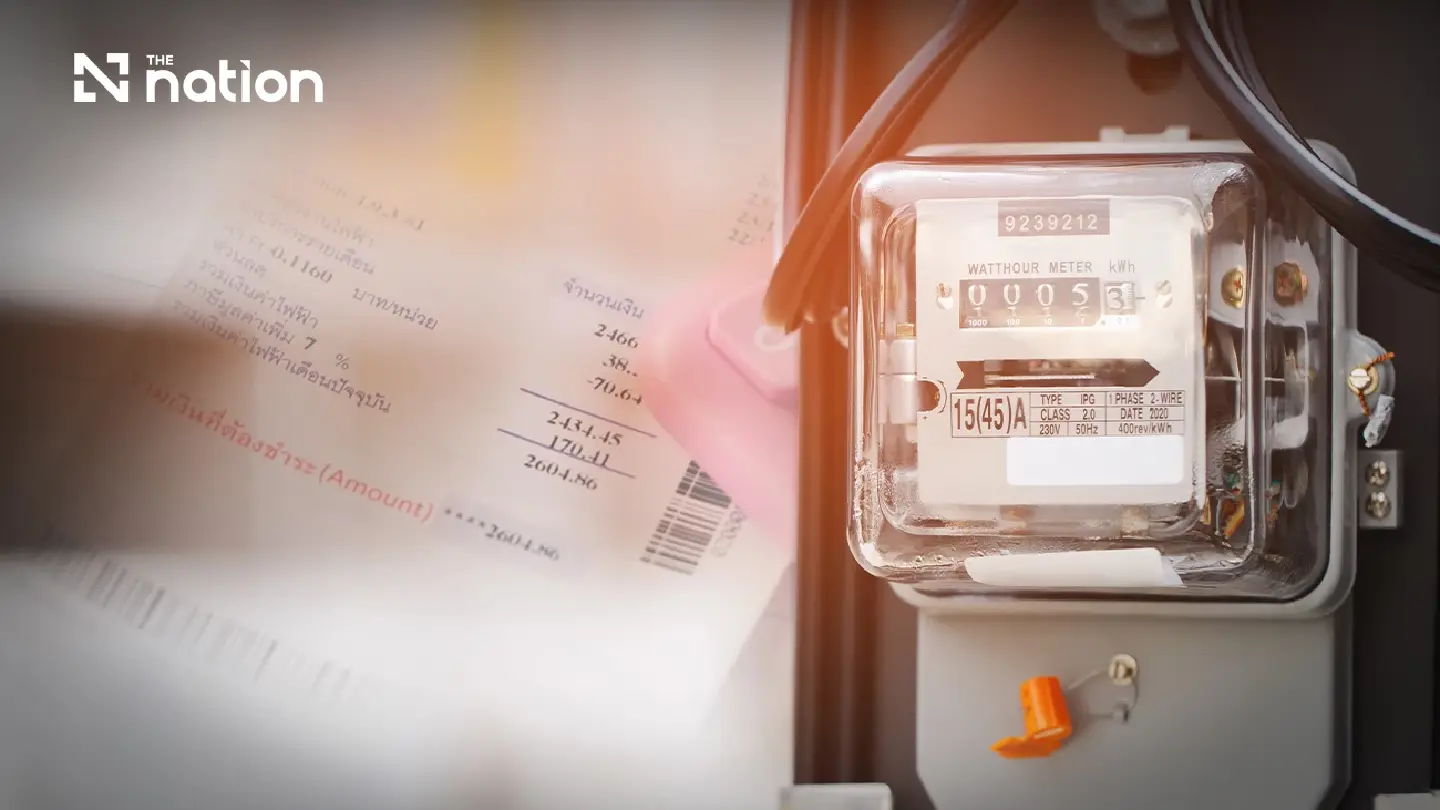


The Energy Ministry says users above 400 units will remain on existing rates as the ERC forwards consultation results to policymakers.
- Thailand will keep existing electricity rates for households using 400 units or more, avoiding a planned progressive tariff increase.
- The government will review the rate hike proposal and will instead focus on reducing structural power costs.
- The decision aims to prevent an additional financial burden on households with several residents or those with higher electricity consumption during the hot season.
Thailand will keep existing electricity rates for households using 400 units or more, avoiding the progressive tariff increase that had raised public concern, Energy Minister Akanat Promphan said.
Akanat said the government would review the plan to raise charges for users above 400 units, with the focus shifting to reducing structural power costs instead.
The aim is to avoid placing an additional burden on households with several residents or those using more electricity during the hot season.
His remarks came after the Energy Regulatory Commission (ERC) acknowledged the results of a public consultation on a proposal to revise progressive residential electricity rates.
The consultation, conducted by the Office of the ERC, followed a National Energy Policy Council resolution involving the Metropolitan Electricity Authority (MEA) and the Provincial Electricity Authority (PEA), and closed on June 5.
At its 24/2026 meeting, also the commission’s 1,014th meeting, on June 17, the ERC assigned the Office of the ERC to submit the consultation results from the public and stakeholders to the Energy Minister.
The report will also include the work of the ERC and related licensees, namely the MEA and PEA, for further policy consideration.
Poonpat Leesombatpiboon, Secretary-General of the Office of the ERC and ERC spokesman, said the consultation drew 6,525 document views on the office’s website from 2,270 visitors, with 653 comments submitted.
The feedback reflected a range of views.
Some respondents opposed the proposal, some supported the second case study, while others raised broader issues.
A total of 215 comments, or 33% of all submissions, opposed the proposal, while 166 comments, or 25%, backed Case Study 2.
Other comments covered possible impacts on energy users, legal and regulatory issues under the Energy Industry Act 2007, and policy recommendations that will be used in the next stage of consideration.
Akanat said the ministry would also promote residential solar power by accelerating a programme to buy 500 megawatts of surplus electricity from household solar systems at a purchase rate of 2.20 baht within June.
Support packages, including loans, down-payment assistance and lower interest rates, will also be considered to encourage installation.
For households using no more than 200 units, the government will not use the central budget to subsidise electricity bills.
Instead, it will consider seeking Cabinet approval to use revenue or profit from the Electricity Generating Authority of Thailand (EGAT), provided the amount does not affect EGAT’s investment plans, as an advance source of support.
The measure will be separate from the existing fuel-cost burden, or AF, already carried by EGAT.
Other revenue, including electricity charges collected from data centres, would later be used to reimburse the amount.
