
Banpu Targets Tech Hyperscalers to Power the AI Boom with Integrated "Gas-to-Compute" Strategy


Thai energy group unveils "Energy Symphonics" roadmap, pursuing hyperscaler power deals in Texas as it completes its Banpu-BPP merger and pivots beyond coal
- Banpu is implementing a "Gas-to-Compute" strategy, integrating its U.S. natural gas production with power generation to directly supply the high energy demands of hyperscale data centers for the AI boom.
- The company is actively pursuing a Power Purchase Agreement (PPA) with a hyperscale operator for a 500-megawatt, gas-fired power facility in Texas, with initial power delivery targeted for 2026-2027.
- As part of its strategy, Banpu is leveraging its carbon capture, utilisation, and storage (CCUS) capabilities to offer a more decarbonized energy solution to power-hungry AI clients.
Banpu integrates U.S. gas-to-compute power generation with battery storage and strategic minerals to meet hyperscaler AI energy demands while advancing decarbonisation.
Regional energy producer Banpu Public Company Limited has set its sights on powering the global artificial intelligence boom, positioning its integrated upstream natural gas and power generation footprint to meet the surging electricity demands of hyperscale data centres.
Speaking at a press conference in Bangkok on Tuesday, Chief Executive Officer Sinon Vongkusolkit stated that robust global energy growth—driven by high-density AI workloads—has opened major infrastructure opportunities for the group.
As part of its "Gas-to-Compute" strategy, Banpu is actively pursuing a long-term Power Purchase Agreement (PPA) with a hyperscale data centre operator for a 500-megawatt power facility in Texas, leveraging its operational gas and generation assets in the United States.
Hyperscaler negotiations and the Jack County opportunity
Central to Banpu's pitch to investors is its US subsidiary, BKV, which the company describes as an integrated "Gas-to-Power" operator rather than a simple upstream gas producer.
Management said it was in direct negotiations with hyperscalers and data centre operators for long-term PPAs targeted for delivery in 2026–2027, moving away from exposure to volatile merchant power markets.
The approach follows a dual-track development model: rapidly deployable 200-megawatt modular gas-fired units to meet urgent data centre power needs, followed by larger combined-cycle gas turbine (CCGT) expansion for utility-scale reliability.
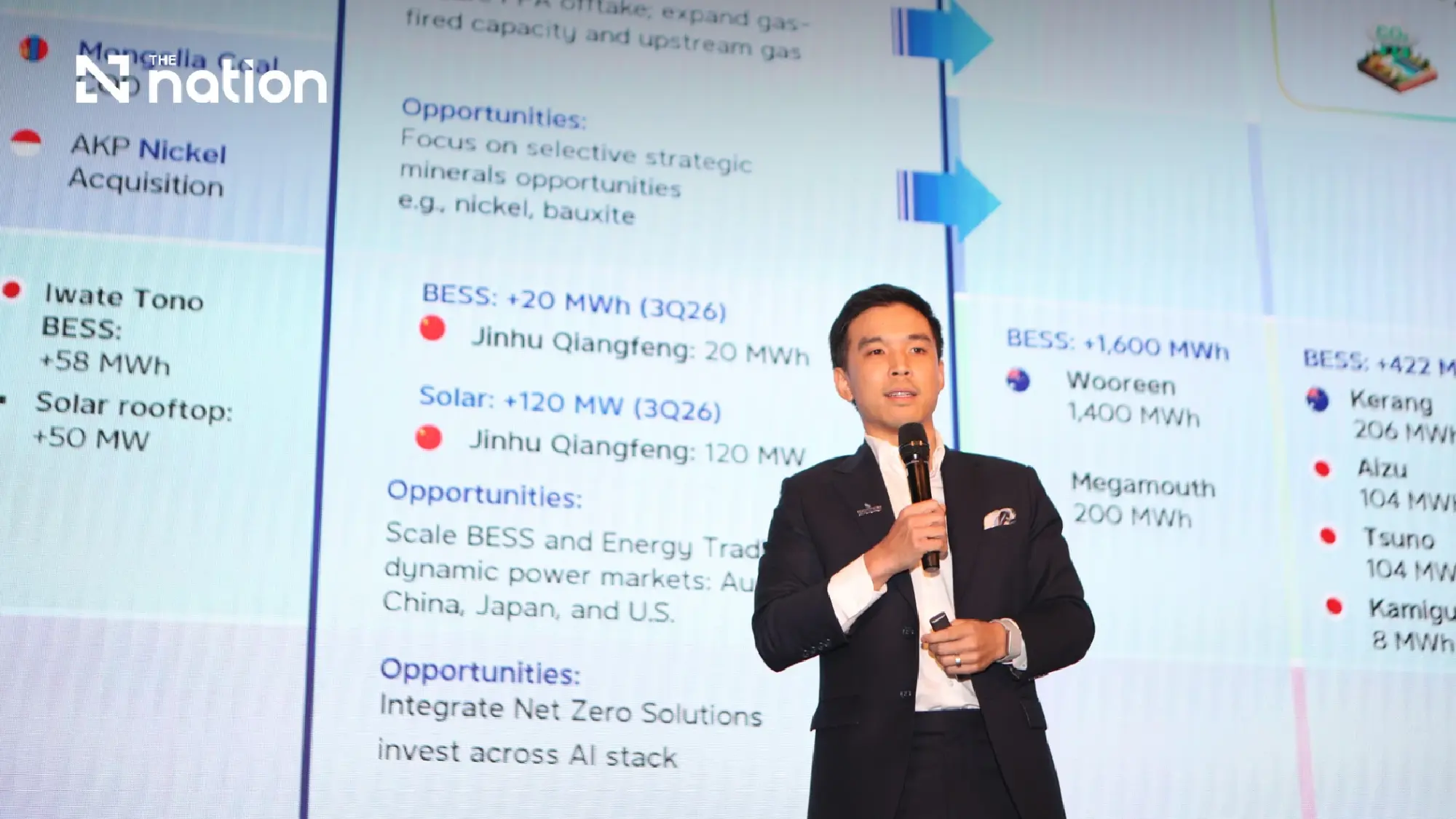
According to the CEO's remarks, the first phase of the 500-megawatt Texas project would be developed as a modular unit, with power expected to be ready for the grid between late 2026 and early 2027, followed by the installation of larger gas turbines in a subsequent phase.
Banpu is also holding more than 6,000 acres in Jack County, near Fort Worth, which it says offers substantial potential for integrated data centre development given its proximity to both transmission infrastructure and gas pipelines.
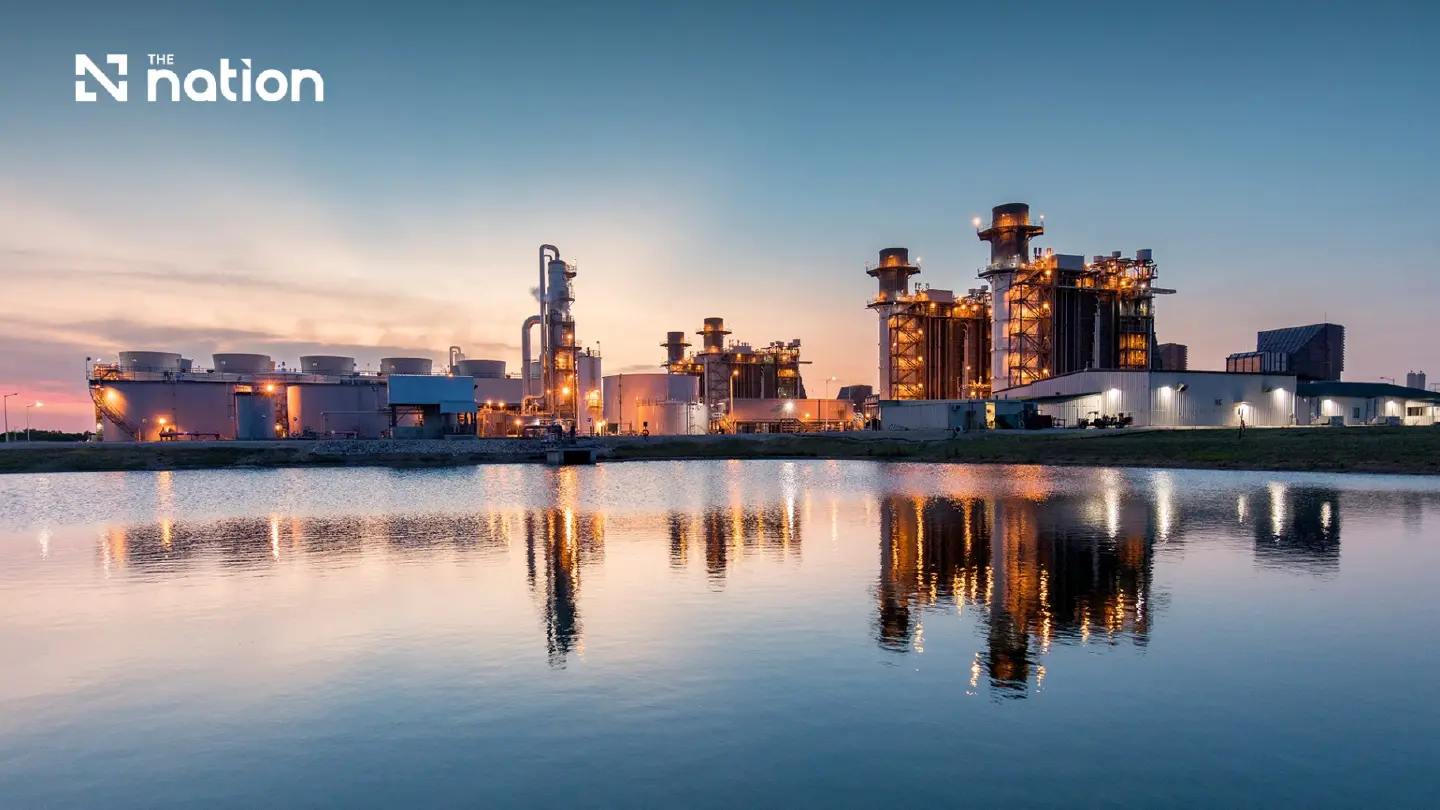
The company's existing Temple I and Temple II combined-cycle gas turbine plants in Texas, with a combined 1.5 gigawatts of operating capacity, sit at the heart of what Banpu calls the "I-35 Load Growth" corridor between Dallas and Austin — a region the company argues is emerging as one of the primary growth markets for US power demand as AI infrastructure expands.
Carbon capture as a reliability differentiator
Banpu is framing its carbon capture, utilisation and storage (CCUS) capabilities as part of the reliability proposition it can offer power-hungry AI workloads, alongside the low decline rate of its Barnett Shale gas assets.
The company operates three CCUS projects — Barnett Zero, Cotton Cove and Eagle Ford — and is targeting a 1.5 million tonnes per annum injection rate by 2028, positioning itself to supply gas-fired power with an embedded decarbonisation offer to hyperscale customers seeking to manage the carbon footprint of their compute demand.
The energy transition and strategic minerals
Beyond its US gas ambitions, Banpu is continuing to reposition its broader portfolio around what it terms "Energy Symphonics" — a strategy intended to hedge high-margin traditional assets against flexible new energy technologies while prioritising energy security.
In its Next-Gen Mining segment, the company reported total coal sales volume of around nine million tonnes and said it was continuing to deploy artificial intelligence to improve operational efficiency.
Banpu is also preparing to convert mining trucks at its Indonesian operations to electric vehicles, a move aimed at cutting both fuel costs and carbon emissions.
The company reiterated its "crawl-walk-run" approach to strategic minerals, citing its investment in Indonesian nickel producer AKP as a pilot exposure intended to build expertise ahead of any further scaling, alongside exploratory interest in bauxite — both regarded as critical inputs for battery and electric vehicle supply chains.
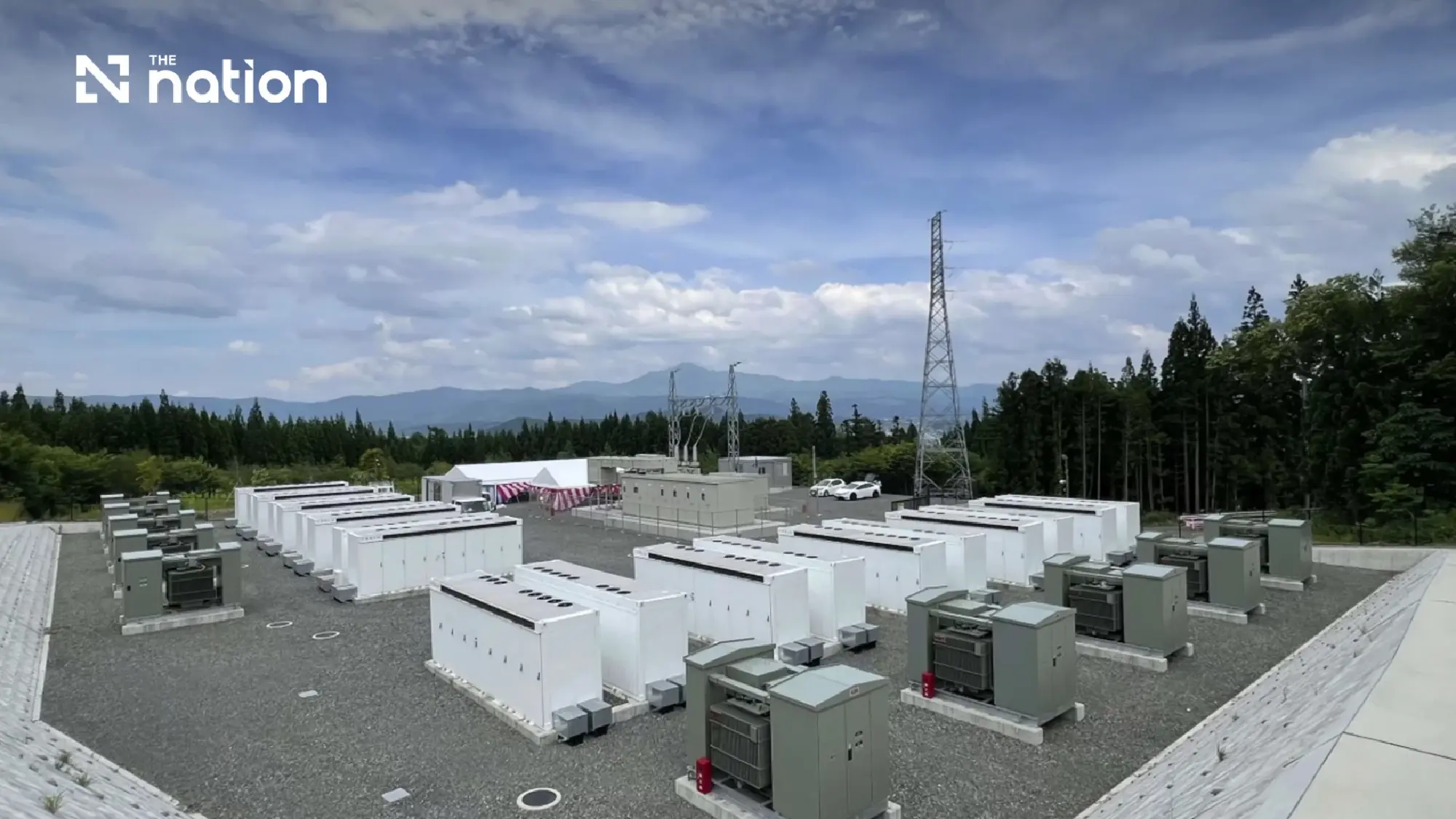
On the Power+ side of the business, Banpu is expanding its battery energy storage system (BESS) portfolio alongside renewables, with commercial operation of its Jinhu Qiangfeng solar-and-storage project in China — combining 120 megawatts of solar capacity with a 10-megawatt/20-megawatt-hour BESS unit — expected by the end of the third quarter.
Banpu has set a longer-term goal of expanding its total energy storage capacity in Japan to one gigawatt-hour by 2030 and says it is leveraging its energy trading expertise in deregulated markets such as the United States and Australia to capture arbitrage opportunities as it scales storage capacity across its footprint.
The company's Future Tech and Corporate Venture Capital arm, meanwhile, is targeting investments across the "AI stack", from chips and compute infrastructure through to cloud infrastructure, AI models and applications, alongside continued exploration of small modular reactors as a potential long-term baseload solution for carbon-constrained technology customers.
Financial performance and corporate restructuring
The strategic pivot coincided with Banpu’s second-quarter 2026 financial results—the first following its 31 July amalgamation with Banpu Power (BPP). The newly consolidated entity began trading on the Stock Exchange of Thailand on 4 August.
Second-quarter sales revenue rose 7 per cent quarter-on-quarter and 16 per cent year-on-year to US$1,438 million, buoyed by a 38 per cent surge in US Closed-Loop Gas sales and solid Next-Gen Mining performance. Quarter-on-quarter EBITDA grew 22 per cent to US$327 million, yielding a net profit of US$49 million.
Post-merger balance sheet metrics showed a net debt-to-equity ratio of 0.82 and an 'A+' credit rating with a stable outlook from TRIS Rating. Banpu declared an interim dividend of THB 0.40 per share, payable on 25 September, reinforcing its target 50 per cent net profit payout policy.
Executives described the amalgamation as phase two of a three-stage transformation—following BKV’s 2024 NYSE listing—that will see Banpu recycle capital from legacy holdings into CCUS, energy storage, and strategic minerals.
Further announcements on Texas hyperscaler negotiations and Jack County site developments will follow as commercial discussions, financing, and regulatory approvals progress.
