
This is how it used to be


Play
Nostalgia has a 100-year-old Chinese community in Pattaya bustling again every Saturday
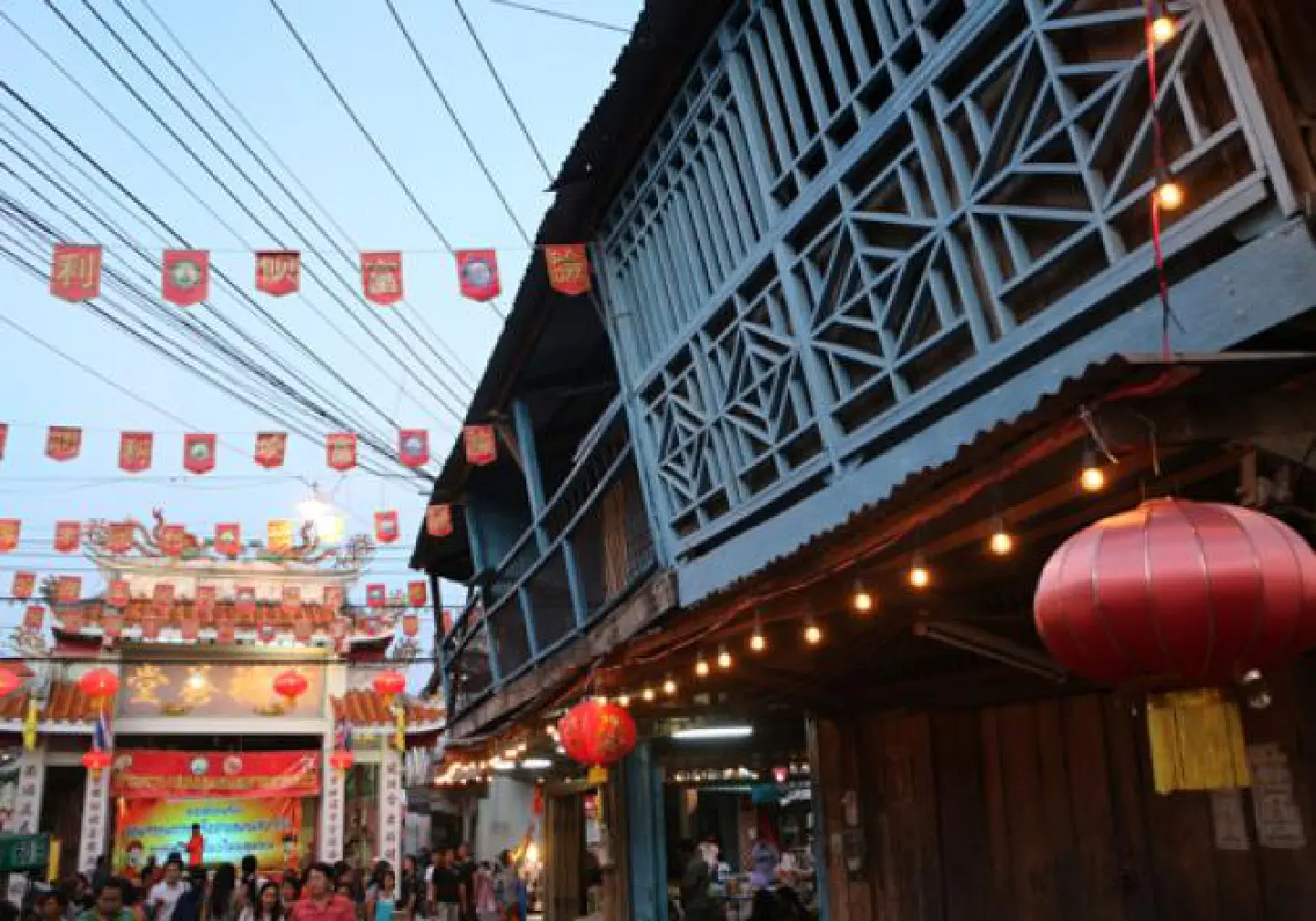
The seaside city of Pattaya now has another “walking street”, and it’s one that residents can proudly show off to visitors of all ages without fear of seeing any scantily clad bar workers. It’s a small road through the venerable Chinese community of Ban Chagngaew, and every Saturday the residents put on quite a show of their own.
Many of them wear classical Chinese costumes and set up stalls in front of their vintage wooden shophouses to sell homemade dishes. The attention they’re getting is most welcome in a neighbourhood that had all but faded away over the decades, and it’s restored a thrilling liveliness to the place.
By noon there are already people milling along the pedestrian thoroughfare, most of them just friends and neighbours at that time of day, but also folks who live nearby looking to slake their nostalgia for favourite foods and cherished memories.
By late afternoon visitors arrive from outside Pattaya, recreating a sense of the entertaining bustle for which Ban Chagngaew was quite well known a long time ago.
That was before hard times muscled into the fun and most of the young people had to move elsewhere to find the same measure of prosperity.
Direk Kiattikool is a community activist and couldn’t be happier with the way the 100-year-old neighbourhood has bounced back since its walking street opened in May. It hadn’t been easy convincing the old-timers that it was a good plan, he says.
“At first some people resisted the idea, worried about sacrificing their privacy, but now they’re happy. Their children are coming home more often to join in the activities and the community is alive again!”
It took three years to get it rolling, though. The notion came from the Designated Areas for Sustainable Tourism Administration after it established an office in Pattaya, and it was certainly an innovation for the tourist magnet that has struggled to shed its image as a “sin city”, infamous for its abundance of lurid nightlife.
Taweebhong Wichaidit, who runs the office, had seen the same heritage idea take hold in Amphawa, Samut Sakhon, where promotion of the charming canal-village culture of bygone times has drawn large numbers of tourists. He noticed the similarities to Ban Chagngaew. “The old houses are still there. The old people are still there to share stories about their past. Nothing needs to be rebuilt,” he says.
The community of about 100 households and 500 residents lost an entire generation of younger people when economic difficulties forced them to seek jobs elsewhere. The elderly left behind only got to see their children and grandchildren again on annual holidays like Lunar New Year and the Ghost Festival. Now, with the walking street, says Taweebhong, “This is the extended part of the celebrations.”
A working committee held monthly meetings, tapped tourism experts and organised field trips to communities that had gained fresh leases on life through commercial ventures. “Then it was up to us to figure out what our identity was and what we should do with it,” says Direk. He moved to Ban Chagngaew 40 years ago and over the decades learned much about its booming past.
It was the Chinese immigrants who made surrounding Huay Yai district a lively place, more prosperous than even Chon Buri’s central Muang district. Business was conducted day and night, centred on 16 thriving mills that processed rice and tapioca flour. Most residents came to own tapioca farms that attracted labourers from other areas.
Ban Chagngaew had its own movie theatre, which opened 80 years ago and flourished for decades, and even an opium den that also did a brisk trade. Life could get pretty rough at times, Direk admits, comparing the area in its heyday to America’s Wild West. “Every day someone dropped dead!”
Eventually, though, the crop fields fell into neglect, the mills closed (except for the sole surviving flour mill) and many of the immigrants’ descendants turned into emigrants.
The concept of a walking-street tourist market had zero support the first year and only about 30 per cent the second year, but that turned out to be enough to convince the rest. If nothing is done, they were told, the community will die.
Direk says much of the resistance stemmed from the fact that a lot of residents are well off enough financially that selling goods in the street sounded outlandish. What changed their minds was the prospect of a regular weekend market bringing in buyers for other goods – and bringing back young former residents.
“They supported the project not because they want extra income but because they wanted their children to return home,” Taweebhong confirms. “And, when they come, their friends tag along. Plus, the social media they use have helped spread the word, so we’re getting people from Chon Buri, Rayong and Chanthaburi.”
Now, says Direk, the residents are proud that their heritage is of interest to outsiders. “They’re pleased even if they can’t sell anything. At least they have a chance to get dressed up!”
The walking street, less than a kilometre, has volunteers distributing paper parasols at the entrance. Nearby you can buy some nourishing fish-maw soup, juices made with five grains, wonderful beef noodles and hoi jor, deep-fried crab rolls.
With tummies soon full, visitors stroll around admiring private collections of old posters and other memorabilia. After sunset kids , dressed in Chinese attire, dance on a stage singing Thai and Chinese songs, and a classic film is screened in the open air.
Direk says 80 per cent of the vendors are members of the community and everyone is encouraged to sell only what’s unique to Ban Chagngaew. “If people want stuff that can be found anywhere, they can go to Chatuchak Market,” he laughs.
Next year they’ll spruce up the landscaping and install a better lighting system. They plan to repave the street with concrete stones for a more rustic look and, once that’s done, it will be permanently closed to vehicle traffic. The old cinema will be turned into a museum and they also want to revive the opium den – it’s just a matter of where to put it and what to sell there instead of opium. From only Saturday, the market could be opened on Sunday or even more.
“We will revive our history,” Direk says with the confidence of a century’s legacy on his side.
TURNING THINGS AROUND
- The Designated Areas for Sustainable Tourism Administration (Dasta) is a public organisation established by royal decree in 2003. It coordinates efforts among local and national agencies and makes recommendations to the Cabinet.
- Headquartered in the Tipco Building on Rama IV Road in Bangkok, you can find out more at Dasta.or.th.
