
Indonesia faces market confidence test as assets tumble
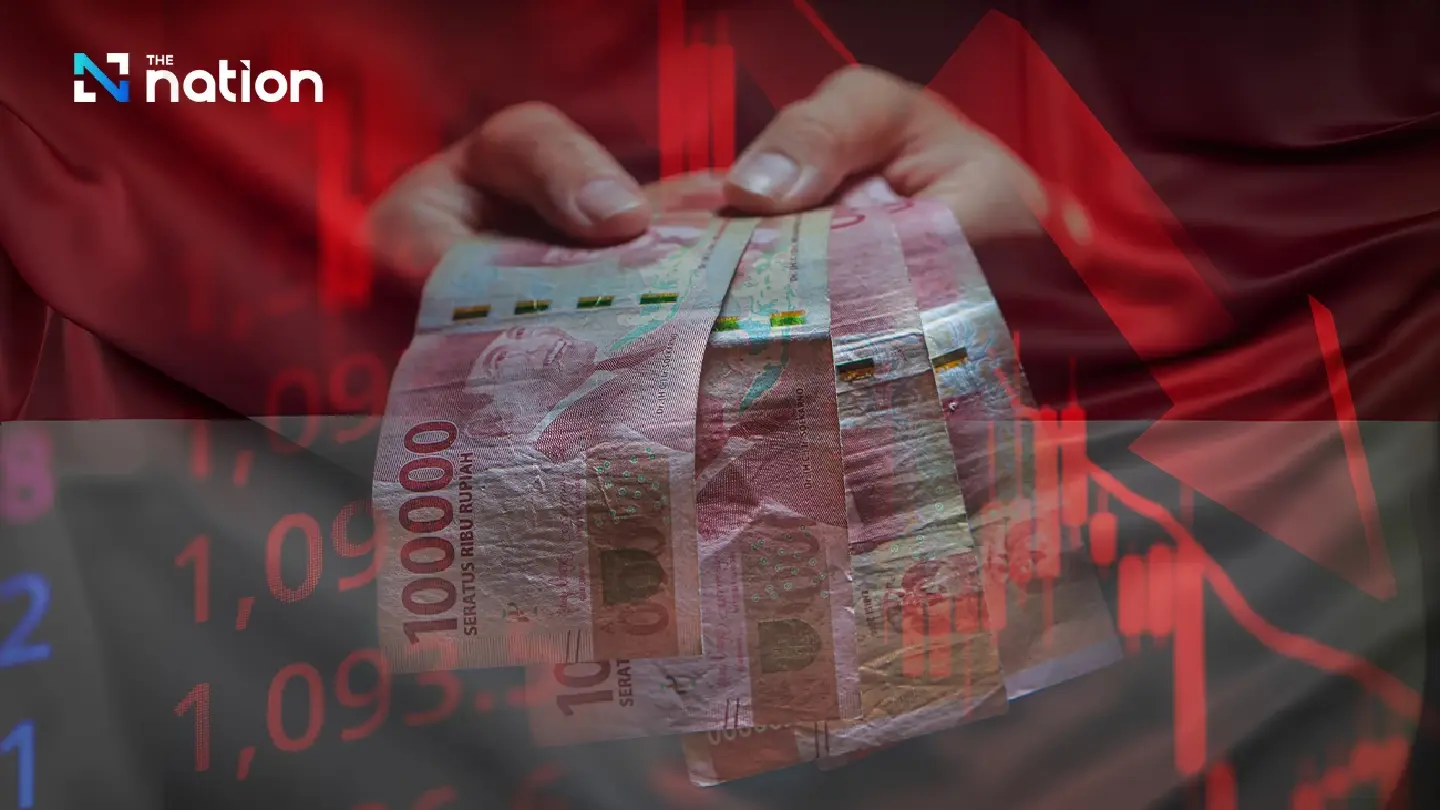


Indonesia’s stocks, rupiah and bonds have come under pressure as investors question fiscal discipline, policy direction and central bank independence
- Investor confidence is shaken by concerns over future fiscal discipline, driven by President Prabowo's populist spending plans, such as a massive free-meal programme, and rising energy subsidy costs.
- A shift towards more state-led economic intervention and governance issues, highlighted by a corruption case in a flagship government project, are increasing investor uncertainty.
- The loss of the country's trusted finance minister and legislative changes perceived as undermining the central bank's independence have further eroded market trust.
Indonesia is facing one of its toughest market-confidence tests in years, as investors sell off the country’s stocks, bonds and currency amid growing concern over fiscal discipline, political interference and the future direction of economic policy.
In financial markets, one of the clearest warning signs is not merely a falling stock market or a weaker currency. It is when several asset classes come under pressure at the same time and that is now happening in Indonesia.
Over recent months, foreign investors have steadily reduced their exposure to Indonesian assets, from equities and government bonds to the rupiah.
The Jakarta stock market has fallen by more than 36% from its peak, making it one of the worst-performing major markets globally, while the rupiah has weakened beyond 18,000 to the US dollar.
Foreign holdings of Indonesian government bonds have also dropped by about 86 trillion rupiah since August 2025, raising the question of whether Southeast Asia’s former market darling is now facing a broader crisis of confidence.
Fiscal pressure moves to the centre of concern
At first glance, Indonesia’s problem may appear to be about a tightening fiscal position. But for many investors, the larger issue is not only the current budget numbers, but the future direction of government spending.
Indonesia’s 2025 budget deficit stands at 2.92% of gross domestic product, still just below the legal ceiling of 3%. On paper, the figure remains within the fiscal framework.
Markets, however, are looking beyond the present number. Their concern is the future burden from President Prabowo Subianto’s large-scale spending agenda.
A key example is the government’s flagship free-meal programme, valued at 268 trillion rupiah, or about 490 billion baht. The policy is aimed at improving public welfare and child nutrition, but investors view it as a major long-term fiscal commitment that will require sustained funding.
Higher oil prices, driven by conflict in the Middle East, are adding further pressure. Indonesia imports large volumes of crude oil and liquefied petroleum gas, meaning rising energy prices could increase import costs and force the government to spend more on domestic energy subsidies.
Together, these factors have led investors to question whether Indonesia can maintain fiscal discipline while pursuing populist policies, major state-led projects and energy subsidies at the same time.
Those concerns have intensified after Fitch Ratings and Moody’s revised Indonesia’s sovereign credit outlook from stable to negative. S&P has maintained a stable outlook, but has also warned that fiscal burdens and rising debt-servicing costs need close monitoring.
Henry Wibowo, co-founder of Alphagate Capital and former Indonesia strategist at J.P. Morgan, said the recent sell-off reflected several factors, including rising concern over possible further pressure on Indonesia’s credit rating amid a wider budget deficit and higher oil prices.
State intervention worries investors
Another major factor weighing on confidence is the perception that Prabowo’s economic policy is becoming more interventionist and state-led.
Since taking office, he has expanded the role of the state in several strategic industries, including natural resources, mining, palm oil and the national wealth fund Danantara. The government has moved to take control of, or co-manage, various palm plantations, mining concessions and processing facilities, saying the aim is to organise national resources, prevent leakages and increase state revenue.
Supporters argue that such policies may be necessary if Indonesia is to escape the middle-income trap and push economic growth towards the government’s 8% target.
Foreign investors, however, see a different risk. They worry that an expanding state role could weaken regulatory certainty, reduce business freedom and increase the risk of politically driven decision-making.
When the state becomes not only the regulator but also, in some cases, a direct market player, investors become more cautious before committing capital.
Free-meal corruption case raises governance questions
Governance concerns have added another layer of pressure.
Prabowo’s flagship free-meal programme is facing a corruption case after the director of the National Nutrition Agency and two deputy directors were arrested and accused of involvement in alleged budget embezzlement.
For investors, the concern is not limited to the criminal case itself. The wider question is whether the government has the capacity to manage large-scale projects, monitor public spending and prevent budget leakages.
Prabowo has sought to turn the crisis into an opportunity by pledging a stronger crackdown on corruption and stressing that all state officials are subject to scrutiny. But from the market’s perspective, the damage to confidence has already been done.
Once a flagship policy becomes associated with governance concerns, the credibility of the administration itself also comes under scrutiny.
Central bank independence comes under scrutiny
Investors are also watching changes affecting financial institutions, especially Bank Indonesia.
Indonesia’s parliament has passed amendments to financial-sector laws giving lawmakers greater authority to assess the performance of the central bank and financial regulators, while also allowing parliament to issue recommendations with binding force.
The government may view the move as a way to increase public accountability and ensure that independent agencies work in line with national development goals.
Many investors, however, worry that the changes could erode institutional independence. If performance reviews become political tools, or if they are used to pressure the central bank into policies favoured by the government such as short-term interest-rate cuts despite inflation risks, Bank Indonesia’s credibility in maintaining currency stability could be weakened.
Bhima Yudhistira Adhinegara, executive director of the Centre of Economic and Law Studies, said the draft legislation posed a challenge to central bank independence and could open the door for politicians to exert influence over independent institutions.
He said the most worrying element was the mechanism for removing members of the central bank’s board of governors, which could carry strong political implications.
Loss of a trusted finance minister unsettles markets
Another turning point for investors was the departure of Sri Mulyani Indrawati, Indonesia’s former finance minister and one of the country’s most trusted economic policymakers.
Sri Mulyani had long been viewed as a fiscal anchor, with a strong reputation for maintaining budget discipline. She had resisted the push for the free-meal programme, arguing that the policy would require excessive spending and could undermine fiscal discipline.
Prabowo wanted to accelerate the programme as a political priority, while Sri Mulyani insisted on preserving the legal deficit ceiling of 3%. The disagreement became a major source of tension within the cabinet.
When she eventually left office, many investors saw it as the loss of an important source of fiscal credibility.
Mohit Mirpuri, senior partner at SGMC Capital, said her departure, though not entirely unexpected after recent political turbulence, marked the end of an era of fiscal credibility for Indonesia.
Although the new finance minister and senior officials have insisted that the country’s fiscal position remains strong, liquidity is sufficient and the economy still has momentum, markets remain unconvinced. In an environment where the government is pursuing several large policies at once, investors want evidence rather than reassurance.
Jason Tuvey, deputy chief emerging markets economist at Capital Economics, said the heavy sell-off in Indonesian assets reflected investor concern over the country’s policy direction.
He said the shift had become clearer after major political demonstrations in support of Prabowo in the middle of last year, which were followed by Sri Mulyani’s removal and a move towards more populist and interventionist economic policies.
The pressure on Indonesia therefore reflects more than short-term volatility. It has become a wider test of whether the government can convince markets that growth ambitions, state intervention and social spending can still be managed within a credible fiscal and institutional framework.
