
Thailand disputes property seizure claim at Cambodia border
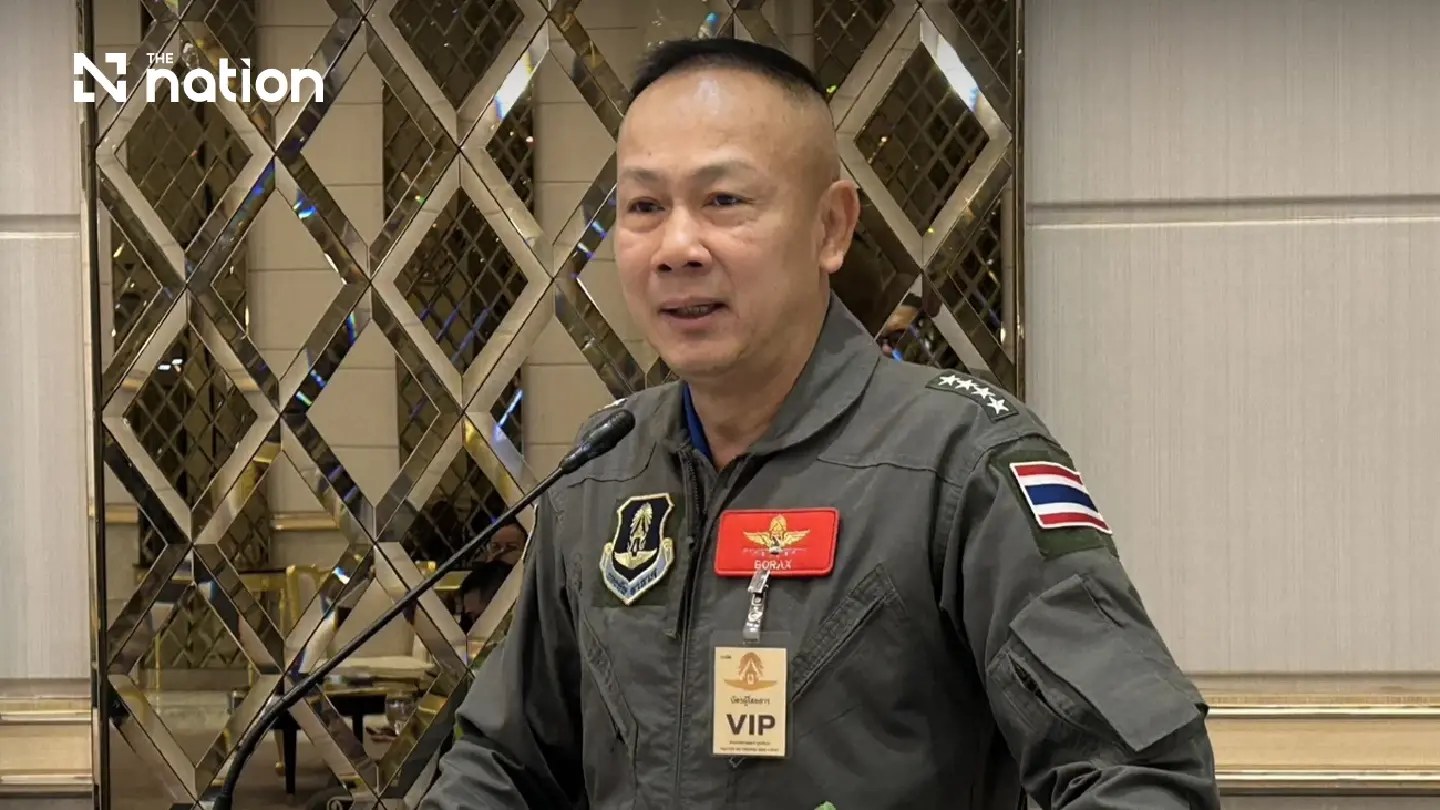


Thailand says a visit by Chinese embassy officials does not endorse a hotel owner’s claims and insists troop positions follow the December 27 agreement.
Thailand has disputed allegations that its forces seized land and property belonging to a Chinese investor near the Cambodian border, insisting that private ownership claims must be separated from military deployments and resolved through evidence and bilateral mechanisms.
Air Chief Marshal Prapas Sornchaidee, Assistant Commander-in-Chief of the Royal Thai Air Force and director of Thailand’s Joint Information Center (JIC) on the Thailand-Cambodia situation, addressed the dispute on Wednesday (August 19, 2026).
The owner of Heng Fang Hotel had reportedly taken officials from the Chinese embassy in Cambodia to inspect the area and called on Thailand to return property to the Chinese investor.
Prapas said the investor’s complaint, the Chinese government’s position, the facts surrounding the property and the territorial issue must be considered separately rather than conflated.
An individual had the right to complain to or seek assistance from their country’s embassy, he said. However, allegations that Thailand had invaded, seized land or looted property did not become established facts merely because they had been made publicly.
Troops remain on agreed deployment line
Prapas said the current positioning of Thai troops complied with the Joint Statement signed by Thailand and Cambodia on December 27, 2025.
The agreement requires both sides to maintain their existing troop deployments without further movement. Thai government statements have also said there should be no additional troop movements, encroachment or patrols towards the other side’s positions.
The positions are described by Thai authorities as the Troop Deployment Line.
Thai forces maintaining control along that line should not be interpreted unilaterally as an invasion or occupation, Prapas said. The military had not drawn the line arbitrarily but was operating within a framework accepted by both countries.
Any disagreement over the location of troop deployments should be submitted to the mechanisms agreed by Thailand and Cambodia, he added.
Interviews, video clips and social-media posts could not be used to determine the territorial status of an area.
Property claims require documents and coordinates
Prapas said the property dispute must be handled separately from questions over military deployment.
The parties would need to establish where the property was located, who legally owned it, which country had jurisdiction and how the area was classified under existing agreements and bilateral border mechanisms.
“These matters must be discussed through documents, coordinates, evidence and intergovernmental mechanisms,” he said. “Cameras, public pressure or the use of the word ‘invasion’ cannot determine a border.”
The same distinction applied to the presence of Chinese diplomatic officials in the area.
Prapas said that if Chinese embassy personnel had travelled there to assist a Chinese citizen or hear the investor’s concerns, Thailand would not assume that their visit meant the Chinese government had endorsed the allegations.
Thailand attached considerable importance to its relationship with China, he added, and believed Beijing understood that disputes between two countries must be addressed through facts and the appropriate mechanisms rather than unilateral accusations.
Social media cannot determine territorial status
“Investors have the right to make claims, but no one has the right to turn an allegation into fact, and no one can change a border through social-media posts,” Prapas said.
“The position of the Thai military is equally clear. We have not advanced. We are maintaining our deployment in accordance with the agreement, and we will not abandon our duty to safeguard Thailand’s sovereignty.”
Thailand did not want to escalate its dispute with any party, he added, but would base decisions involving sovereignty and the national interest on facts, evidence, agreements and the law.
Prapas said Thailand was prepared to issue direct factual clarifications whenever information was circulated accusing the country of invading territory or looting property.
“We are not picking a fight with the investor. We are not picking a fight with the embassy, and we do not want a dispute with a neighbouring country,” he said.
“But we will not allow unsupported allegations to become accepted as truth in the eyes of the public. Our position is to uphold the agreement, hold our positions, safeguard sovereignty and preserve peace at the same time.”
