
Thailand rejects Cambodian allegations over border works
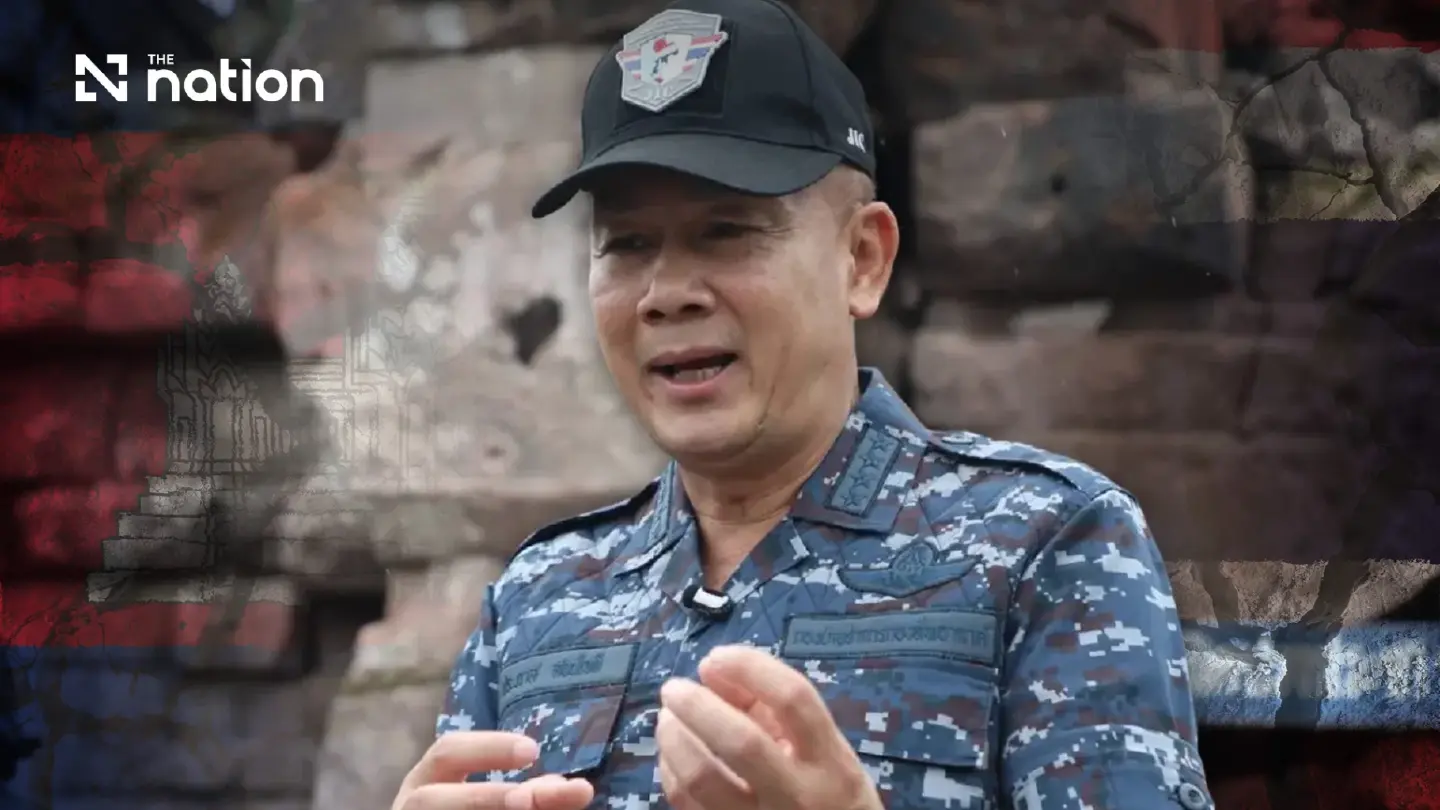


Thailand says disputed border activity should be verified through evidence and bilateral mechanisms rather than unilateral statements or claims.
Thailand has rejected allegations circulated by Cambodian media that Thai forces cleared land, constructed roads and established military positions in violation of Cambodian sovereignty, insisting that territorial disputes must be determined by evidence and agreed bilateral mechanisms rather than unilateral claims.
Air Chief Marshal Prapas Sornchaidee, Assistant Commander-in-Chief of the Royal Thai Air Force and Director of the Joint Information Center on the Thailand-Cambodia Situation (JIC), said on Saturday (August 22, 2026) that Thailand had no policy of invading or occupying the territory of a neighbouring country. The official English spelling of his name and JIC title are used by Thailand’s Government Public Relations Department.
Prapas said Thai activities along the border were intended to protect military personnel and civilians, guard against threats and maintain security in areas under Thai control and responsibility, while taking relevant agreements into account.
“Security measures do not determine a boundary and should not be interpreted as changing the outcome of the border demarcation process, for which the two countries already have agreed mechanisms,” he said.
Thailand calls for evidence through GBC and JBC
Asked how Thailand would respond if Cambodia maintained that the areas concerned belonged to Cambodia, Prapas said either side was entitled to make a claim, but a unilateral assertion did not automatically make it a fact.
Where the two countries disagreed over the location of the boundary or over where particular activities had taken place, he said maps, evidence and factual information should be submitted through mechanisms recognised by both countries.
He cited the General Border Committee (GBC) and the Thailand-Cambodia Joint Boundary Commission (JBC) as the appropriate channels for establishing the facts and seeking a solution.
“Border lines should not be changed by force, nor can they be redrawn through statements, news reports or social-media posts,” Prapas said.
The JIC director also rejected suggestions that Thailand was breaching the ceasefire agreement.
He said Thailand remained firmly committed to the Joint Statement of the Third Special General Border Committee meeting on December 27, 2025, as well as the agreed de-escalation measures, but stressed that the agreement imposed obligations on both sides.
ASEAN’s statement on that meeting confirms that Cambodia and Thailand agreed on de-escalation measures and mechanisms for their implementation and verification.
Prapas said questions or allegations concerning incidents on the ground should be jointly examined through existing coordination mechanisms rather than judged through public statements.
Increasing accusations, he said, could heighten tensions without bringing either side closer to establishing the facts.
JIC rejects labelling dispute as information warfare
Asked whether Cambodia was engaging in information warfare, Prapas declined to characterise either side in those terms.
He said the JIC’s principle was to examine information or allegations involving Thailand and respond with verifiable facts.
Repeated publication of opinions or allegations could lead the public to mistake them for established facts, he said.
“Our approach is that allegations must be answered with facts, disputes with evidence, and differences must be resolved through mechanisms accepted by both sides.”
Prapas said Thailand strongly agreed with resolving the dispute peacefully but argued that peaceful conduct should apply both on the ground and in the information environment.
Both sides, he said, should reduce provocative language and unverified allegations and return disputed facts to the negotiating table and established bilateral mechanisms.
He added that the international community was more interested in verifiable facts, restraint and a genuine commitment to peaceful settlement than in which side issued statements first or made the strongest accusations.
Thailand says it will not compete through rhetoric
Asked how Thailand would respond if similar Cambodian statements continued, Prapas said Bangkok would not engage in a contest of rhetoric.
Thailand’s responsibilities were to maintain security, safeguard its sovereignty and protect the interests of its people without unnecessarily escalating the situation, he said.
“Our principles remain the same: do not provoke, do not become complacent and do not create conflict, while remaining fully prepared to protect sovereignty and public safety. Everything must remain within the law, international agreements and international principles.”
Prapas said the question of whether the disputed areas belonged to Thailand or Cambodia should not be settled by statements from either side.
The issue should instead be determined through evidence, maps, agreements and processes accepted by both countries, he said, adding that this was the purpose of the JBC.
“If we believe in peaceful means, we must also believe in the process. One side cannot simply declare the answer and demand that the other accept it.”
Road and military-position decisions depend on security
Asked whether Thailand would halt road construction or the establishment of military positions as demanded by Cambodia, Prapas said decisions on security measures must take account of conditions on the ground, the security situation, relevant agreements and the safety of troops and civilians.
A unilateral demand should not replace procedures jointly agreed by the two countries, he said.
If questions arose over whether particular activities affected existing agreements, they should be referred to the established mechanisms for verification.
Prapas reiterated Thailand’s position that allegations should not be treated as facts and statements should not determine territorial boundaries.
“Allegations are not facts. Statements are not borders. Disputes must be proven through evidence and mutually agreed mechanisms,” he said.
“Thailand does not want conflict with a neighbouring country. We want the people of both countries to live together peacefully, but lasting peace must rest on facts, mutual respect for agreements and equal respect for sovereignty.”
Prapas said Thailand was ready for dialogue, fact-finding and peaceful means, while remaining fully prepared to safeguard its sovereignty and the security of the Thai people.
