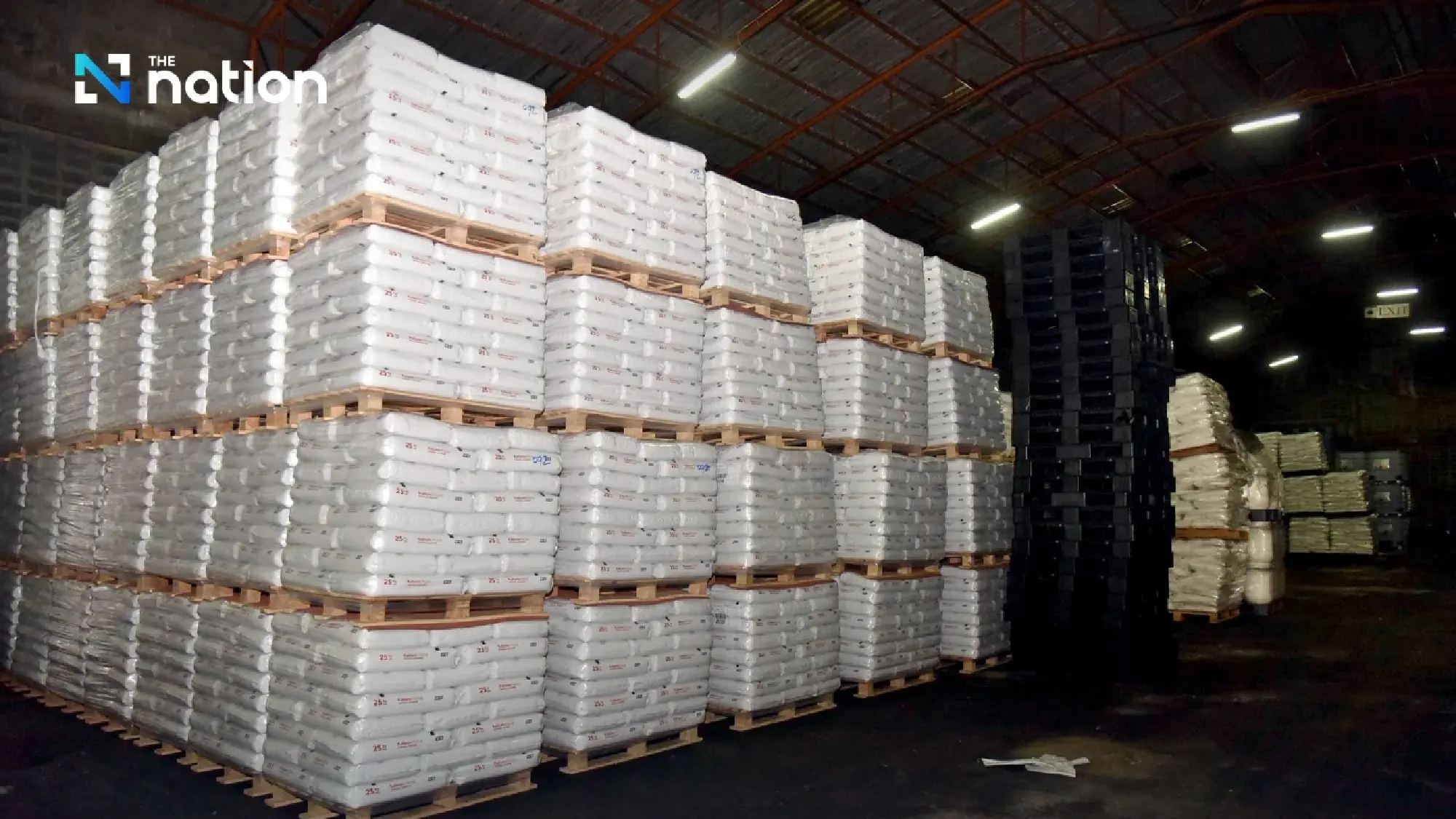
ONCB and DSI seize chemicals enough for 1.1bn meth pills
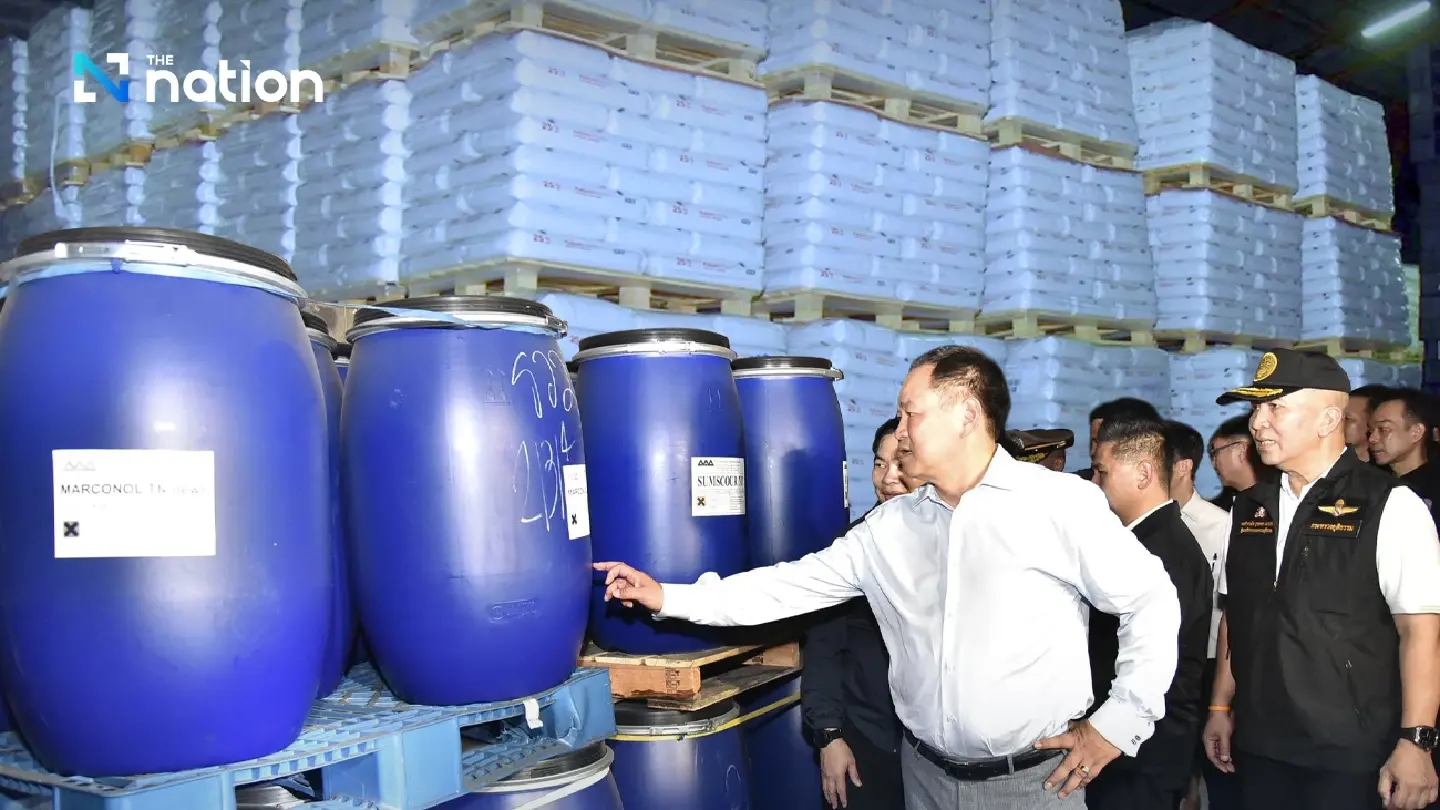


Thai authorities seized 50 tonnes of chemicals that could have been used to produce more than 1.1bn methamphetamine pills.
The Office of the Narcotics Control Board (ONCB), the Department of Special Investigation (DSI) and South Korean intelligence officials have searched 10 locations in four provinces, dismantling a drug network and seizing a massive lot of precursor chemicals.
Authorities said the 50 tonnes of seized chemicals could have been used to produce more than 1.1 billion methamphetamine pills if they had reached drug production sites.
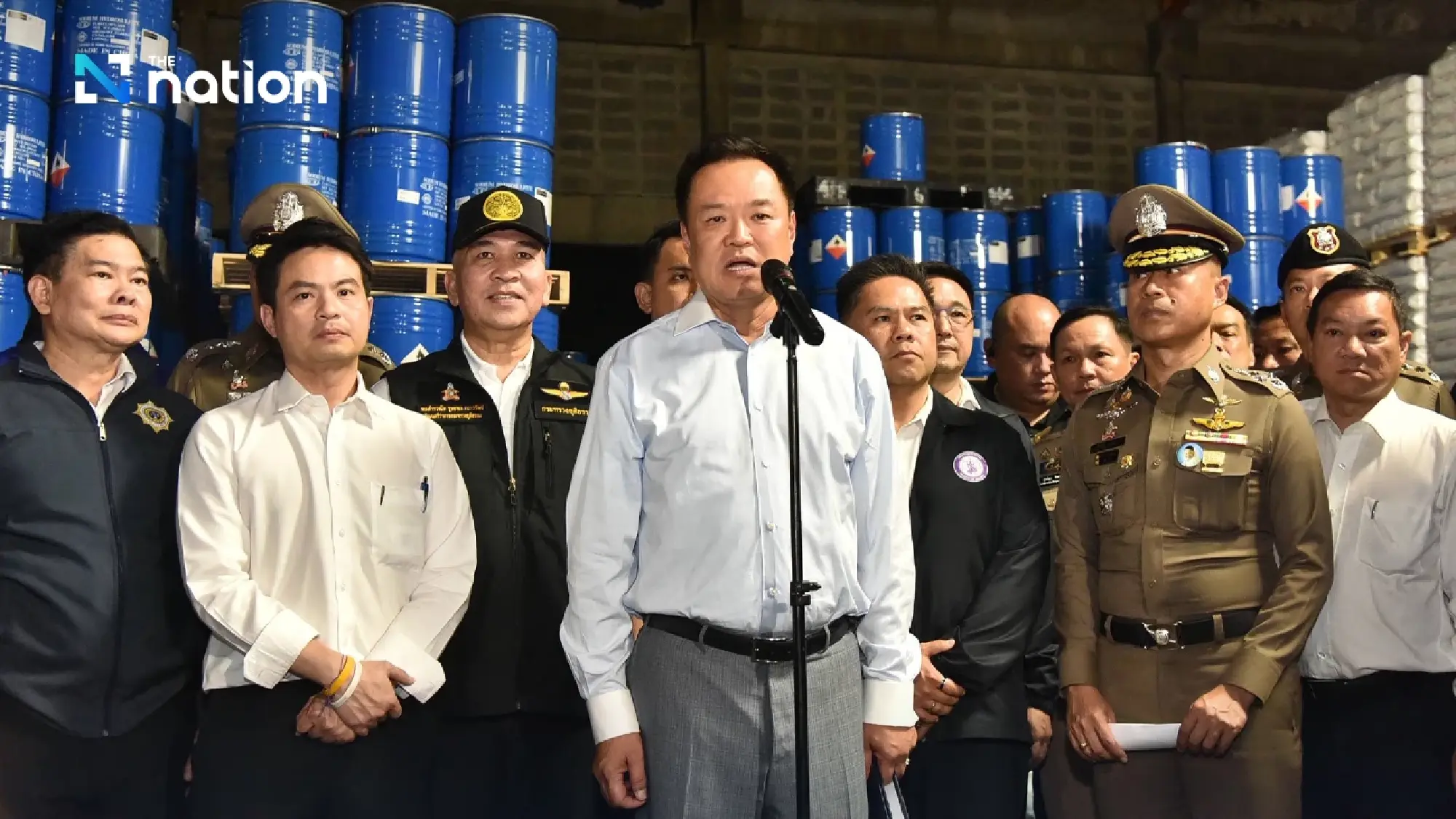
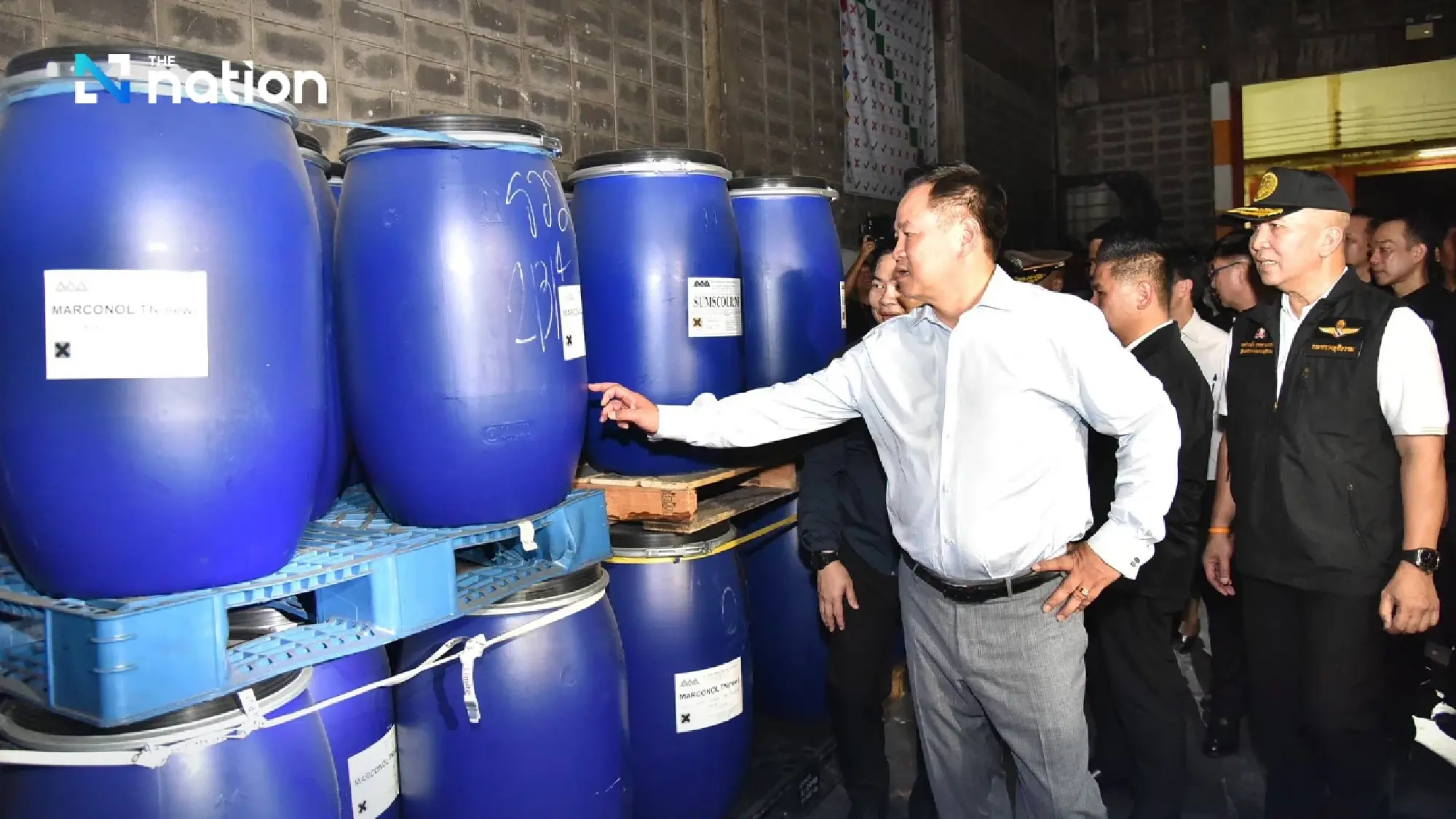
Prime Minister and Interior Minister Anutin Charnvirakul, Justice Minister Pol Lt Gen Ruttapol Naowarat, ONCB secretary-general Pol Maj Suriya Singhakamol, DSI director-general Pol Maj Yutthana Praedam and related agencies jointly announced the results of the “Pikhat Ya Sep Tit” anti-drug operation on Tuesday at a factory warehouse in Samut Prakan province.
The operation followed cooperation between the Thai government and the South Korean government, after the National Intelligence Service (NIS) of South Korea expanded its intelligence work and helped return a major drug suspect to Thailand in April 2026.
The suspect, identified as Nu Chen, was handed over to Thai authorities. The ONCB, police and the DSI later expanded their intelligence work and found that Nu Chen had networks linked to various transactions in Thailand and overseas.
One of those transactions involved the alleged illegal purchase, sale and transport of precursor substances and chemicals for use at drug production sites in the Golden Triangle.
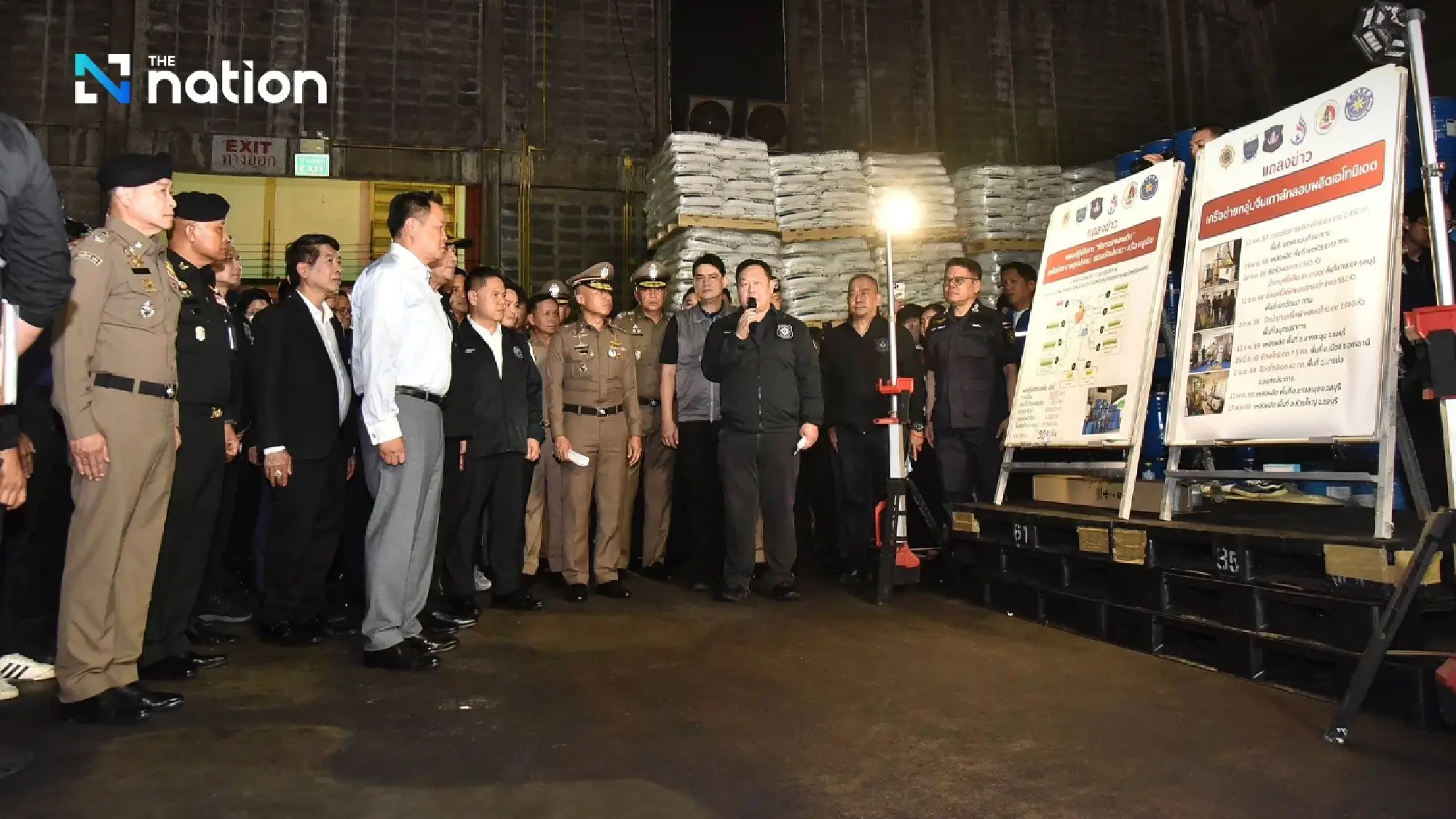
The latest operation targeted three companies across 10 locations in four provinces: Bangkok, Samut Prakan, Rayong and Nonthaburi.
Authorities also found links between these companies and grey Chinese networks accused of offences in Thailand, including the illegal use of chemicals to produce etomidate, a Category 2 psychotropic substance, which was then mixed into illegal e-cigarette liquids.
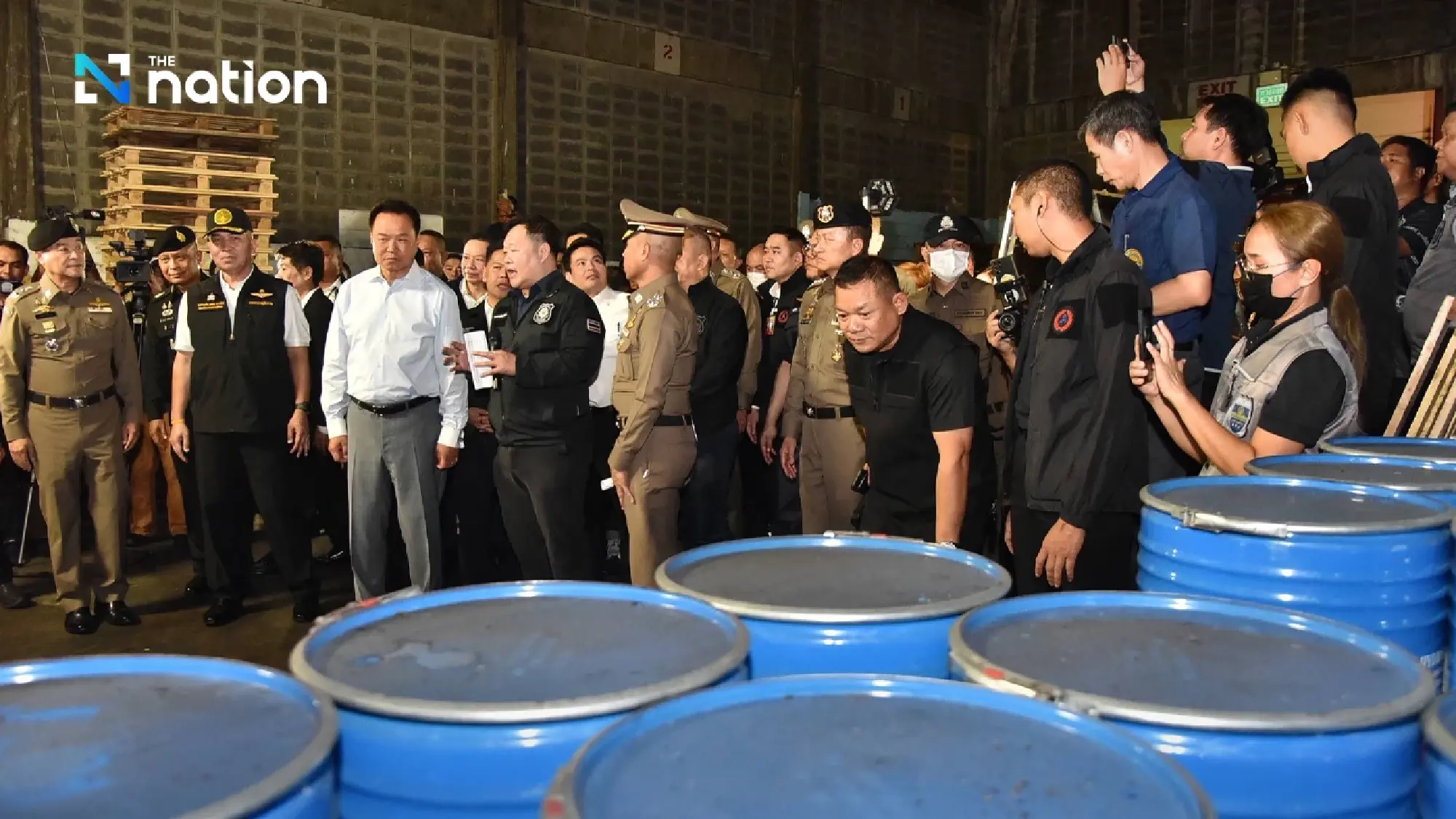
Four related arrests had already been made before this operation. Authorities said the latest raids were part of a wider effort to expand investigations, identify those involved and cut off drug production networks in the Golden Triangle before narcotics could enter Thailand.
The operation led to the seizure of five types of precursor substances and chemicals that could be used in drug production:
- Acetone — 9,105 kilogrammes, used in the plastics industry
- Hydrochloric acid — 225 kilogrammes, used in metal industries, bleaching, fertiliser production, cleaning products, medicine and organic substances
- Acetic acid — 10,170 kilogrammes, used in textile dyeing and leather tanning
- Sulphuric acid — 4,500 kilogrammes, used for degreasing and metal surface treatment
- Dioctyl phthalate — 26,000 kilogrammes
The seized substances totalled 50 tonnes.
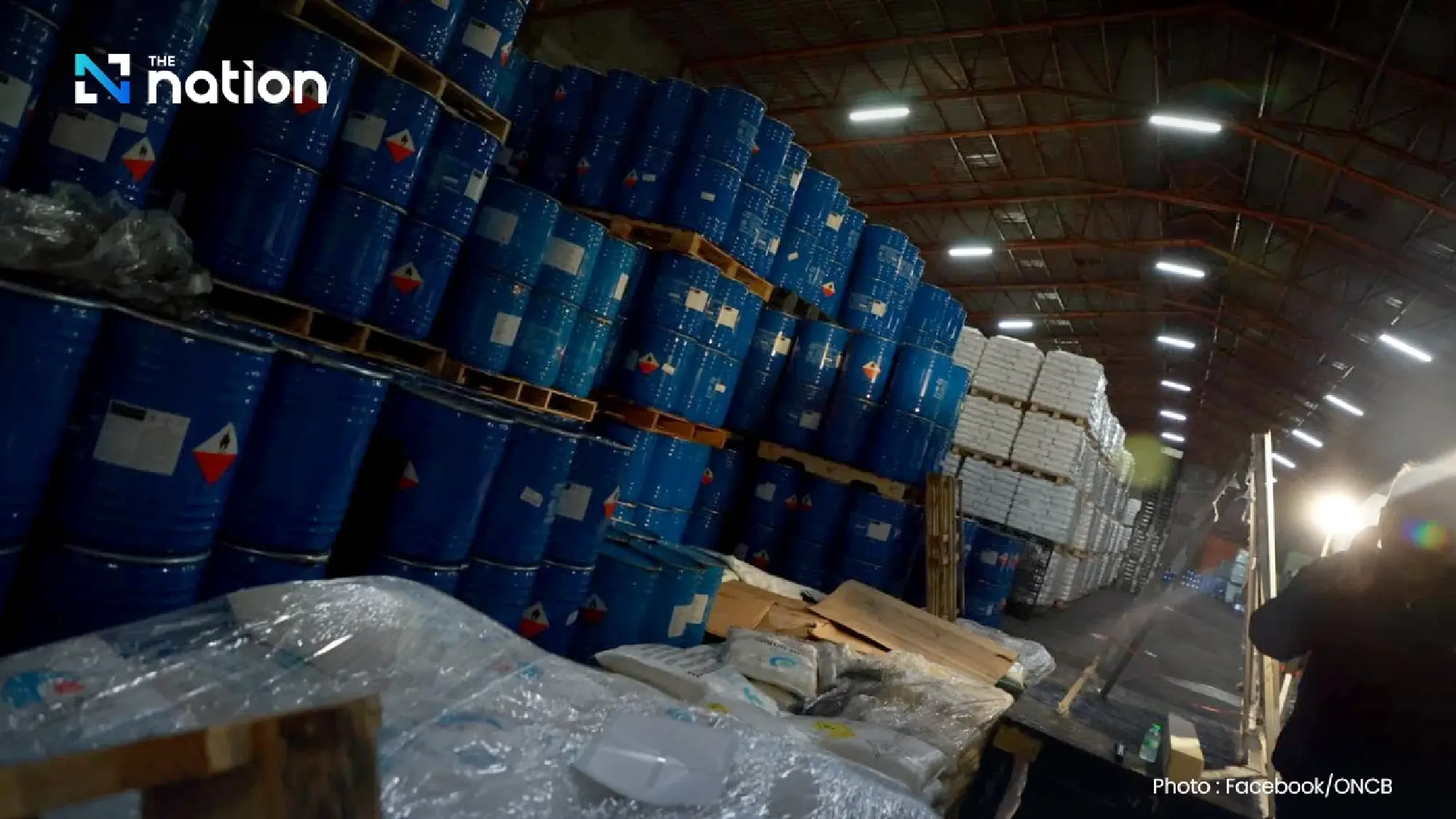
Officials said that if the chemicals had been sent to drug production sites, they could have been used to produce 1.1 billion methamphetamine pills, equivalent to the amount of methamphetamine pills seized over an entire year, or 21 tonnes of crystal methamphetamine.
The chemicals are classified as Category 3 hazardous substances under the Hazardous Substances Act 1992 and fall under the responsibility of the Department of Industrial Works.
During the inspection, officials found no evidence showing that the inspected premises had been granted licences to possess Category 3 hazardous substances under the Hazardous Substances Act 1992, or other related documents.
Acting under Section 54(3) of the Hazardous Substances Act 1992, officials seized the materials, objects and other related items for legal proceedings.