
Plastic bottles blanket Phi Phi Leh bay as Thailand’s marine waste threat grows
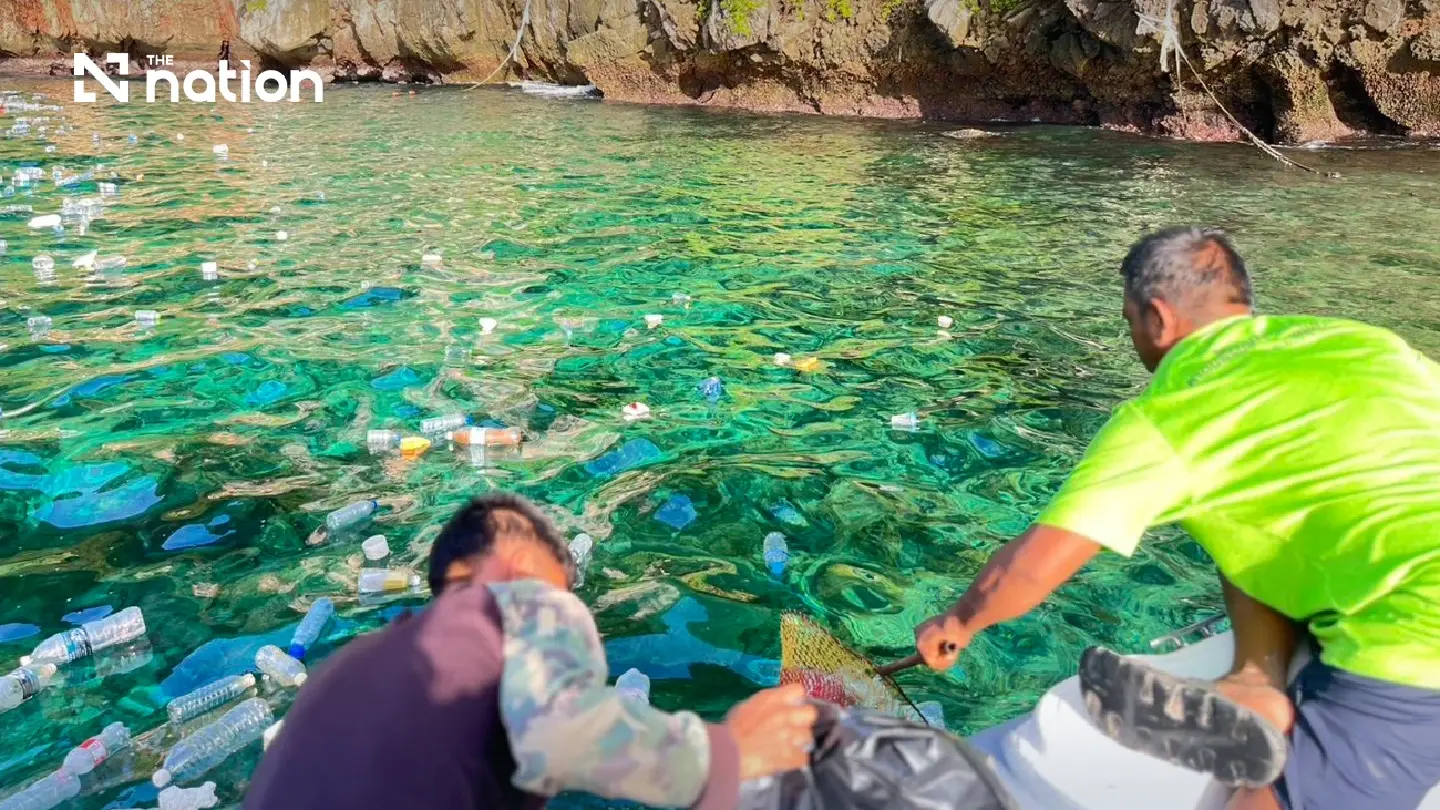


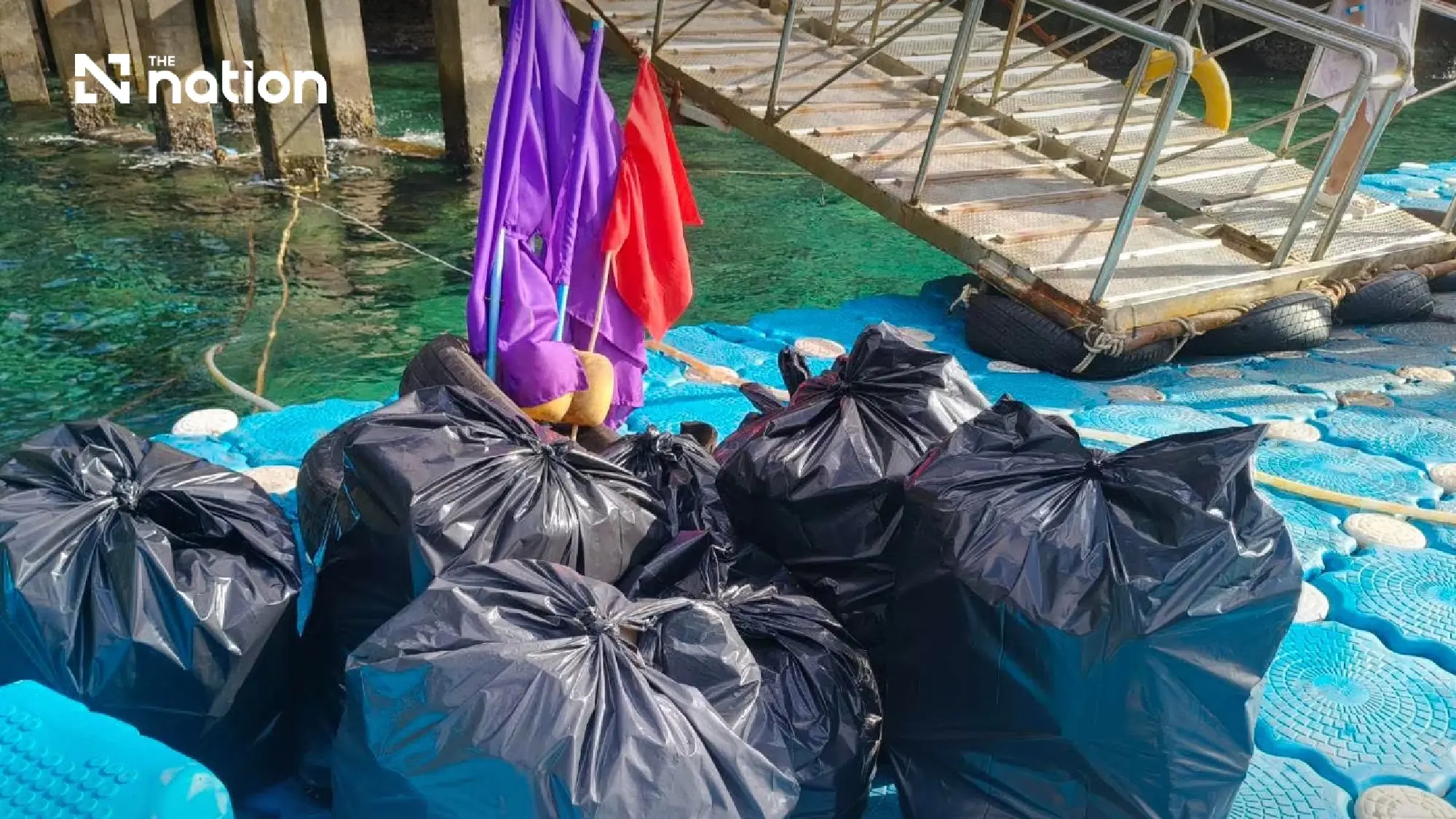
National park officials collected six large bags of plastic waste from Loh Samah Bay near Maya Bay, as new DMCR and Pollution Control Department data show plastic debris remains a major threat to Thailand’s seas, coral reefs and rare marine animals.
Plastic waste found near Maya Bay gateway
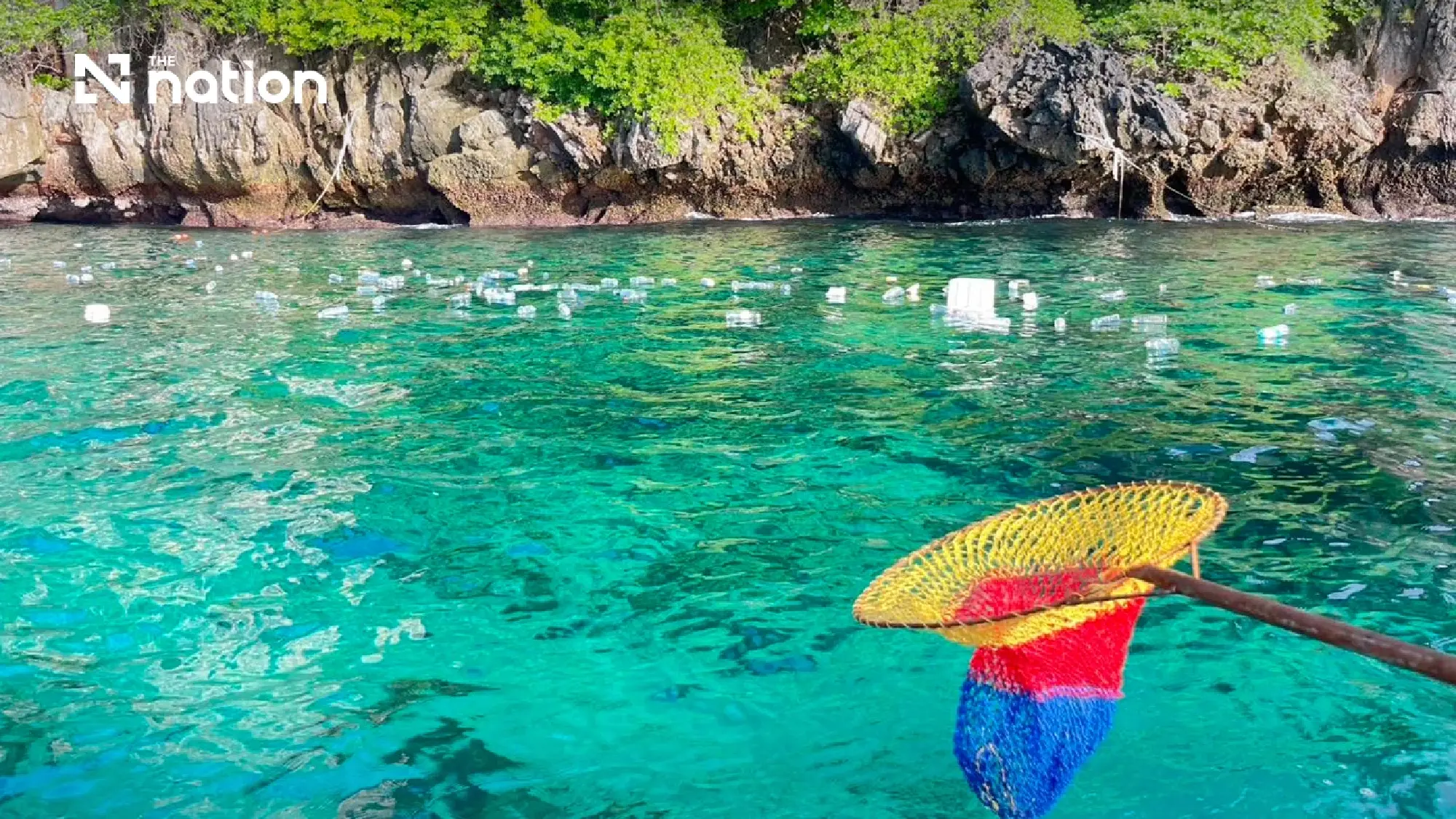
National park officials collected six large bags of plastic waste from Loh Samah Bay on Phi Phi Leh Island after large numbers of plastic water bottles were found floating across the sea near the boat access point to Maya Bay, one of Krabi’s best-known marine attractions.
Images posted by Hat Noppharat Thara–Mu Ko Phi Phi National Park showed plastic bottles and other waste scattered across the surface of the water, prompting concern among conservationists over the impact on marine life and the image of one of Thailand’s most famous island destinations.
Park officials clean bay as monsoon currents push waste ashore
Sangsurin Songthong, chief of the national park, said officers from National Park Protection Unit PP.5, based at Maya Bay, collected rubbish in Loh Samah Bay and Ao Lo Ko.
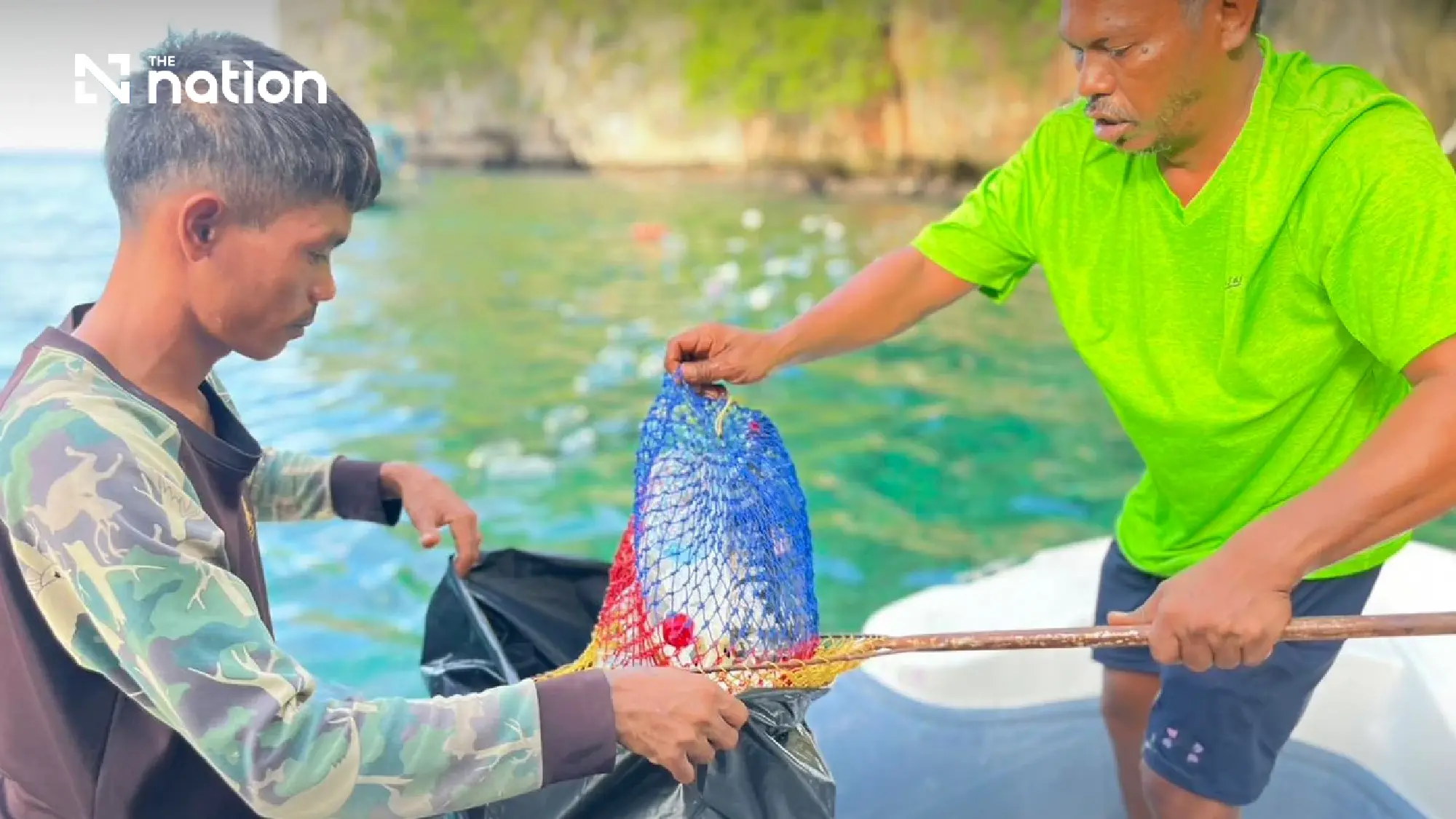
He said most of the rubbish appeared to be monsoon debris washed into the area by waves and sea currents, a recurring problem during this season. Officials have to remove waste daily to keep marine tourism sites clean and reduce damage to natural resources and marine animals.
The exact source of the rubbish has not been confirmed. Local residents and tourism operators told reporters that the waste may have fallen into the sea while being transported by boat from Phi Phi Island back to the mainland, noting that the rubbish appeared to consist largely of sorted plastic bottles. Authorities have not confirmed that account.
National data show plastic still dominates marine waste
The incident comes despite a reported fall in the amount of marine debris collected nationwide. The Pollution Control Department’s 2024 pollution situation report said the amount of marine debris collected fell to 646 tonnes in 2024, compared with 1,435 tonnes in 2023. The comparison is not exact because the 2023 figure covered January to October, while the 2024 figure covered January to December.
The Department of Marine and Coastal Resources reported that, in fiscal 2024, rubbish collected through its activities totalled more than 4.05 million pieces, weighing 327,143 kilogrammes. The most common item was plastic bags, followed by plastic drink bottles and foam fragments.
DMCR: 305 rare marine animals affected by debris
DMCR data underline the ecological risk behind the Phi Phi Leh clean-up. In fiscal 2024, 305 rare marine animals were directly affected by marine debris, with ingestion of waste the leading cause. The department’s infographic showed 190 animals affected by eating marine waste, 82 by external entanglement, and 33 by both ingestion and entanglement.
The four provinces with the highest reported impact were Chanthaburi, Chumphon, Nakhon Si Thammarat and Satun. DMCR identified soft plastic bags, sack fragments and discarded fishing gear, including pieces of net, as key threats to marine animals.
Coral reefs also under pressure
Marine debris is also affecting coral reef areas. DMCR’s 2024 reef-related survey identified three main activity groups linked to rubbish in coral reef areas: water activities and fishing, coastal and recreational activities, and construction. The survey covered 152 stations in 15 coastal provinces across the Gulf of Thailand and the Andaman Sea, with Chonburi recording the highest level of debris in coral reef areas.
The department said fishing-related waste included ropes, nets and fishing lines, while coastal and tourism-related rubbish included plastic packaging, straws, food containers, cups, plates and cutlery. Construction-related debris included heavy materials such as metal, tyres and other building waste.
Phi Phi case highlights gap between clean-up and prevention
The latest clean-up at Loh Samah Bay shows how quickly waste can enter protected marine tourism areas during the monsoon season. Even when officials collect rubbish daily, plastic bottles and other debris can still be driven into bays by waves, currents or poor waste-handling practices.
For conservationists, the concern is not only the visual impact on a world-famous destination but the wider risk to marine animals, coral reefs and Thailand’s coastal tourism economy. The Phi Phi Leh incident adds pressure on authorities, tour operators and waste transporters to tighten controls before rubbish reaches the sea.
