
Bangkok collects over 400,000 floats after Loy Krathong 2026, with 83% made from natural materials as foam use falls


Natural materials accounted for 83.38% of the floats Bangkok collected, while foam fell to 4.02% and the city urged people to keep bread out of park ponds.
- Bangkok authorities collected a total of 404,907 floats (krathongs) after the 2026 Loy Krathong festival, an increase of 13,880 from the previous year.
- The vast majority of floats, 83.38%, were made from natural materials, continuing an upward trend from 82.76% in 2025.
- The use of environmentally harmful foam floats saw a significant decline, with their share dropping from 7.23% in 2025 to 4.02% in 2026.
- Floats made from bread, which are also biodegradable, accounted for 12.59% of the total, an increase from 10.01% the year before.
Bangkok collected 404,907 floats after the Loy Krathong festival on 24 November 2026, up 13,880 from the previous year. Natural materials accounted for 83.38% of the total, while the share made from foam fell from 7.23% to 4.02%, Bangkok Deputy Governor Pornphrom Vikitsreth said on 25 November.
Foam krathongs fall by more than 12,000
Crews recovered 16,286 foam krathongs across Bangkok, down from 28,298 in 2025. The Bangkok Metropolitan Administration said the decline reflected its campaign to encourage festivalgoers to choose biodegradable floats.
The city counted bread separately from other natural materials. Its breakdown for 2026 was:
- Natural materials: 337,637 floats, or 83.38%, up from 82.76% in 2025.
- Bread: 50,984 floats, or 12.59%, up from 10.01%.
- Foam: 16,286 floats, or 4.02%, down from 7.23%.
Lat Krabang recorded the highest district collection, at 21,173 floats. Pom Prap Sattru Phai recorded the lowest, at 192.

Bangkok’s 35 parks welcome 220,708 visitors
The 35 public parks that Bangkok opened for Loy Krathong welcomed 220,708 visitors. Crews collected 81,545 floats from park waters, about a fifth of the citywide total.
Festivalgoers also floated 20,152 digital krathongs through Greener Bangkok, allowing them to take part without placing a float in the water. The digital tally fell by 3,195 from 23,347 in 2025 and was counted separately from the physical collection.
Crews spend nine hours clearing the Chao Phraya
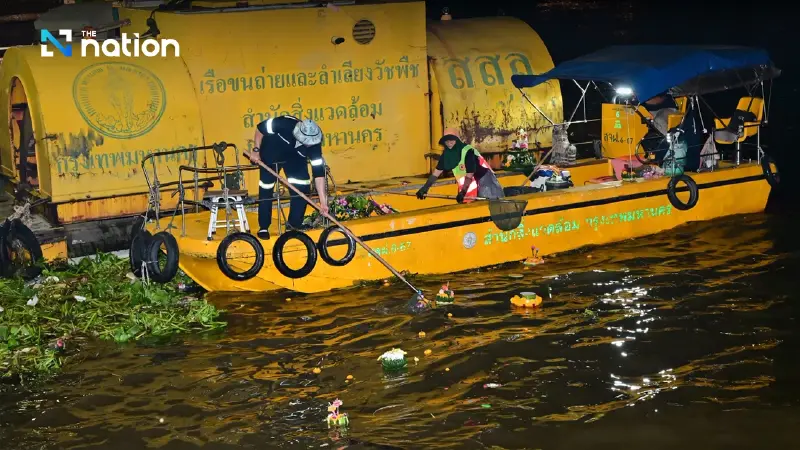
Bangkok deployed 127 staff and 29 boats on the Chao Phraya from 8pm on 24 November until 5am the following morning. Crews covered roughly 15 kilometres between the Rama VIII and Rama IX bridges to stop floats from gathering around bridge piers or drifting towards the Gulf of Thailand. They recovered 10,154 krathongs from the river.
Crews sorted the river floats as they brought them ashore. Natural materials were set aside for shredding and processing into organic fertiliser at Nong Khaem. Foam and other non-biodegradable materials were separated for sanitary landfill disposal.

City asks residents to keep bread out of park ponds
Bangkok officials thanked residents for helping to reduce foam waste and urged them to choose floats made from materials that break down readily. They also asked people to avoid bread krathongs in enclosed bodies of water. In park ponds and lakes, uneaten bread can accumulate and decompose, damaging water quality and harming aquatic life.


