
Anutin weighs arms spending against the cost of Thailand’s 2025 border evacuations
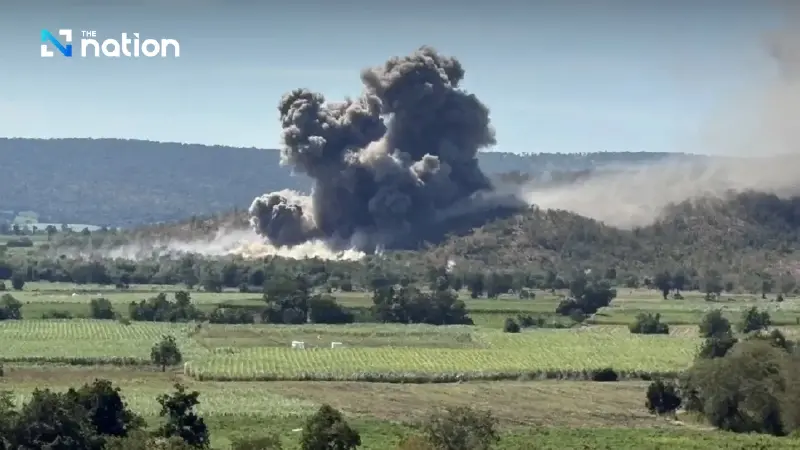


Asked about Gripen fighters, Anutin backed spending to defend Thailand and cited the cost of evacuations and repairs after the 2025 border clashes.
- At a Royal Thai Air Force drill, Prime Minister Anutin Charnvirakul declared that Thailand will not tolerate any loss of its sovereignty, "even for a minute," and that even the smallest, briefest incursion is unacceptable.
- He emphasized the armed forces' readiness to defend against any invasion, citing ongoing disputes with neighboring countries as a reason this preparedness is essential.
- Anutin justified a strong defense posture by pointing to the high costs of past border clashes, such as civilian evacuations, arguing these costs are incurred regardless of weapons spending once fighting breaks out.
- He urged budget decision-makers, such as MPs and senators, to witness the armed forces' capabilities firsthand to better understand the need for defense funding.
Prime Minister Anutin Charnvirakul said in Lop Buri on 26 November 2026 that Thailand’s armed forces were ready to fight if the country was invaded. “We cannot lend out Thailand’s sovereignty, even for a minute,” he told reporters. “It must remain with Thailand at all times.”
Anutin, who is also interior minister, spoke at the Chai Badan training range after opening the Royal Thai Air Force’s 2027 tactical air operations test and evaluation. He rejected the idea that Thailand could tolerate a small incursion and reclaim the ground later. No one entrusted with defending the country, he said, could take that position.
Anutin recalled how former air force chief Air Chief Marshal Voranart Apicharee had illustrated the point. Even someone crossing into Thailand without permission to buy a glass of iced black coffee, and then leaving would be an intrusion the former commander would not accept. In Anutin’s account, ACM Voranart said Thailand could not afford to lose even a square inch. Anutin said continuing disputes with neighbouring countries made readiness essential.

Anutin urges budget decision-makers to see the armed forces firsthand
Anutin said working closely with the armed forces had allowed him to see their capabilities for himself. Cabinet ministers, MPs and senators who decide defence budgets should see them too, he said. Economic and technological competition had changed the nature of conflict, but armed clashes remained possible.
Anutin expressed confidence in all branches of the armed forces. Demonstrating their readiness could reassure the public and show the government what support they needed, he said. The government, Parliament and the military shared responsibility for defending Thai territory and protecting both civilians and service personnel.

Gripen question turns to the cost of border evacuations
Asked whether his government would support buying Gripen fighters, Anutin said he would back measures that strengthened Thailand’s security. He gave no commitment to a particular purchase. Frequent meetings between national leaders could not rule out armed clashes, he said. Thailand also had to prepare for terrorism and threats involving technology.
Anutin urged people concerned about defence spending to speak to residents affected by the 2025 clashes along the Thai-Cambodian border. He said families in seven border provinces had gone to bed fearing bombardment, and residents had been forced to evacuate. He cited Kantharalak district in Si Sa Ket province, as well as communities in Surin and Buri Ram.
Even if the government spent nothing on weapons, Anutin said, it would still face the cost of evacuating people, compensating those affected and repairing the damage once fighting broke out. He said the government weighed those costs when drawing up the annual defence budget and scrutinised proposed purchases for necessity.
Asked whether the display proved Thailand’s military was a match for any in the world, Anutin declined to predict who would win a war. Thailand had no intention of invading anyone, he said, but anyone threatening the kingdom would face armed forces that were ready to defend it and would keep strengthening that readiness.


