
JAXA's low-cost H3 rocket launch marks key test after setback
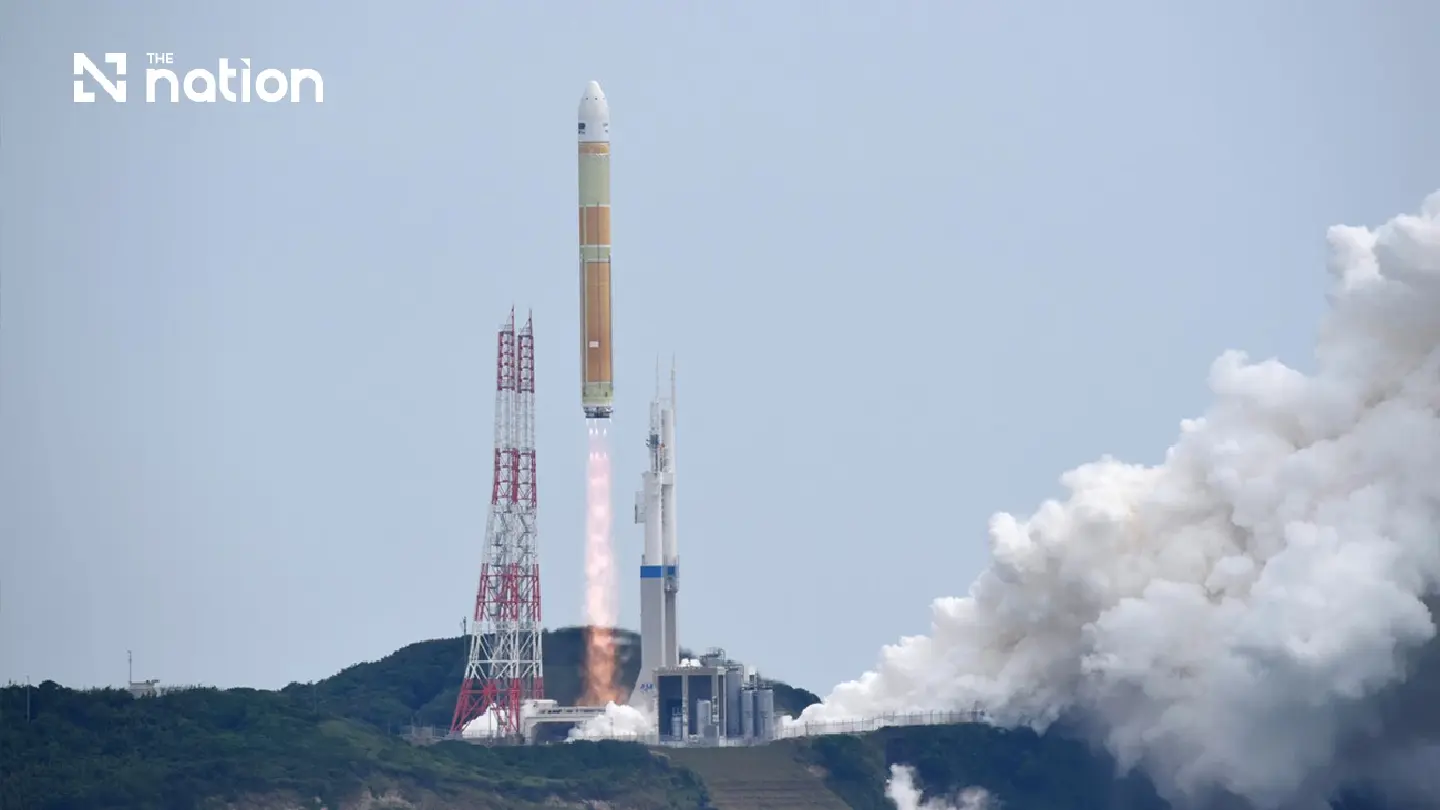


The sixth H3 vehicle placed six small satellites in orbit as Japan tested its booster-free type 30 model and sought to rebuild market confidence.
- Japan's Aerospace Exploration Agency (JAXA) successfully launched its H3 rocket, marking a key recovery after a launch failure six months earlier.
- The mission was a crucial test of the rocket's simplest and lowest-cost configuration, which operates without solid rocket boosters.
- This success is a vital step in restoring confidence in the H3 program and achieving the goal of halving launch costs compared to its predecessor, the H-2A rocket.
The Japan Aerospace Exploration Agency, better known as JAXA, successfully launched an H3 rocket on Friday morning (June 12), six months after a launch attempt ended in failure last December.
The rocket lifted off from the Tanegashima Space Centre in Kagoshima Prefecture, south-western Japan, at 9.53am.
Around 15 minutes later, it reached its intended orbit at an altitude of about 580 kilometres.
The sixth H3 rocket was carrying six small satellites built by universities and other organisations.
All six satellites were released successfully after the vehicle arrived in orbit.
The mission was also a major test of the H3’s simplest, low-cost configuration, which flies without a solid rocket booster.
For JAXA, the success marked an important step towards restoring confidence in the programme and making progress in the satellite launch market.
“The six months felt short yet long.
We've come this far thanks to everyone's support,” Makoto Arita, manager of JAXA's H3 project team, said with relief at a press conference on Friday.
The H3 is a two-stage, liquid-fuel rocket that JAXA and Mitsubishi Heavy Industries Ltd have jointly developed since 2014.
It is intended to become Japan’s flagship launch vehicle, helping the country maintain independent access to space by carrying satellites and other payloads without relying on foreign providers.
To improve launch performance, the rocket uses a new liquid-propellant engine in its first stage.
JAXA has also sought to sharply reduce costs compared with the previous H-2A rocket by cutting the number of parts and making greater use of commercial off-the-shelf components.
The first H3 launch failed in 2023 because of a problem with the second-stage engine.
From the second unit in 2024, the rocket then recorded five consecutive successful launches before another failure occurred with the eighth launch last December.
An investigation concluded that the direct cause of the December failure was a defective part in the satellite-mounting section, which broke after being subjected to shock during flight.
JAXA responded by taking measures, including changes to related components.
Since the start of development, JAXA has aimed to bring the H3 series into the satellite launch market.
The series has three configurations, offering different levels of capability and cost depending on a satellite’s weight and the orbit into which it must be placed.
JAXA has already launched the type 22, which has two liquid engines and two solid rocket boosters, and the type 24, which has two liquid engines and four solid rocket boosters.
The type 24 has the highest launch capability in the H3 series.
The sixth unit launched on Friday was the type 30, the simplest and cheapest version, powered only by three liquid engines.
Although it has the smallest launch capacity in the series, it is still capable of carrying an Earth observation satellite weighing up to about four tonnes, a size commonly used for government satellites.
If the type 30 enters regular operation, JAXA will be able to meet its original target of cutting launch costs to about half those of the H-2A rocket.
Friday’s launch was also the first time a large Japanese rocket powered solely by liquid-propellant engines had flown successfully.
The technology is expected to be useful for future reusable launch vehicles.

[Copyright The Jiji Press, Ltd.]
