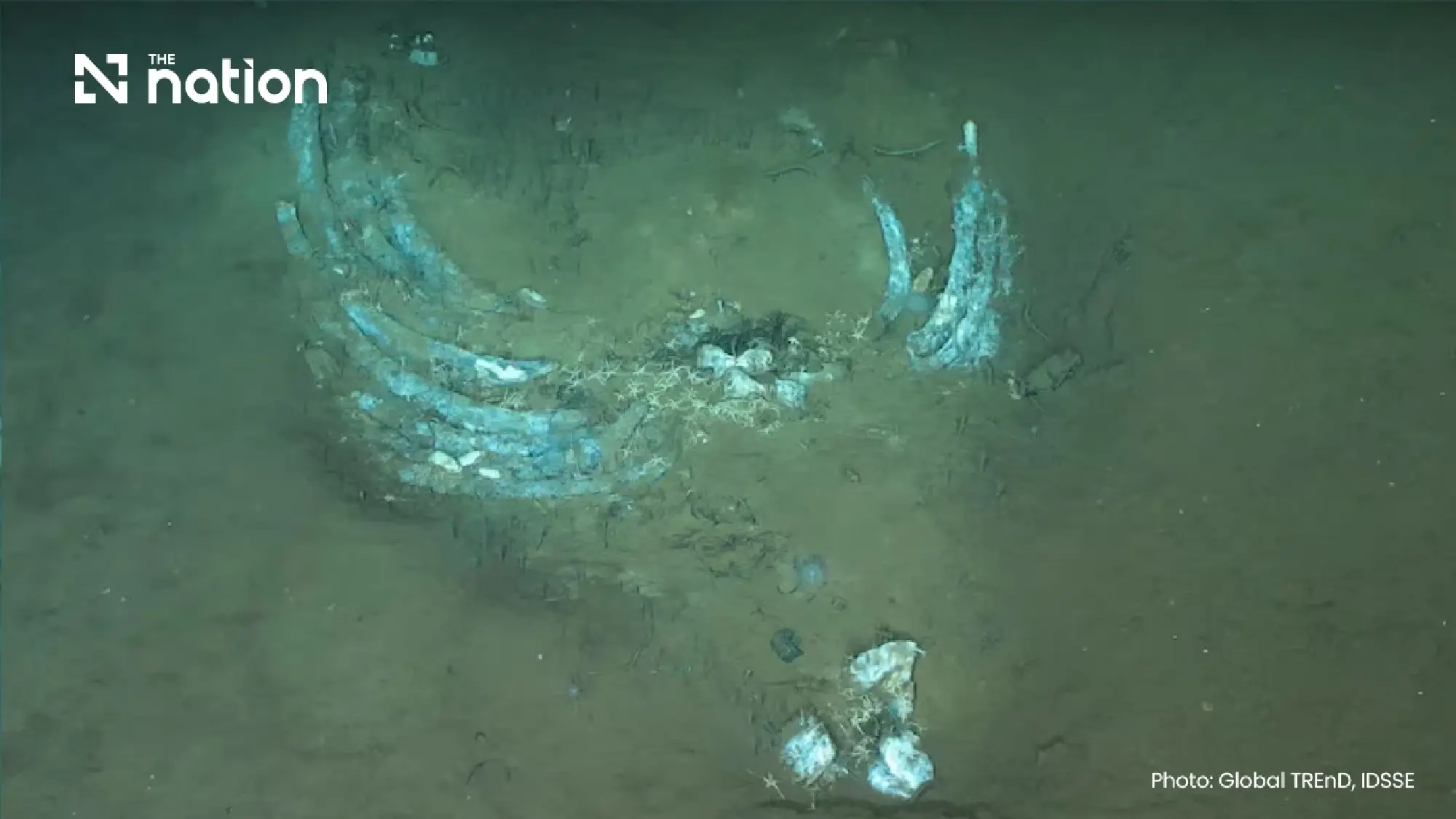
Oldest whale graveyard holds 5.3m-year-old fossils in Indian Ocean
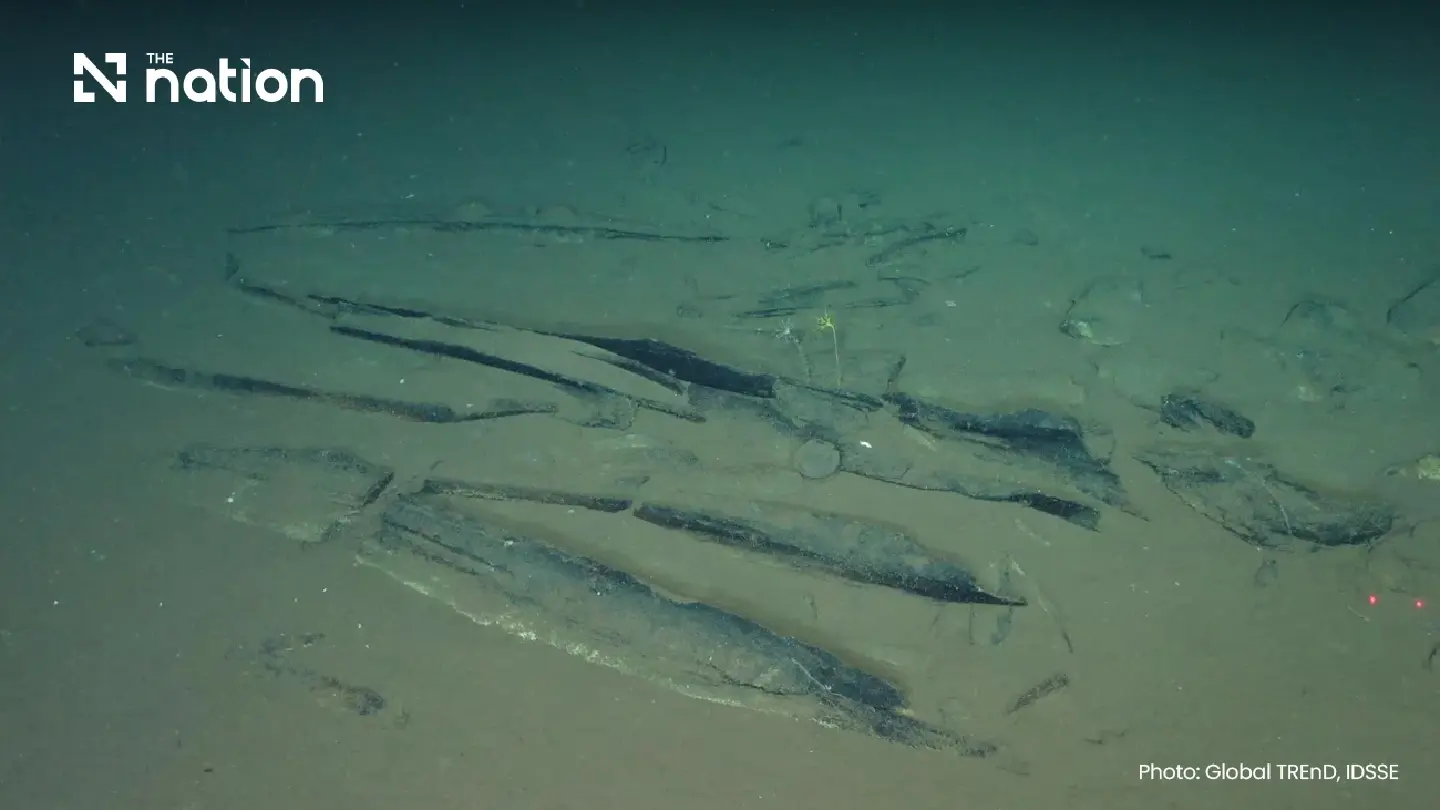


Researchers using the deep-sea submersible Fendouzhe documented 485 fossil sites and five recent whale falls in the Diamantina Fracture Zone.
- The oldest, largest, and deepest known whale graveyard has been discovered in the Indian Ocean's Diamantina Fracture Zone, containing fossils up to 5.3 million years old.
- Located at depths of up to 7,002 meters, the site contains 485 fossil locations, including the remains of a newly discovered prehistoric beaked whale species, *Pterocetus diamantinae*.
- The high density of skeletons suggests the area may be a migratory route or a deep hunting ground where whales perish, providing scientists with new insights into cetacean evolution.
An international team of researchers has revealed the discovery of the oldest, largest and deepest “whale graveyard” in the south-eastern Indian Ocean, in the Diamantina Fracture Zone, an undersea system of ridges and trenches stretching across the southern Indian Ocean about 1,600 kilometres west of the Australian coast.
The survey was carried out by the Chinese research vessel Tan Suo Yi Hao, together with scientists from Italy and New Zealand, using a deep-sea submersible called Fendouzhe.
The vehicle can descend to depths known as the “hadal zone”, between 6,000 and 11,000 metres, to study ecosystems and geology in the deepest parts of the ocean.
The whale graveyard extends for more than 1,200 kilometres and lies at a maximum depth of 7,002 metres, almost the deepest point of the Diamantina Fracture Zone.
Across more than 32 dives, researchers found 485 whale fossil sites, as well as five sites containing recently dead whale carcasses that were decomposing.
These whale remains on the seabed are scientifically known as the “whale-fall” phenomenon.
When a whale carcass sinks to the ocean floor, it becomes an “oasis of life”, providing a vast source of energy for the surrounding ecosystem.
The decomposition process is complex and can be divided into four main stages.
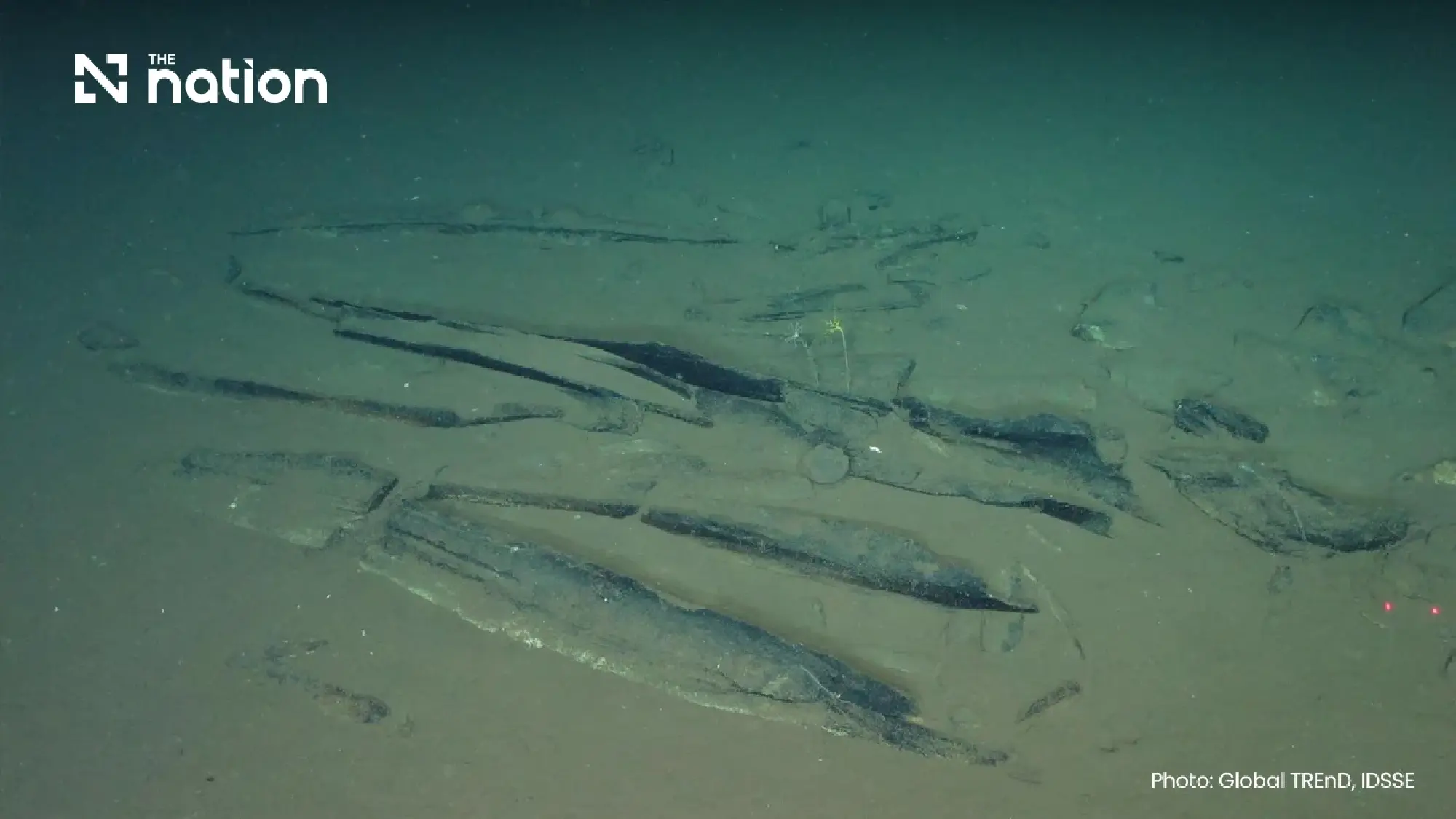
The first stage begins when large scavengers arrive to feed on soft tissue, followed by a second stage in which smaller organisms begin to colonise the bones and sediment.
This is followed by the “sulfophilic phase”, in which bacteria break down fats inside the bones, producing sulphur that becomes food for specialised animals.
In the final stage, the remaining bones become a “reef” for attached organisms to inhabit.
The whale-fall phenomenon is therefore regarded as a major “biodiversity hotspot” in the deep sea.
It also provides a habitat for specialised species such as brittle stars, bone-eating worms, crustaceans and molluscs, many of which may be species never before known to science.
Scientists said some fossils were as old as 5.3 million years, dating back to the Pliocene epoch.
One important fossil is the skull of “Pterocetus diamantinae”, a prehistoric beaked whale species that was recently discovered and newly named.
Fossils of an Antarctic minke whale measuring up to 5 metres in length were also found, making it the largest whale remains in this discovery.
Peng Xiaotong, deputy director of the Institute of Deep-sea Science and Engineering (IDSSE) and head of the research team, said of the discovery: “The discovery of a graveyard on this scale was entirely beyond expectations. The extent of its distribution, its depth and the age range of the remains we found went far beyond what we had imagined.”
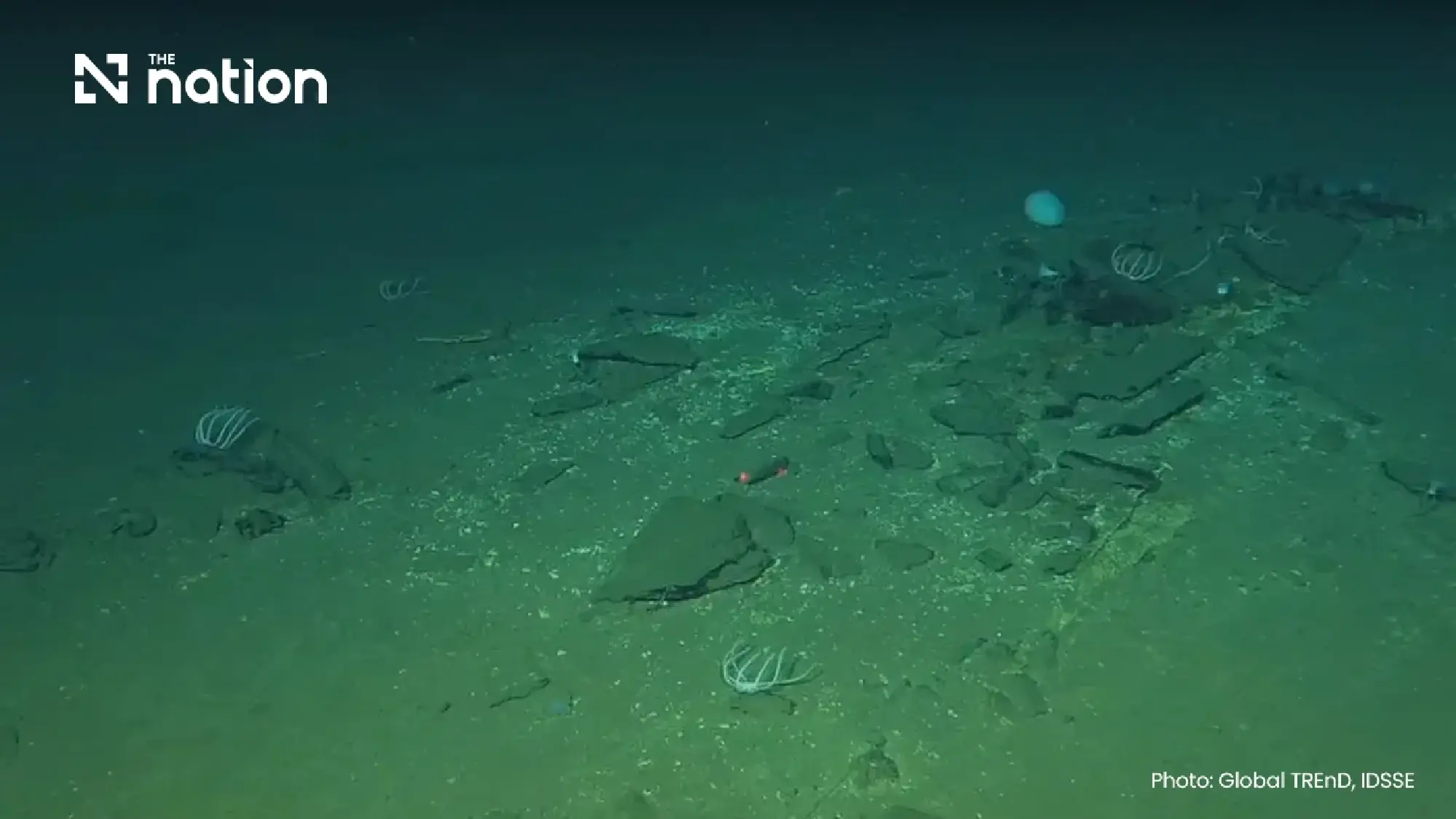
Dr Giovanni Bianucci of the University of Pisa, a co-researcher, said: “This discovery shows that these extreme and still unexplored environments are home to species and ecosystems unknown to science, and indicates that life can adapt and evolve even under extreme conditions without light and with very high pressure.”
Jon Copley, professor of ocean exploration at the University of Southampton, observed that the whale graveyard had a density of nearly 800 skeletons per square kilometre.
He therefore suggested that the area may be a migratory route for baleen whales and a hunting ground for squid for beaked whales, which have to dive so deeply that they may reach their physical limits and die.
Finally, Song Xikun, a marine biodiversity researcher, said the discovery would help scientists better trace the evolution of cetaceans over geological time and underlined the importance of conservation: “The establishment of marine protected areas in deep-sea trench ecosystems should be considered in the future to protect the unique evolutionary heritage of our planet.”