
US and Iran presidents sign ceasefire agreement, but Trump says he could still resume attacks
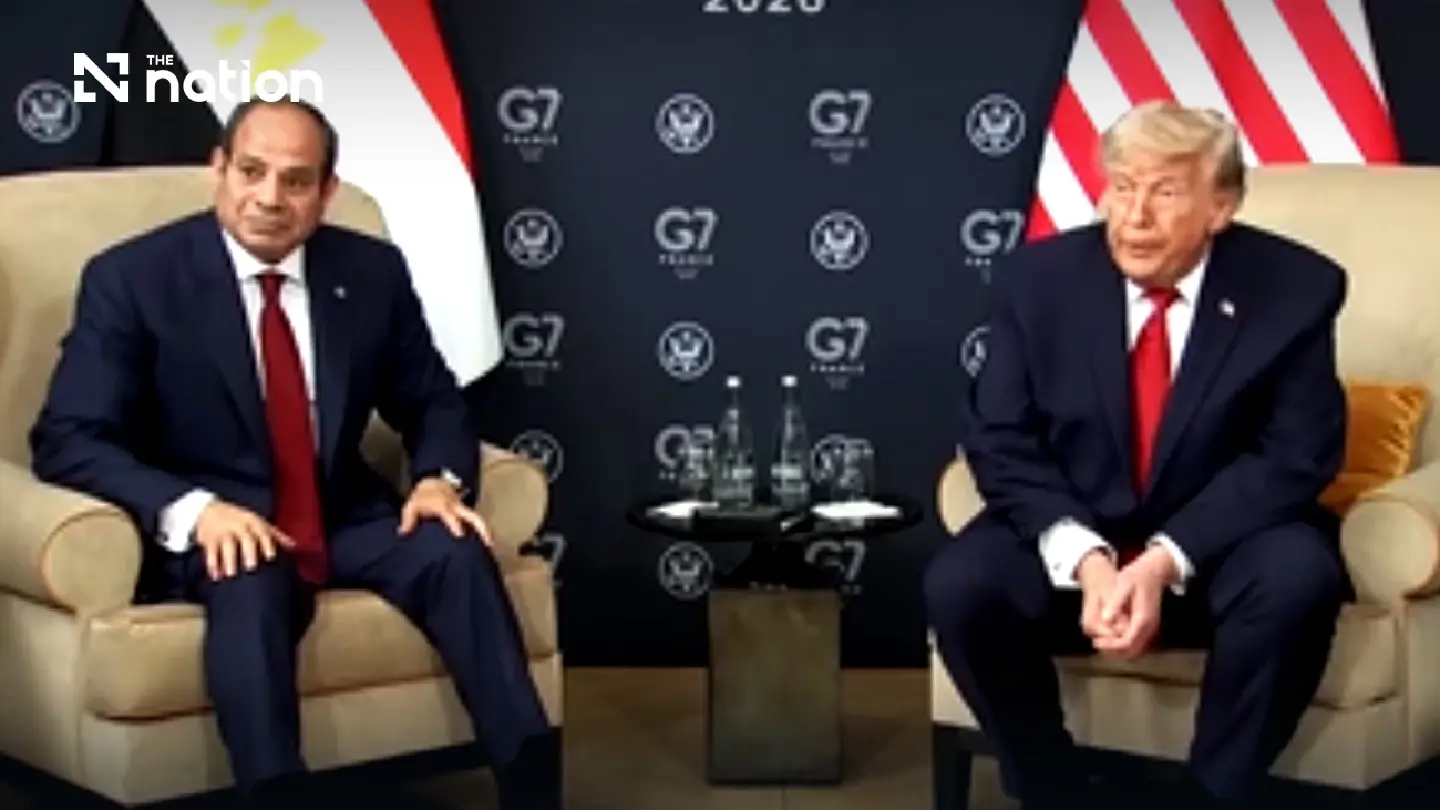


G7 leaders welcomed a US-Iran interim agreement but urged an immediate Lebanon ceasefire as fighting continued despite the truce push
World leaders have welcomed a fragile US-Iran interim agreement aimed at extending a ceasefire and opening the way to a permanent truce, but warned that the diplomatic breakthrough must also halt fighting in Lebanon and address wider security concerns across the region.
The agreement, released by Washington and Tehran on Wednesday, was digitally signed by US President Donald Trump and Iranian President Masoud Pezeshkian, according to officials from both countries. Iran’s foreign ministry said the memorandum had already taken effect.
The deal extends a ceasefire for another 60 days while negotiators work towards a final settlement. A senior US official cautioned, however, that both sides could still walk away before a binding agreement is reached.
Trump, who was attending the G7 summit in France, kept up pressure on Tehran despite the agreement, warning that the United States could resume attacks if Iran failed to honour its commitments. He also said negotiators were working on a permanent truce over the next 60 days.
The 14-point memorandum calls for an immediate end to the war on all fronts, including Lebanon. It also provides for the full resumption of maritime traffic through the Strait of Hormuz, the lifting of a US blockade on Iranian ports, the waiving of US sanctions on Iran, the unfreezing of Iranian assets and a US$300 billion economic rehabilitation plan for the Islamic Republic.
Iran also reaffirmed that it would not build nuclear weapons, a position it has maintained for decades.
The agreement follows months of conflict that began after the United States and Israel launched military action against Iran on February 28. The conflict later widened across the region, pushing up energy prices, reviving inflation concerns and raising fears of food-supply pressure in developing countries.
At their summit in Evian-les-Bains, the leaders of France, Germany, Britain, Japan, Italy, Canada and the United States welcomed the agreement, but made clear that negotiations should go beyond the immediate ceasefire.
In a joint statement, the G7 leaders said talks must address the threats posed by Iran “in the region and beyond” and ensure that Tehran never obtains a nuclear weapon.
The group also demanded an immediate ceasefire in Lebanon, where the US-Iran memorandum calls for a halt to fighting between Israel and Hezbollah. Although violence has eased since the agreement was reached on Sunday, it has not stopped.
Israel was not part of the negotiations and has said it retains the right to use force. Its military is occupying parts of southern Lebanon, while Hezbollah remains a key Iranian-backed force in the country.
Trump also appeared to criticise Israeli Prime Minister Benjamin Netanyahu over Israel’s approach in Lebanon, saying the two had “a little dispute” over the country. Referring to Netanyahu by his nickname, Trump said Israel should use a “softer touch” and did not need to destroy a building every time someone from Hezbollah entered it.
Lebanese state media reported fresh Israeli air strikes and artillery fire in several southern towns on Wednesday. Lebanese security sources said Hezbollah had launched two drone attacks on Israeli forces in the south, although the group did not publicly claim responsibility.
Israel later said five of its soldiers had been injured in two Hezbollah drone attacks in southern Lebanon.
The agreement also carries major economic implications because of the Strait of Hormuz, the narrow but critical waterway between Iran and Oman. Oil prices initially fell on hopes that traffic through the strait would fully resume, with Brent crude dropping below US$80, its lowest level since the opening stages of the US-Iran conflict.
Prices later recovered more than 1% after Trump warned that the United States could return to military action if he was not satisfied with Iran’s conduct.
The diplomatic path remains uncertain. While G7 leaders welcomed the US-Iran deal, European officials have not endorsed Washington’s original decision to go to war without United Nations authorisation. They also remain concerned that Iran may have gained leverage by withstanding US pressure and asserting control over the Strait of Hormuz.
For now, the interim agreement has created a narrow window for negotiation. Whether it becomes a lasting truce may depend not only on Washington and Tehran, but also on whether the violence in Lebanon can be brought under control.
