
China begins trial of digitally upgraded maritime patrol boat
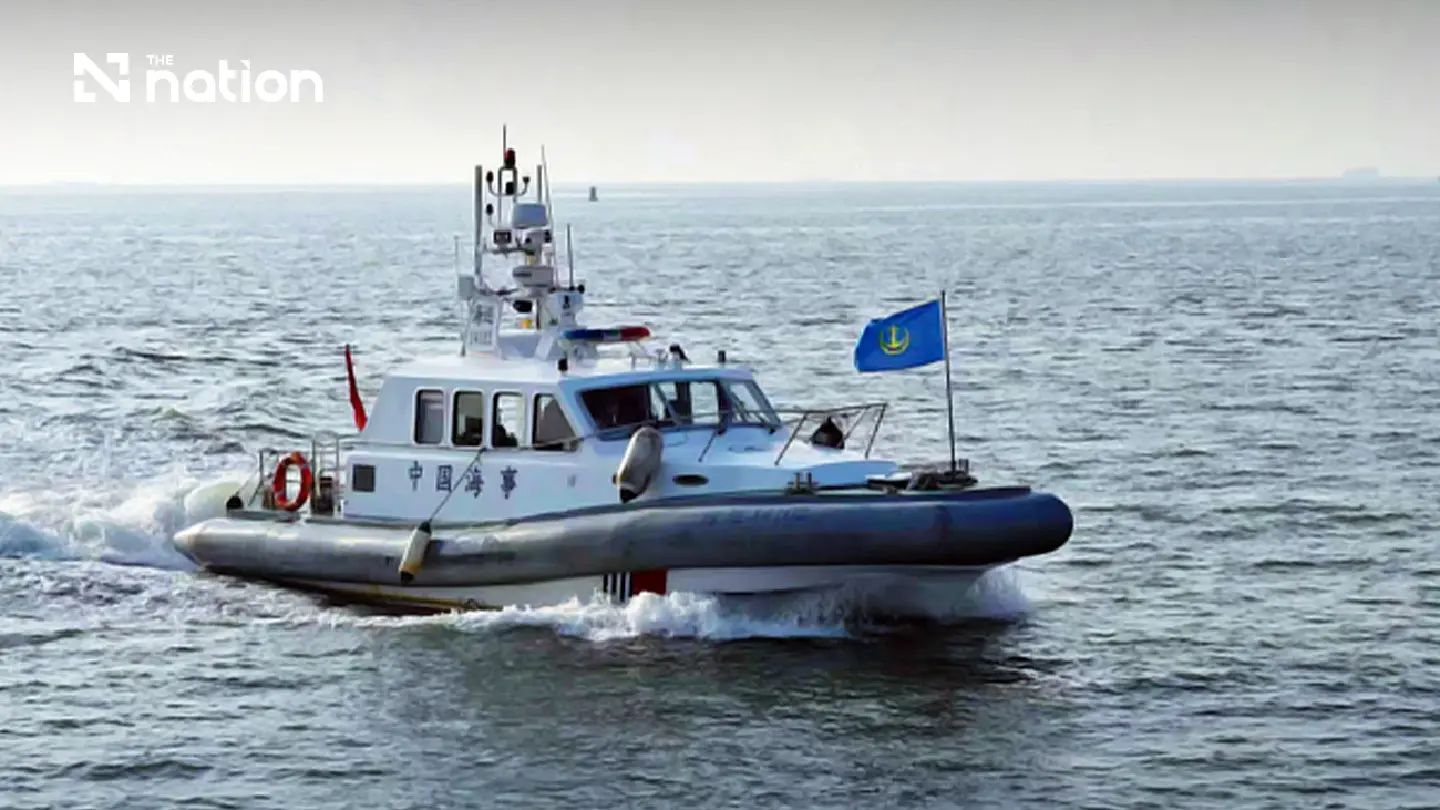


Haixun 14102 combines automated navigation, real-time sensing and human support from land as China expands intelligent and greener shipping systems.
- China is testing the Haixun 14102, an existing 12-metre patrol boat in Shenzhen, which has been retrofitted with digital and intelligent systems.
- The upgrade enables functions like automated navigation, obstacle avoidance, object recognition, and remote operation from a land-based command center.
- The trial aims to test a cost-effective way to enhance maritime law enforcement by assisting officers with technology, rather than building entirely new intelligent vessels.
An existing 12-metre patrol boat in Shenzhen is being used to test how automated navigation and land-based support can be incorporated into maritime law enforcement without commissioning a purpose-built vessel.
The compact and highly manoeuvrable Haixun 14102 entered trial operation in early July and is China’s first maritime law-enforcement craft to undergo an integrated digital and intelligent upgrade, according to the Maritime Safety Administration under the Ministry of Transport.
An intelligent navigation module, multiple sensing devices and a ship-to-shore control platform allow the vessel to adjust its direction, remain on a designated route and examine the water for potential dangers without requiring an officer to steer every manoeuvre.
Its functions also include automated patrols, obstacle avoidance, object recognition and remote operation under supervision from land.
Trial data showed that Haixun 14102 remained within one metre of its intended route during an autonomous journey of 14.2 nautical miles.
In a simulated rescue, it detected, identified and approached a person in the water within three minutes.
The vessel can reach 36 knots and was chosen for the project because it is extensively used for routine patrols, emergency responses and rescue missions.
The technology is intended to assist maritime officers rather than replace them.
Hao Xianlin, head of an airport maritime patrol unit under the Bao’an Maritime Safety Administration, noted that a search-and-rescue mission may continue for 36 or even 48 hours.
In such operations, he explained, integrated sensing can “greatly improve our ability to detect and identify” the person being sought.
That support is particularly relevant in the Guangdong-Hong Kong-Macao Greater Bay Area, where Shenzhen’s busy and often congested waterways are shared by commercial ships, passenger ferries and smaller craft.
Extended periods of visual observation can cause fatigue, while darkness, fog, rough seas and heavy traffic make monitoring more difficult.
Video and sensing information from Haixun 14102 is transmitted to an onshore command centre, enabling officers to follow surrounding conditions in real time and intervene when necessary.
Instead of replacing the original boat, engineers installed navigation, sensing, communications and ship-to-shore systems without changing its principal structure or compromising its existing performance.
Shenzhen maritime authorities regard this approach as less costly and quicker to deploy than constructing an intelligent vessel for a specific purpose.
The Shenzhen pilot is one element of China’s effort to apply artificial intelligence, connected navigation and remote monitoring across one of the world’s largest water transport networks.
The country’s ports handled 18.34 billion metric tonnes of cargo and 354 million twenty-foot equivalent units of containers in 2025, while its navigable inland waterways covered 128,700 kilometres.
As the network has expanded, attention has extended beyond ports, berths and shipping channels to coordination among vessels, navigation facilities, land-based platforms and maritime regulators.
Under the Smart Shipping 2030 Action Plan, issued earlier this year by the Ministry of Transport and three other central government departments, China is seeking greater integration of AI with vessels, ports, waterways, navigation support and maritime supervision.
Emergency rescue, navigation at night or in fog, travel through narrow and winding waterways, waterborne construction and short-distance transport have been identified as priority applications.
By 2027, the country plans to establish at least three comprehensive pilot regions, open more than five trial routes, develop over 10 replicable application scenarios and operate more than 100 intelligent vessels.
Digital development is unfolding alongside a gradual transition to cleaner vessels.
Electric and other new-energy craft are replacing older diesel-powered boats on the Minjiang River in Fujian province and the Lijiang River in the Guangxi Zhuang Autonomous Region.
The change is intended to reduce engine noise, exhaust emissions and pollution risks along scenic waterways.
Sightseeing vessels operating on the two rivers store wastewater, oily residues and rubbish onboard before taking them ashore for treatment, rather than releasing the waste into the water.
The Lijiang River has also introduced a fully electric maritime law-enforcement vessel suited to shallow water, sharp bends and narrow channels.
Navigation infrastructure is being upgraded as well.
At Jiangyin Port in Fujian, navigation aids have been fitted with weather-monitoring and Automatic Identification System devices.
Drones carry out routine inspections, while connected buoys alert approaching vessels to reefs and other dangers.
Chen Jingui, a manager at Fuqing Strait Power Generation, described the upgraded navigation aids as systems that “can now see, hear and give warnings”.
He added that they provide a clearer understanding of conditions when vessels enter or leave the port.
A separate digital maritime platform monitors sightseeing boats throughout their night cruises on the Minjiang River.
By tracking their movements from land, maritime authorities can recognise unusual situations and respond more quickly.
Researchers nevertheless caution against treating intelligent shipping as a matter of simply installing sensors or removing crews.
Yin Yong, a professor at Dalian Maritime University’s Navigation College, explained that even the most sophisticated laboratory simulation cannot reproduce every wave, current or unexpected situation at sea.
At the university’s shore-based digital operation and control centre, researchers receive real-time information from the intelligent research and training vessel Xin Hong Zhuan.
The data include the vessel’s location, engine performance, energy consumption and surrounding sea conditions.
The centre operates as a cockpit on land, providing navigational advice to crews and allowing shore-based personnel to offer support or assume remote control in narrow channels, severe weather or emergencies.
Yin called cooperation between vessels and land-based operators “the most practical model at the present stage”.
Autonomous navigation can play a greater role in open water, while human judgement remains available when conditions become more difficult.
Although many of these projects are still relatively small, they demonstrate how digital and green systems can support quieter sightseeing journeys, more efficient patrols and faster emergency responses.
Wider deployment will require additional trials, inspections and certification, together with operating standards, cyber-security protections and clearly assigned responsibilities for vessel crews and shore-based operators.
Electric vessels will also depend on reliable charging facilities, battery safety systems and arrangements for maintenance and recycling.
As trials involving Haixun 14102 proceed, Shenzhen maritime authorities are refining training, inspection and certification procedures, law-enforcement protocols and maintenance standards.
Findings from the project will be used to assess whether comparable upgrades can be introduced on other maritime patrol and rescue vessels.
Source: China Daily
