
At least 160 killed in Nepal-China floods and mudslides, hundreds missing


More than 400 tourists are missing after floods swept Nepal’s northern border, while Tibet reported 265 people missing in Gyirong
- At least 160 people have been killed and hundreds are missing after floods and mudslides struck the Nepal-China border.
- The disaster is believed to have been triggered by an earthquake-induced glacier collapse, which sent a debris-laden flood into a river.
- The missing include over 400 tourists in Nepal (including 340 foreign nationals) and 265 people in China's Gyirong County.
- The floods destroyed homes, roads, and communication lines, cutting off the affected area and hampering rescue efforts.
At least 160 people have been killed and hundreds remain missing after floods and mudslides devastated communities along the Nepal-China border on Wednesday (August 26, 2026), destroying homes, roads and other infrastructure.
Nepalese police had recovered 157 bodies, while the country’s tourism authorities reported that more than 400 tourists were missing, including about 340 foreign nationals. Chinese authorities confirmed three deaths and 265 missing people in Gyirong County in Tibet.
South Korea separately reported that eight of its citizens working on a hydroelectric project were missing.
The affected area lies on an important route to Kailash Manasarovar in Tibet, which attracts large numbers of pilgrims at this time of year.
Glacier collapse may have triggered floods
Initial assessments by Nepalese officials indicated that an earthquake may have caused the lower section of a glacier to collapse, sending earth and rock into a river and unleashing the floods.
The German Research Centre for Geosciences detected a magnitude 4.4 earthquake approximately seven minutes before the time recorded on surveillance footage of the disaster.
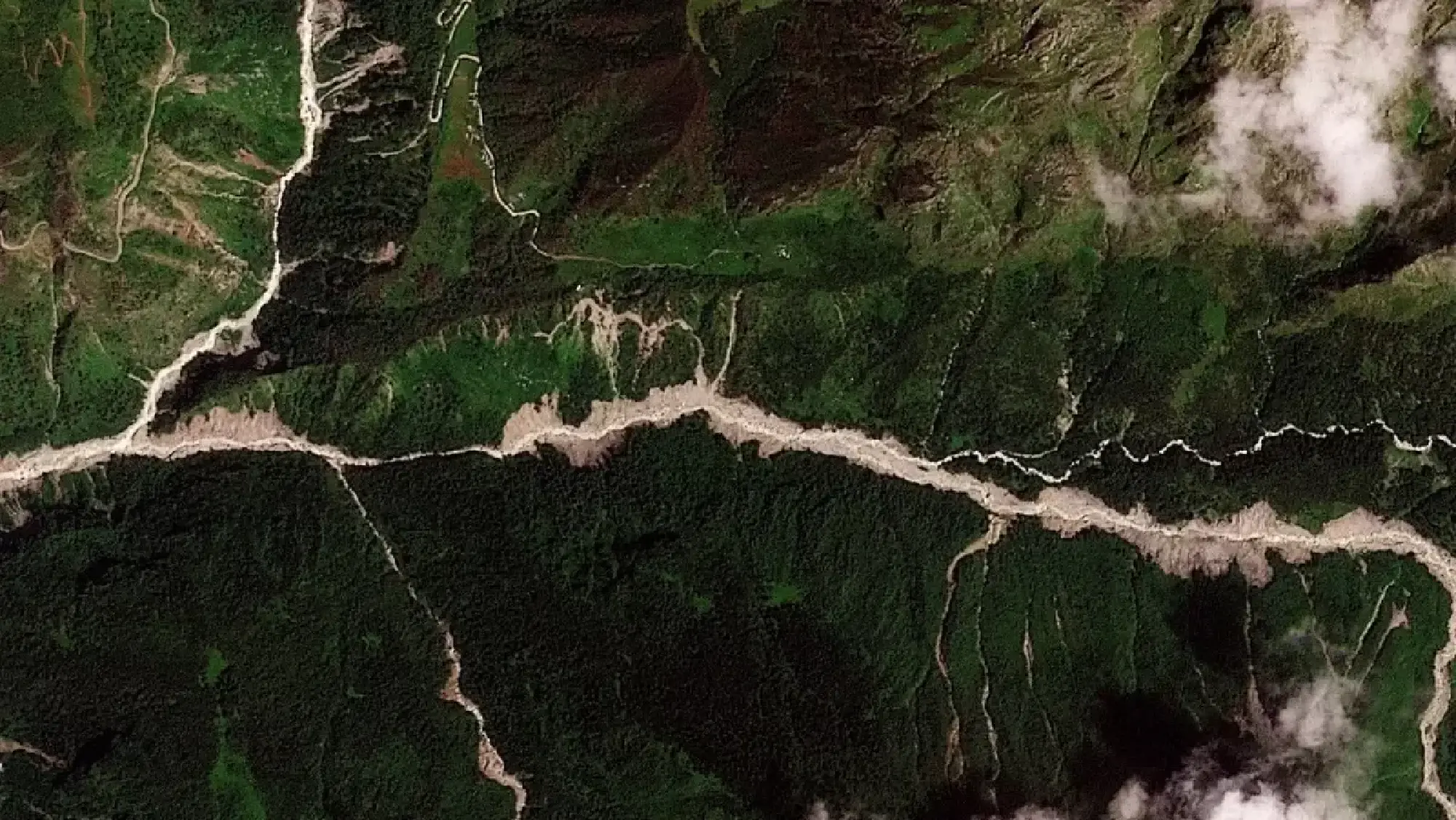
An initial analysis of satellite images indicated that a collapse involving ice and rock may have triggered a debris-laden flood in the Lhende River, about 20 kilometres from Nepal’s Rasuwagadhi border crossing.
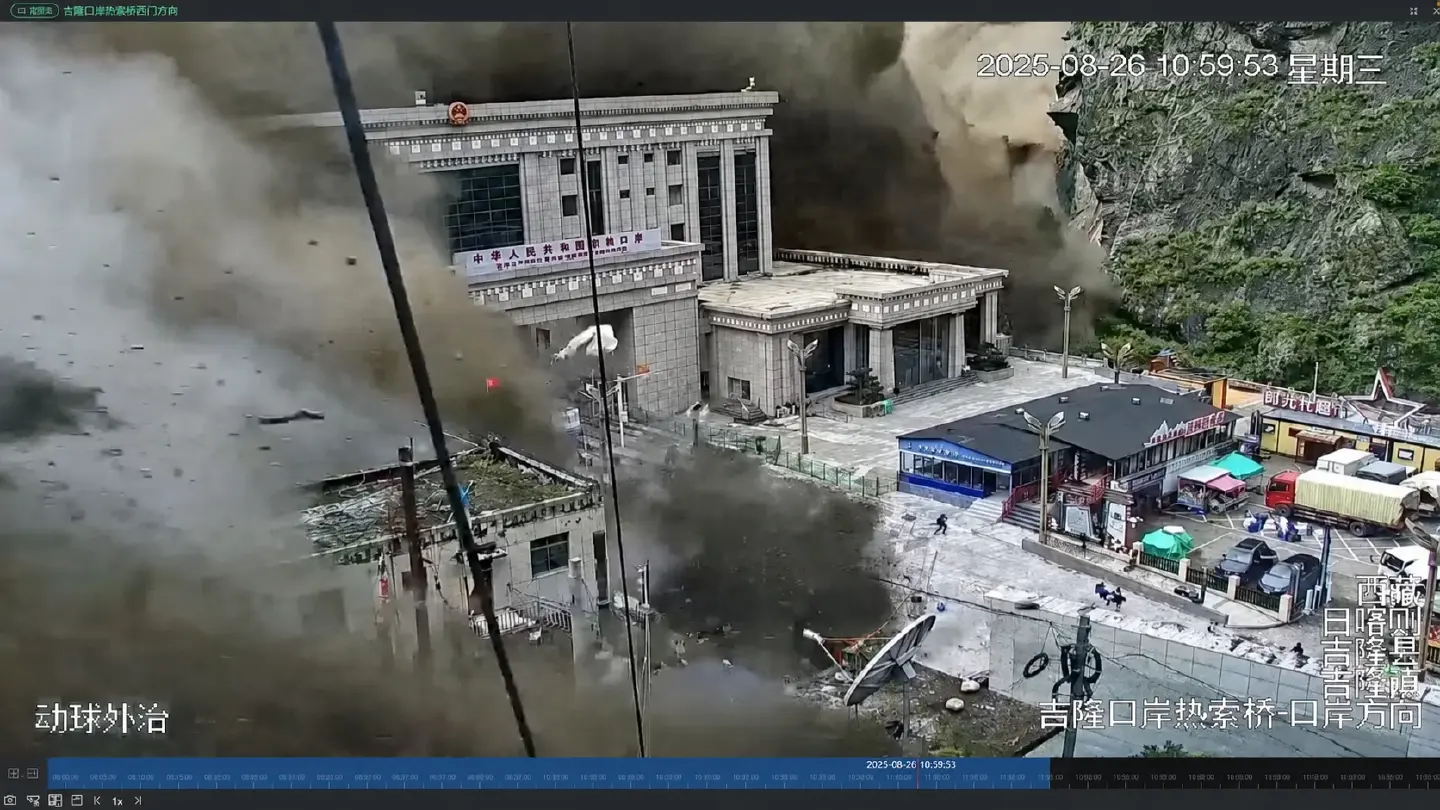
Surveillance footage from the Gyirong crossing showed people running from the approaching mudslide before the torrent engulfed the checkpoint and obscured the camera’s view. Satellite images also showed water carrying rocks and ice from the mountains into the valley.
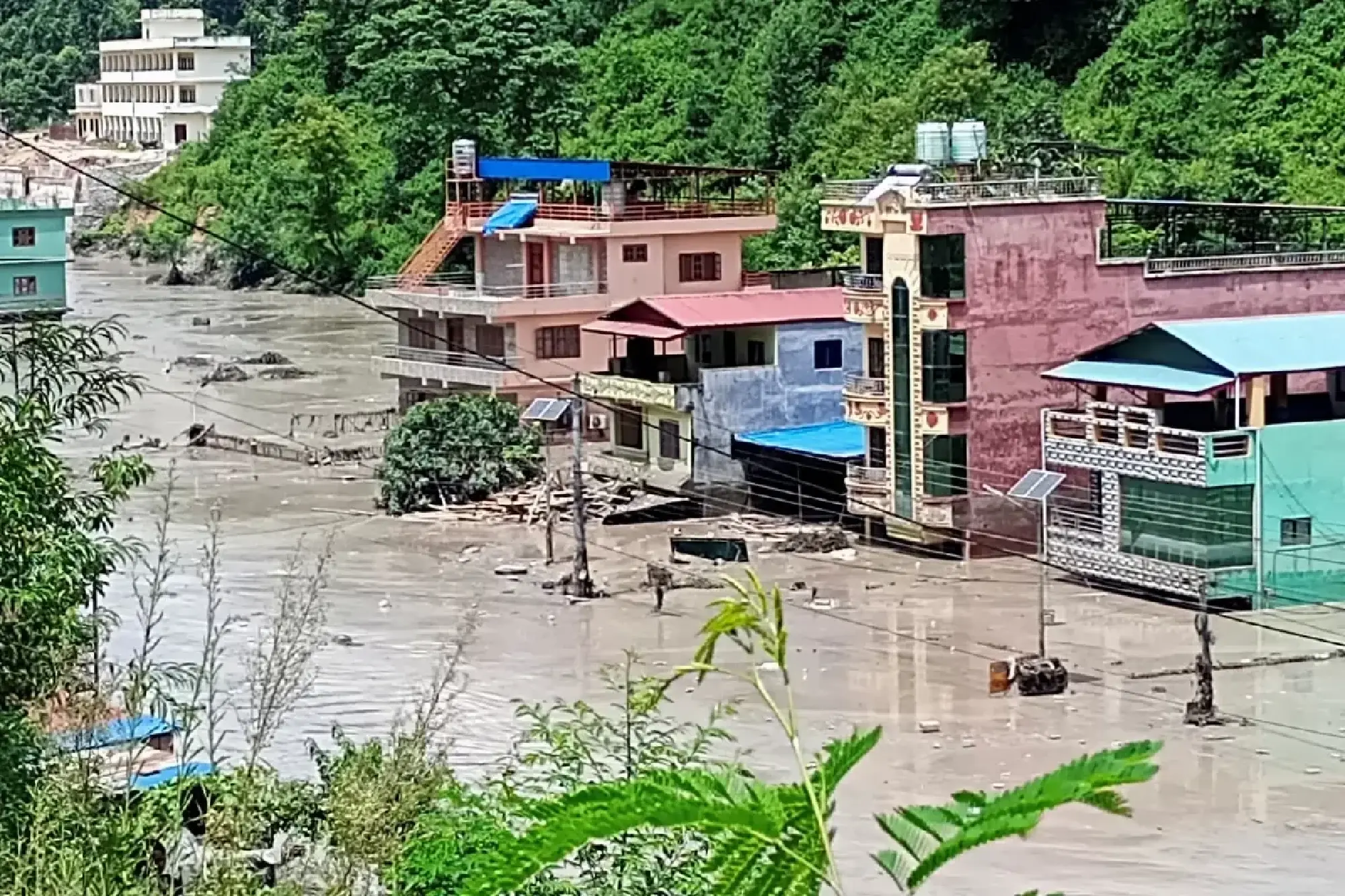
An official in Nepal’s Rasuwa district warned that the disaster had probably caused extensive damage to residents’ property. Images from the affected areas showed mud and floodwater sweeping away vehicles and structures and engulfing villages.
Roads and communications cut
China’s official Xinhua News Agency reported that the landslide occurred on the Nepalese side of the border and affected Gyirong border port, severing roads, communications and electricity supplies. Routes into the crossing were destroyed, preventing rescue teams from establishing contact with the area.
Helicopters were carrying survivors to safety, but damaged roads and bridges continued to obstruct searches for the missing.
Chinese President Xi Jinping called for an intensified search for missing people and ordered improvements to disaster monitoring and early-warning systems.
Flood alerts were also issued in the northern Indian states of Uttar Pradesh and Bihar. Bihar authorities had evacuated about 5,000 people and were preparing to move a further 10,000 to 12,000 residents from areas considered at risk.
