Driving the Next Phase of Thailand's EV Journey: Advancing an Intelligent EV Ecosystem and High-Tech Manufacturing Hub


Thailand's electric vehicle (EV) market has experienced remarkable growth since entering the mass market in 2019. What began with only a few hundred vehicle registrations quickly expanded into the thousands and has continued its upward trajectory. The industry reached a significant milestone in 2025, when annual EV registrations surpassed 120,000 units for the first time, up from approximately 70,000 units in 2023.
Market demand continues to accelerate. According to Thailand's Department of Land Transport, registrations of passenger EVs with up to seven seats—the country's largest EV segment—already exceeded 103,000 units during the first half of 2026 (January–June), approaching the total registrations recorded throughout 2025.
With an expanding lineup of new EV models and the continued entry of global automotive brands into the Thai market, industry observers expect total EV registrations to reach approximately 200,000 units by the end of 2026. This would represent more than 30% of Thailand's passenger vehicle market, enabling the country to achieve its "30@30" target—the national objective of having electric vehicles account for 30% of total vehicle production by 2030—ahead of schedule.
Why Thailand's EV Market Continues to Expand
Several factors have contributed to the rapid adoption of EVs in Thailand.
Rising fuel prices have encouraged consumers to seek more cost-efficient transportation alternatives, making EVs increasingly attractive for everyday use.
Consumers also benefit from a much broader selection of models than ever before. Today's market spans compact city cars, sedans, SUVs, MPVs, sports cars, and even high-performance electric vehicles delivering more than 1,000 horsepower.
Electric powertrains provide outstanding driving performance through instant torque, rapid acceleration, and high overall efficiency. At the same time, many EV models are now competitively priced, with numerous offerings available below the price of comparable internal combustion engine (ICE) vehicles.
Consumer confidence has also improved considerably. Early concerns surrounding product quality, safety, long-term maintenance, resale value, and ownership experience have gradually diminished. While some challenges remain, many consumers now conclude that the overall benefits—including lower operating costs, improved driving performance, and advanced technology—far outweigh the drawbacks.
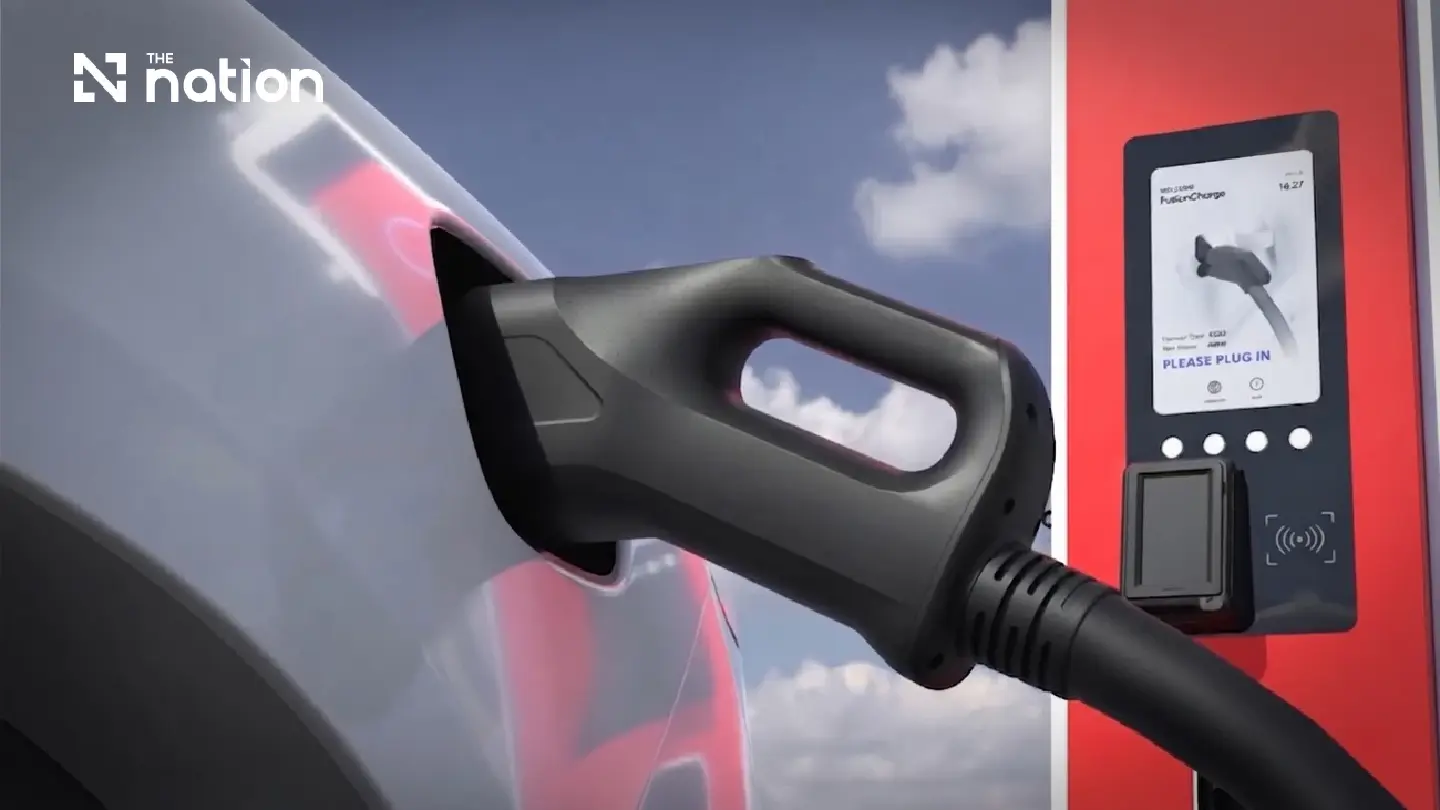
Another barrier that has eased is charging infrastructure. Public charging availability was initially viewed as a major concern, but better infrastructure planning, greater consumer familiarity with charging behavior, and continuous investment have significantly improved convenience.
According to the Electric Vehicle Association of Thailand (EVAT), as of April 2026 Thailand had 4,817 public charging locations with a total of 14,486 charging connectors, including 9,049 DC fast chargers and 5,437 AC chargers.
Although charging infrastructure continues to expand, it still trails the growing EV fleet. Thailand now has more than 487,000 registered electric vehicles, meaning the ratio of public chargers to vehicles will require continued investment as EV adoption accelerates.
Beyond Vehicle Sales: Building a Complete EV Ecosystem
While demand continues to grow, Thailand's next challenge lies on the manufacturing side.
The government's 30@30 strategy is not solely focused on domestic EV adoption; it also aims to establish Thailand as the regional production hub for electric vehicles. During the first five months of 2026, domestic production of passenger EVs and electric SUVs reached 21,396 units, representing a modest 4.4% year-on-year increase. Although production is growing, further expansion will be essential if Thailand is to achieve its long-term manufacturing ambitions.
Industry participants remain optimistic as several newly established production facilities continue ramping up operations.
However, becoming an EV manufacturing hub requires much more than assembling vehicles. Developing a comprehensive ecosystem—including batteries, semiconductors, electronic systems, software, charging infrastructure, and local component suppliers—is equally important.
Thailand has long been one of Southeast Asia's strongest automotive parts manufacturing bases. As the global industry transitions from internal combustion engines to electrified mobility, ensuring that existing suppliers successfully adapt to next-generation technologies will be critical to maintaining the country's competitiveness.
From Electric Vehicles to Intelligent Mobility
Technology and innovation will increasingly define the next phase of Thailand's automotive industry.
Future export competitiveness will depend not only on manufacturing capability but also on delivering intelligent, software-driven mobility solutions that meet evolving global demand.
Industry experts have long identified four pillars shaping the future of mobility:
- Electrification
- Intelligence
- Connectivity
- Sharing
Thailand has already made significant progress in electrification, while intelligent vehicle technologies are rapidly emerging.
Connectivity, however, remains an area requiring substantial development. Vehicle-to-vehicle (V2V), vehicle-to-infrastructure (V2I), and cloud-based connectivity will play a crucial role in improving road safety, traffic efficiency, predictive maintenance, and the overall driving experience.
Achieving these capabilities will require advanced digital technologies, artificial intelligence, cloud computing, and high-speed communications networks. Intelligent systems capable of predicting road conditions, preventing accidents, enabling advanced driver-assistance systems (ADAS), and ultimately supporting autonomous driving will become increasingly important.
The fourth pillar—shared mobility—also presents significant opportunities. More efficient vehicle sharing and mobility services could further accelerate EV adoption while supporting more sustainable urban transportation.
A Platform for Collaboration
As Thailand enters the next stage of EV development, collaboration across government, industry, technology providers, and academia has become increasingly important.
Against this backdrop, the Intelligent EV Industry CXO Forum brings together policymakers, technology leaders, automotive executives, and industry experts to exchange ideas and explore strategies for accelerating Thailand's intelligent EV ecosystem.
Featured speakers include:
- David Li, Chief Executive Officer of Huawei Technologies (Thailand), who will share insights into global automotive transformation and the convergence of intelligent electric vehicles, artificial intelligence (AI), cloud computing, connectivity, and data-driven mobility.
- Jiang Wei, Minister Counsellor, Embassy of P.R.China in the Kingdom of Thailand., who will discuss strengthening Thailand–China cooperation beyond manufacturing toward joint research, development, and innovation, supporting Thailand's ambition to become ASEAN's regional hub for electric vehicles and intelligent mobility.
- Liu Xiaoshi, Vice President of the China EV100 Think Tank, who will explain how artificial intelligence is transforming conventional automobiles into software-defined, connected Intelligent EVs.
The forum will also feature panel discussions with leading experts, including representatives from Thailand's Board of Investment (BOI), the Thailand Automotive Institute, the Electric Vehicle Association of Thailand (EVAT), as well as executives from TRUE, PTTOR, SPARK EV, and other key organizations.
By bringing together leaders from both the public and private sectors, the forum aims to foster collaboration, accelerate innovation, strengthen Thailand's EV ecosystem, and reinforce the country's long-term ambition to become Southeast Asia's leading hub for intelligent mobility and high-technology manufacturing.