
Global Leaders Gather at AIT for World Toilet Summit 2026 to Advance Safe and Sustainable Sanitation
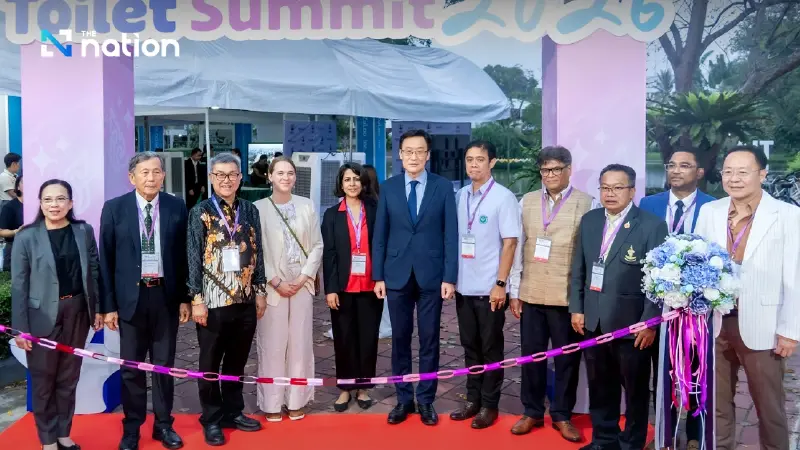


Global partners unite to address the sanitation crisis affecting 3.4 billion people worldwide, advancing innovation, investment, and partnerships to improve access to safe sanitation and quality of life.
Pathum Thani, Thailand, 17 November 2026 – The Asian Institute of Technology (AIT), through its Global Water & Sanitation Center (GWSC), together with the World Toilet Organization (WTO), the Department of Health under Thailand’s Ministry of Public Health, and the Bangkok Metropolitan Administration (BMA), is hosting the World Toilet Summit 2026 from 17–19 November 2026 at AIT in Pathum Thani, Thailand. The three-day summit brings together government leaders, international organizations, financial institutions, industry representatives, and academics, to address the challenges in developing safe, inclusive, and sustainable sanitation systems. Under the theme “Safe Toilets, Reused Resources, and Healthy Communities,” the event focuses on connecting research and innovation with policy and investment, transforming knowledge into practical, scalable sanitation solutions that improve public health, protect the environment, and enhance quality of life for communities worldwide. The summit concludes on World Toilet Day and coincides with the 25th anniversary of the World Toilet Organization (WTO).

Professor Pai-Chi Li, President of AIT, underscored the role of research-driven innovation and international partnerships in advancing practical sanitation solutions. “Safe sanitation is a matter of human dignity, public health, and environmental sustainability. At AIT, we believe in creating social impact through innovation. This summit provides an important platform to strengthen partnerships, turn research into practical solutions, and advance sustainable sanitation that improves quality of life worldwide,” said Professor Li.
Despite progress in global development, access to safely managed sanitation remains a major challenge. Approximately 3.4 billion people worldwide still lack access to safely managed sanitation services, posing serious risks to public health, quality of life, and the environment. Rapid urbanization and climate change are placing additional pressure on sanitation infrastructure and services, complicating efforts to provide safe and equitable access. The Summit highlights the need to give sanitation greater attention in global development efforts and brings together expertise in science, technology, public policy, and investment to identify solutions suited to local needs. It also supports progress toward Sustainable Development Goal 6 (SDG 6): Clean Water and Sanitation.

A key highlight of the summit is the effort to translate international collaboration into concrete action in Thailand. AIT, the Ministry of Public Health, and the Office of the National Economic and Social Development Council (NESDC) are scheduled to sign a Memorandum of Understanding (MoU) to jointly develop an investment and implementation plan for fecal sludge management in pilot cities across Thailand. The agreement is expected to support more efficient and sustainable sanitation management in urban areas. The summit will also feature innovative sanitation technologies, including fecal sludge management solutions, waste-to-resource approaches based on circular economy principles, and climate-resilient sanitation systems. Technology demonstrations will further highlight opportunities to apply research findings in real-world settings and scale up effective solutions across cities and communities in the region.
Dr. Thiti Sawangtham, Director-General of the Department of Health, Ministry of Public Health, Thailand, highlighted the importance of safe, accessible, and inclusive public toilets in supporting healthier cities. “Clean, safe, and accessible public toilets are essential to protecting public health and improving quality of life, particularly in rapidly growing cities like Bangkok. We are committed to raising public toilet standards, strengthening wastewater and fecal sludge management, and adopting innovative technologies. Through this summit, we aim to strengthen international collaboration and translate knowledge and innovation into practical solutions for healthier and more sustainable cities,” said Dr. Thiti.
For AIT, the summit reflects its ongoing work to address sanitation challenges through research, innovation and capacity building. Through GWSC, AIT advances research, capacity building, and policy engagement in water and sanitation across Asia and Africa. Co-hosting World Toilet Summit 2026 provides an important platform for strengthening partnerships among researchers, governments, international organizations, and the private sector, while promoting the practical application of sanitation technologies, particularly in underserved communities. These efforts aim to support the development of locally appropriate sanitation solutions that can be adapted and scaled across regions, contributing to long-term improvements in public health and environmental sustainability.

The Gates Foundation, which has partnered with AIT since 2012 and helped establish GWSC in 2022, highlighted the need to pair new technology with the systems that allow it to scale. Ms. Sakshi Gudwani, WASH Asia Lead at the Gates Foundation, pointed to AIT’s Living Lab, where researchers, manufacturers, operators and public agencies test solutions in real conditions, alongside GWSC’s technical assistance work with governments and development partners. “Technology without systems stays in the lab. Systems without technology have nothing new to scale. We need both, moving together,” said Ms. Gudwani.
Looking ahead, Ms. Gudwani expressed hope that the summit will lead to concrete collaboration among cities, researchers, companies and development partners. “The lasting opportunity is to build regional capability that continues to generate solutions, improve decisions and support reliable sanitation services,” she said.
Mr. Jack Sim, Founder of WTO, reflected on 25 years of efforts to advance global sanitation through advocacy, policy reform, and international collaboration. “Over the years, we have seen how awareness, political commitment, and investment can transform sanitation systems and improve people's lives. The remarkable improvements in public toilets across Bangkok and other cities demonstrate what can be achieved through collective action. This summit brings together passionate experts and partners to exchange solutions, strengthen cooperation, and accelerate progress toward better sanitation worldwide,” said Mr. Sim.
Professor Thammarat Koottatep, Co-Director of AIT-GWSC, emphasized the importance of connecting research, technology, and implementation. “Providing access to toilets is only the first step. The real challenge lies in ensuring that waste is safely treated and managed. Through this summit, we aim to bring together researchers, governments, and industry partners to share knowledge, advance innovative sanitation technologies, and encourage greater investment in practical, affordable solutions that protect public health and the environment,” said Prof. Thammarat.
The programme also brings together policy dialogue, technology exchange, and community engagement. The summit aims to translate discussion and partnerships into practical action to expand access to safe and inclusive sanitation worldwide. It will conclude on 19 November, World Toilet Day, with the presentation of a Conference Declaration and Call to Action, calling for greater cooperation in policy, investment, and innovation to advance sustainable sanitation systems and resource recovery.
By bringing together global expertise and strengthening international partnerships, the summit aims to accelerate progress in closing sanitation gaps, reducing inequalities, and creating healthier communities. The discussions and partnerships established during the summit are expected to support practical solutions, encourage investment in sustainable sanitation infrastructure, and strengthen cooperation among governments, research institutions, development partners, and the private sector. These collective efforts mark an important step toward a more sustainable sanitation future, improving quality of life for both present and future generations.
