
Thailand advances climate bill as global warming risks intensify
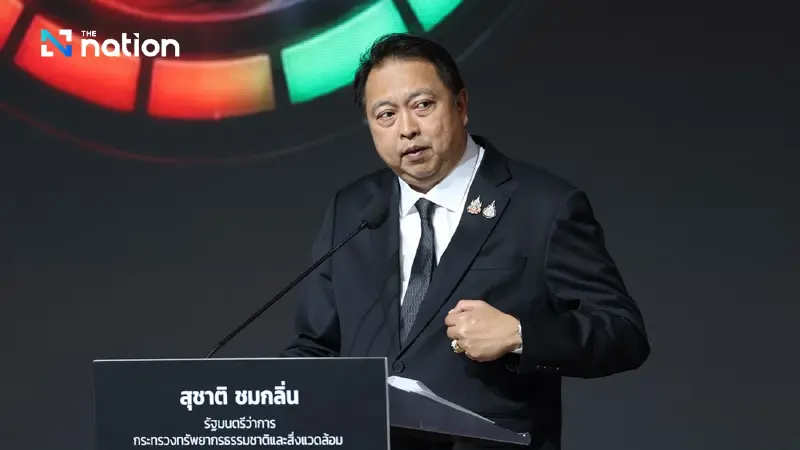


Thailand’s climate change bill could reach Parliament within six months, with proposed emissions rules for major industries to help Thailand achieve net zero by 2050.
- Thailand's landmark climate change bill is nearing the final stages of review and is expected to be presented to parliament within six months.
- The legislation aims to establish a national framework for reducing greenhouse gas emissions, with the goal of achieving net zero by 2050 and enhancing business competitiveness.
- Key measures include an emissions trading system and emissions allowances, which will initially apply to large industrial firms before being extended to smaller enterprises.
- This legislative push is a response to Thailand's significant vulnerability to the impacts of global warming, despite being a minor contributor to global emissions.
Thailand’s landmark climate change bill could reach the House of Representatives within six months as the government steps up efforts to reduce greenhouse gas emissions, strengthen business competitiveness and tackle the growing risks of global warming.
Speaking at the “Sustainability Forum 2027 – The Race Against Global Warming”, hosted by Bangkokbiznews on Wednesday (November 25), Suchart Chomklin, Minister of Natural Resources and Environment, revealed that the review of the draft legislation was nearing completion, with only the final nine sections, which deal with penalties, still under consideration.
He described the proposed legislation as a historic milestone that would establish a national roadmap for emissions reduction, supported by regulations, enforcement mechanisms and penalties, to help Thailand achieve net zero by 2050.

Climate bill to strengthen business competitiveness
Elaborating on the proposed legislation, Komest Putthasorn, Deputy Director-General of the Department of Climate Change and Environment (DCCE), explained that the bill, comprising 14 chapters and 105 sections, was under review by the Council of State’s seventh committee and was expected to come into force in 2027.
He stressed that the proposed legislation was intended to foster shared responsibility for tackling climate change while strengthening the competitiveness of Thai enterprises and ensuring a level playing field.
“The climate change bill is not something to be afraid of, nor is it designed to impose punishment. It is about a responsibility that we all share,” he said.
The legislation would introduce greenhouse gas accounting, emissions baselines, emissions allowances and an emissions trading system, with the involvement of the Thailand Greenhouse Gas Management Organization (TGO).
The law would initially apply to large industrial operators, with the allocation of emissions allowances taking into account the volume and types of greenhouse gases they emit.
The requirements would gradually be extended to small and medium-sized enterprises (SMEs), giving them time to adjust while minimising disruption to their operations.
Komest noted that this phased approach would help Thai businesses navigate the low-carbon transition and strengthen their position in international markets.
Why Thailand cannot afford to ignore global warming
Despite accounting for less than 1% of global greenhouse gas emissions, Thailand ranks among the countries most vulnerable to the impacts of climate change, according to Komest.
“We cannot tackle global warming by focusing solely on adapting to its impacts. We must also reduce greenhouse gas emissions at source. Otherwise, we will not achieve net zero,” he explained.
Under its nationally determined contribution (NDC), Thailand aims to reduce net greenhouse gas emissions by at least 47% from 2019 levels by 2035, paving the way for net zero by 2050.
Achieving these targets would require close collaboration between government agencies, the private sector and civil society.

Government accelerates transition to clean energy
Suchart highlighted the importance of pursuing a two-pronged strategy: cutting greenhouse gas emissions while increasing the amount of carbon absorbed by forests.
Among the government’s key initiatives is a programme to support the installation of rooftop solar panels on one million homes, alongside efforts to accelerate the transition away from fossil fuels.
The government is also promoting the use of electric cars and motorcycles, as well as the introduction of electric buses into public transport networks in Bangkok and Chiang Mai.
The minister also pointed to growing private-sector participation in the green transition, noting that some logistics companies had already placed orders for hundreds of electric vehicles.
International funding to support industrial transition
International financial support would also play an important role in helping Thai businesses adopt cleaner production methods.
According to the minister, the World Bank had provided US$1 million in initial funding to develop an operational framework, followed by an additional 80 million baht to support revisions to carbon credit legislation and the development of a management platform.
He added that Thailand had secured up to 800 million baht in grant funding at the COP31 climate conference. The funds would help industries adopt cleaner production processes.

Climate action is a shared national responsibility
Beyond legislation and financial support, Suchart stressed that tackling global warming required a nationwide effort rather than government action alone.
“Addressing climate change is not something a minister or ministry can do alone. The whole country must work together, and young people are particularly important,” he remarked.
He called for greater opportunities for young people from all provinces to participate in international climate conferences, regardless of their families’ financial circumstances, and emphasised the need to translate their proposals into practical action.
Suchart emphasised that the success of global climate commitments should ultimately be judged by action rather than promises.
With younger generations set to inherit the consequences of today’s decisions, he urged all sectors to prioritise people’s quality of life and the country’s long-term sustainability.
“If we do not start in our generation, we will never get started. We have to start today,” he concluded.
