
Bangkok Airways Scales Back U-Tapao Phase One to Unlock Ecosystem Growth
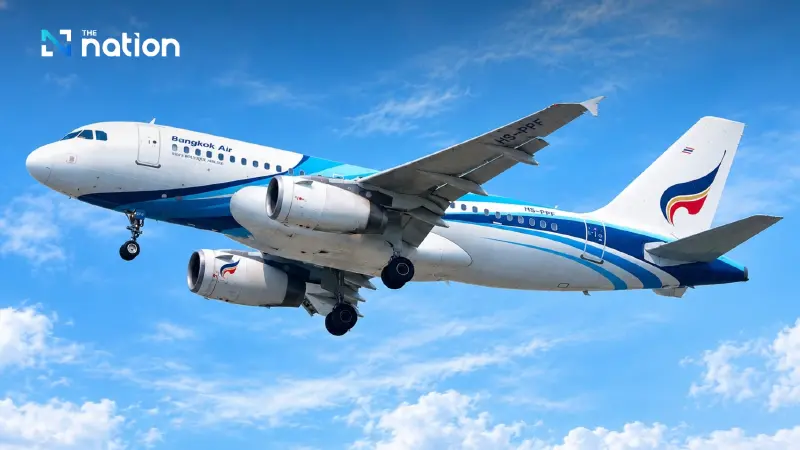


Airline trims initial U-Tapao capital outlay by roughly 70% while expanding Samui capacity, ATR fleet, and airport services to defend margins in 2027
- Bangkok Airways is reducing its initial capital expenditure on the U-Tapao airport's first phase by approximately 70%, lowering the initial passenger capacity from 10 million to 3 million per year.
- This move is part of a strategy to redirect funds and focus on strengthening its integrated "Aviation Ecosystem", which includes its airline, airports, catering, ground handling, and MRO services.
- The freed-up capital will support other growth initiatives, including a THB 3 billion upgrade to double Samui airport's capacity and the addition of several new ATR 72-600 aircraft to its fleet.
- The decision to scale back the U-Tapao project was influenced by delays in the high-speed rail link, prompting a revised plan centered on existing road and air connectivity.
Airline trims the initial U-Tapao capital outlay by roughly 70% while expanding Samui capacity, the ATR fleet, and airport services to defend margins in 2027.
Bangkok Airways Public Company Limited is recalibrating its capital deployment for 2027 and beyond, scaling back initial spending on the U-Tapao airport development while leaning on its integrated Aviation Ecosystem to cushion fuel volatility and supply-chain bottlenecks.
Outlined at a media briefing on Monday 23 November 2026, the strategy pairs disciplined phasing at flagship infrastructure projects with targeted fleet additions and recurring revenue from ground, cargo, and catering units.
The most consequential shift involves the U-Tapao International Airport and Eastern Aviation City project, executed under U-Tapao Aviation Co., Ltd.
Rather than waiting on delayed high-speed rail links connecting three airports, investors have restructured phase one around road highways and existing air connectivity.
Initial passenger capacity for phase one has been lowered from 10 million to 3 million passengers per year, cutting initial terminal and apron capital expenditure by roughly 70% to no more than THB 10 billion.
The overall concession framework remains intact at roughly THB 290 billion and an eventual capacity of up to 60 million passengers annually as demand scales.
Construction on U-Tapao's first phase is expected to begin in the first quarter of 2027, taking three to four years with full commercial operations targeted for 2031.
In the interim, the group is negotiating with the Royal Thai Navy's U-Tapao airport authority to manage Terminal 2 to attract partner airlines and build early traffic.

It also plans a THB 1 billion maintenance, repair, and overhaul (MRO) hangar on roughly 30 rai, built over 1.5 to two years to accommodate two narrow-body jets such as the Airbus A320 at once—starting with its own fleet before serving third-party carriers.
Management frames the business around a multi-pronged Aviation Ecosystem designed to reduce reliance on pure airline operations and generate independent cash flows.
"Aviation business will grow strongly when related businesses grow and move forward together," said Puttipong Prasarttong-Osoth, chief executive officer and president of Bangkok Airways. "The starting point of this ecosystem comes from the airline as the core, supported by airports, catering, ground handling, air cargo, training centres, and MRO—which not only strengthen service efficiency but also allow each unit to grow and generate revenue independently from new customers."

Alongside its boutique airline—which serves 14 domestic and five international routes with 22 aircraft—the group owns and operates airports in Samui, Trat, and Sukhothai.
Its aviation-related portfolio spans Bangkok Air Catering (BAC), ground handling under Bangkok Flight Services (BFS Ground / BMS), air cargo via WFS-PG Cargo (BFS Cargo), pilot and aviation training at Bangkok Air Aviation Training Center (BATC) in Sukhothai, and MRO.
At Samui—which generates roughly 72% to 80% of airline passenger traffic and revenue—Bangkok Airways plans a THB 3 billion upgrade on its existing footprint to raise annual capacity from 3 million to 6 million passengers.

Work is slated to start in early 2027 and finish in 2030 across four to six sub-phases to avoid disrupting flights, including expanding departure gates from seven to 11, increasing check-in counters to 40, and doubling commercial space from 2,000 to 4,000 square metres, alongside a planned proposal to the Civil Aviation Authority of Thailand (CAAT) to adjust passenger service charges (PSC).
Fleet planning directly addresses tight global aviation supply chains and spare parts delays. Bangkok Airways plans to add six ATR 72-600 turboprops—two arriving in late 2026 and four in 2027—bringing fleet size from 22 aircraft toward 24 or 28 depending on scheduled phase-outs, while the official press release notes a broader plan to acquire 10 to 12 ATR 72-600s.
"Amid ongoing volatility in the aviation and tourism industries, Bangkok Airways remains focused on aligning its route network with travel demand, improving fleet utilisation, and maintaining cost efficiency," Puttipong said.

He added that the ATR 72-600 offers lower fuel burn per seat on shorter, fluctuating routes while acting as an operational reserve to prevent flight cancellations when core aircraft wait on spare parts.
For the first nine months of 2026, Bangkok Airways posted total revenue of THB 21.09 billion (THB 21,093 million), up from THB 19.99 billion a year earlier, alongside net profit of THB 3.70 billion (THB 1.30 billion in the third quarter on THB 7.18 billion of revenue).
"For the first nine months of 2026, Bangkok Airways recorded total revenue of THB 21.09 billion, up from THB 19.99 billion in the same period last year," said Anawat Leelawatwatana, senior vice president for finance and accounting. "Passenger transportation revenue accounted for THB 14.05 billion, while passenger service revenue contributed THB 4.44 billion."
Across 36,616 flights, the carrier transported 3.2 million passengers at an 81% average load factor—up five percentage points year on year—with Samui reaching an 87% load factor.
International arrivals into Thailand totalled 20.02 million in the first nine months of 2026, with third-quarter arrivals from Europe and the Middle East up 4%, while US demand rose 24%.
Europe and the Middle East accounted for 55% of passenger revenue (led by Germany, the UK, and France), while e-commerce generated 47% of passenger revenue, travel agents 25%, and codeshare and interline partners 21%. Airport-related subsidiaries underpinned group earnings during the nine-month period.

Bangkok Air Catering generated THB 1.02 billion in revenue, up 9%, with net profit jumping 37% to THB 156 million. BFS Ground recorded revenue of THB 2.58 billion, up 1%, and net profit of THB 324 million, while BFS Cargo posted revenue of THB 2.27 billion, up 12%, and net profit of THB 951 million, up 8%.
Airports of Thailand (AOT) also approved a 3.5-year operating extension for these three Suvarnabhumi airport-related activities, or until new private operators are appointed.
Cost discipline remained central against an average nine-month jet fuel price of USD 145 per barrel, which drove third-quarter fuel costs up 35% to THB 1.23 per available seat kilometre (ASK), partially cushioned by hedging.

Revenue per ASK stood at 6.53 satang against unit cost of 5.46 satang, EBITDA margin reached 29.9%, and cash and bank deposits stood at roughly THB 10 billion—nearly 20% of THB 53 billion in total assets.
Looking into 2027, Bangkok Airways targets roughly 2% revenue growth and continues to adjust capacity dynamically. Advance bookings from December 2026 through June 2027 (as of 16 November 2026) remain heavily weighted toward Samui at 66%, followed by other domestic routes at 28% and international routes at 6%.
