
AI demand extends Thai electronics order books beyond three years
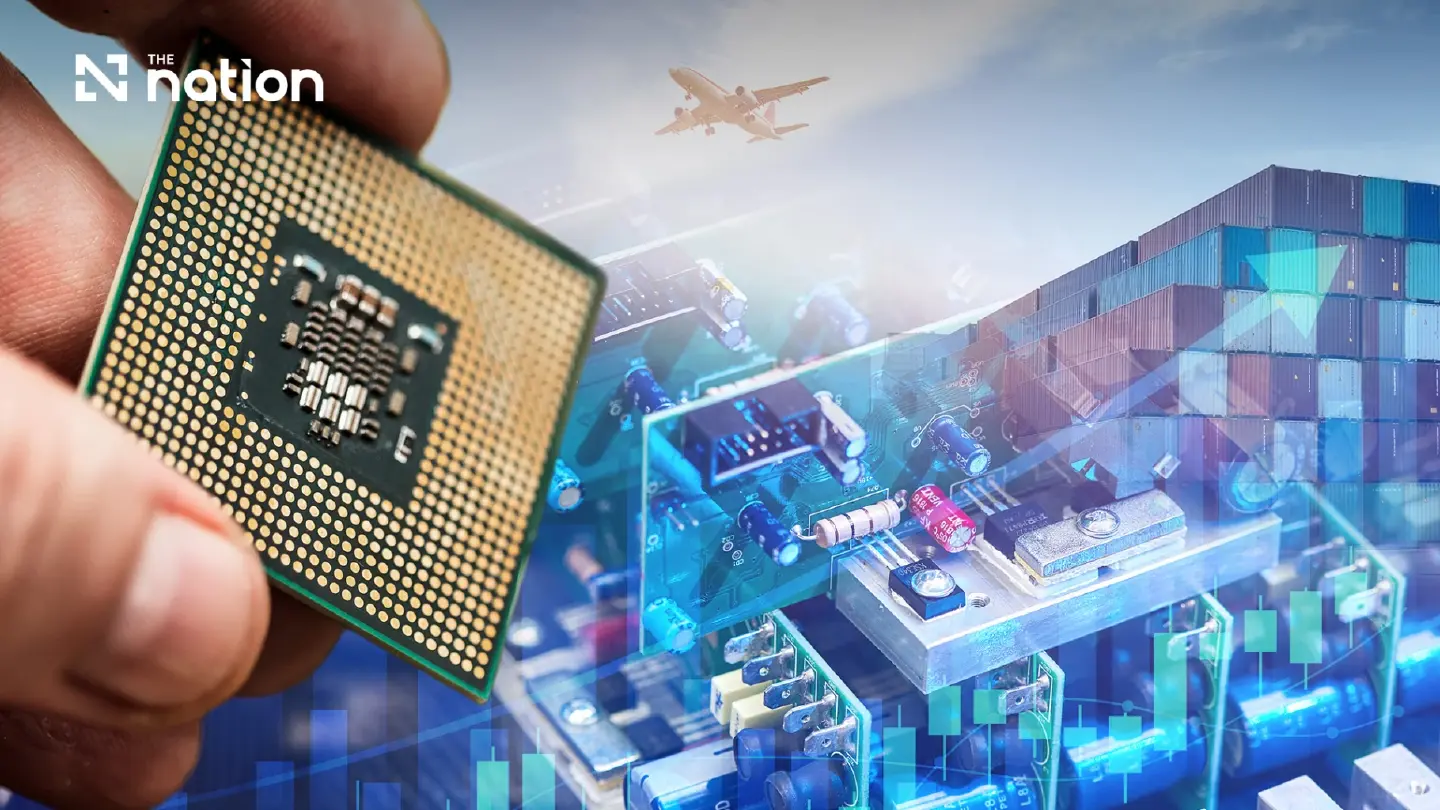


Thailand's electronics exports reached THB1.63 trillion in the first half of 2026, up 46%, while major electronics companies had orders booked 3–5 years ahead.
- A global surge in demand for components used in artificial intelligence (AI) and data centres is extending the order books of major Thai electronics companies to 3–5 years.
- Industry experts describe the current growth cycle as unprecedented, identifying the global AI movement as the main force driving this expansion.
- This AI-driven demand has fueled a sharp increase in Thailand's electronics export value, which grew 46% in the first half of 2026 compared to the same period a year earlier.
Thailand's electronics industry is entering a significant upcycle as artificial intelligence (AI) and data centres accelerate global demand for components, with a clear impact on the country's production base.
Export value rose steadily from THB1.56 trillion in 2022 to THB2.39 trillion in 2025, while exports in the first six months of 2026 had already reached THB1.63 trillion, up 46%.
Major electronics companies now have orders booked 3–5 years ahead, opening the way for a new wave of technology-related industry and investment.
Electronics exports continue to grow
Thailand's electronics export figures over the past five years show steady growth.
Export value was THB1.56 trillion in 2022, up 16%, and THB1.59 trillion in 2023, up 2%.
It then rose 16% to THB1.85 trillion in 2024 and 29% to THB2.39 trillion in 2025.
In the first six months of 2026, exports had already reached THB1.63 trillion, up 46% from the same period a year earlier, clearly indicating that the industry's upward momentum remained strong.

Assoc Prof Dr Aat Pisanwanich, a lecturer in the Faculty of Economics at Rangsit University and an expert in international economics and the economies of the Association of Southeast Asian Nations (ASEAN), told Thansettakij that electronics and components were Thailand's largest export category, accounting for about 33% of total export value.
Thailand was also one of ASEAN's three major production bases, alongside Malaysia and Vietnam.
The strong recent expansion in exports stemmed from changes in the structure of the global economy, particularly growing demand for AI, data centres, processing systems and smart electronic devices.
This had rapidly increased demand for components throughout production chains and was consistent with industry expectations that AI, data centres and digital technology would remain major drivers of Thailand's electronics industry.
AI drives export orders 3–5 years ahead

Dr Sampan Silapanad, president of the Electronics and Computer Employers Association, said the global AI movement was the main force driving the industry's current growth.
The electrical and electronics industry overall had expanded by about 19%, but growth in the electronics segment alone was significantly higher.
He described the current cycle as unprecedented, saying many major electronics companies in Thailand had advance orders covering 3–5 years.
Global demand had risen to the point that some manufacturers were unable to produce quickly enough because of constraints on raw materials and production capacity.
Sampan said the share prices of several electronics companies had risen sharply over the previous 12 months, with some gaining as much as 500%, or several times their earlier value.
He said this reflected investor confidence that AI would be a key technology for creating added value and reshaping the global economy.
Thailand's main electronics exports continued to include computers, printed circuit boards (PCBs), computer components and hard disk drives (HDDs).
Demand for components related to AI, data centres and advanced processing systems was expected to play a greater role in the next phase.
With this momentum, Thailand's electronics exports could grow by 30–40% in 2026 from the previous year if orders and investment continued.
Full-year figures would nevertheless depend heavily on global trade conditions and orders in the second half.
US market outpaces China by more than fivefold
One notable feature was the structure of export markets.
In the first six months of 2026, the United States (US) was Thailand's largest market for electronics exports, with shipments worth more than THB770 billion, up 71%.
This was more than five times the roughly THB141 billion recorded for China.
The gap was attributed in part to geopolitics and US trade policy, as well as several major US electronics companies establishing production bases in Thailand.
Goods made in Thailand were therefore shipped back to the US market.
Aat said China's industry was highly integrated from upstream through midstream to downstream operations, so it needed fewer component imports from Thailand than the US did.
Although the US was a technology superpower, its production costs were high, and it relied on overseas supply chains, giving Thailand a role as a manufacturing base for components and equipment sent back for assembly or use in US production chains.
Export statistics for some countries also had to take account of their roles as logistics and re-export hubs.
In Singapore's case, exports from Thailand were worth THB124.411 billion in the first six months of 2026, up 184%, reflecting its role as a regional distribution hub.
Three waves of foreign capital reshape Thailand
Aat said electronics investment in Thailand could be divided into three waves.
The first involved Japanese investors establishing electrical-appliance and electronics production bases in Thailand over some 30–40 years, with Sony and Toshiba among the companies involved.
The second involved South Korean and US investment, with Samsung and LG, as well as Western Digital and Seagate, playing roles in smart electrical appliances, HDDs and components.
The third is the strong current wave of Chinese and Taiwanese investment, particularly in PCBs, electronic components and smart electrical appliances, with companies such as Midea, Haier, Delta Electronics, Inventec and Foxconn.
Earlier investment had brought clear benefits to Thailand, including the creation of supply chains, the development of Thai suppliers, improved skills among workers, engineers and technicians, and the generation of added value and exports.
The challenge had since changed, however, because some Thai businesses had not kept pace with new technologies such as AI, electric vehicles (EVs) and semiconductor chips.
If Thai suppliers were unable to develop the capacity to make advanced-technology components, foreign investors might import parts from their home countries and assemble them in Thailand.
The country would still benefit from investment and employment but would lose opportunities to create added value and transfer technology domestically.
Thailand must accelerate workforce and technology development
Current employment across the electronics industry and its supply chain stood at about 1 million, up from roughly 800,000, underscoring the industry's importance to Thailand's economy.
However, the sector's rapid growth also risked creating a K-shaped economy, in which large companies and foreign investors grew quickly while small and medium-sized enterprises (SMEs) and lower-tier Thai suppliers were unable to move up into new technology value chains.
Sampan said the government and the Thailand Board of Investment (BOI) should prioritise the promotion of high-quality investment by setting conditions for technology transfer, knowledge-sharing and the development of highly skilled personnel, so that foreign investors would build links with Thai SMEs and start-ups.
Aat said the electronics, semiconductor-chip and PCB sectors had room to keep growing for at least 3–5 years in line with global demand.
Thailand, however, needed coordinated action across three areas: educational institutions, government policy and labour.
Universities needed to align curricula with new technologies, the government had to support research and development (R&D), and workers needed to accelerate reskilling and upskilling.
The government should also use BOI incentives, particularly in the Eastern Economic Corridor (EEC), to create university–industry links, with multinational electronics companies participating in curriculum development, training and research projects with Thai universities.
This would build a workforce with skills matching industry needs and create a long-term engine for the economy, rather than merely delivering high export growth for a limited period.
Source: Thansettakij
