
Abhisit backs charter’s Article 5 for conflict resolution
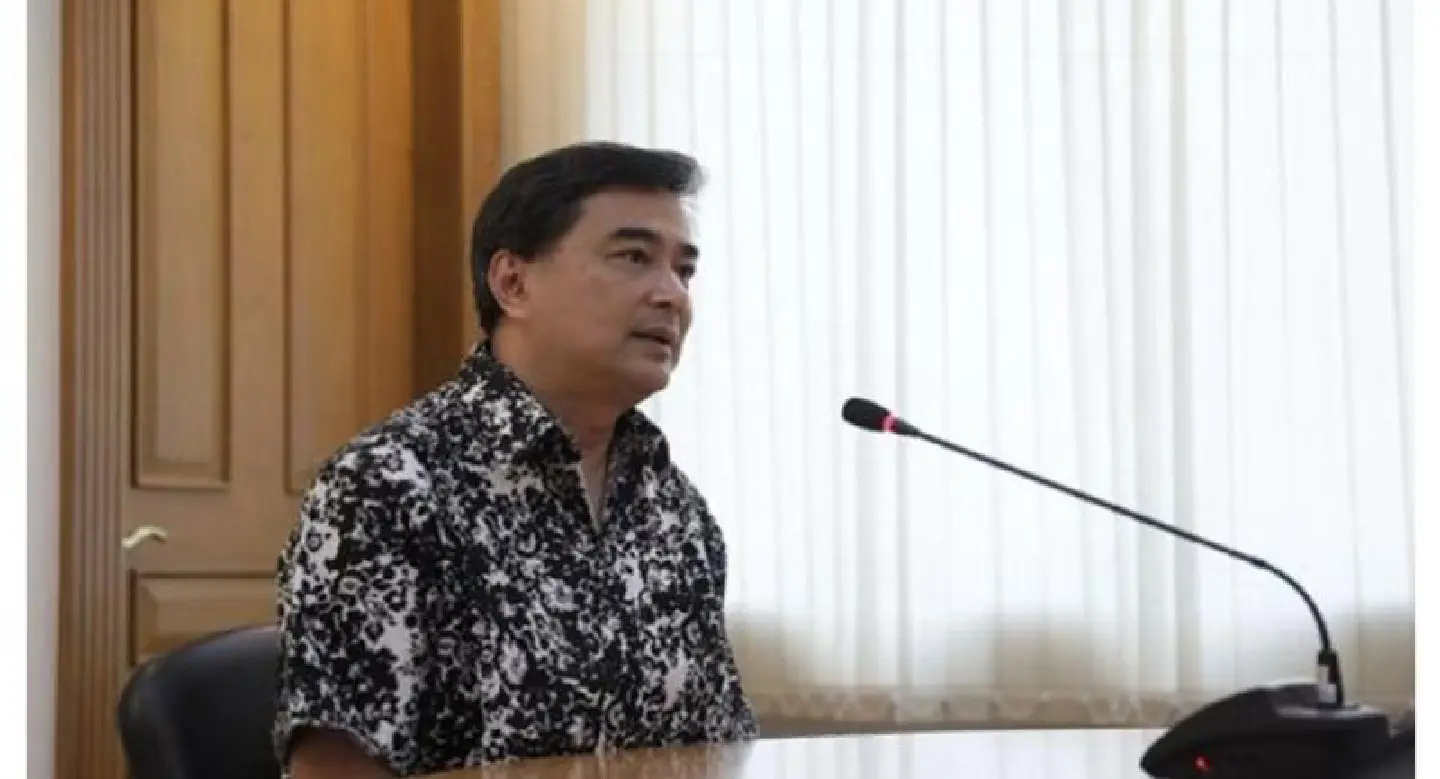


The leader of the Democrat Party, Abhisit Vejjajiva, viewed the revised Article 5 of the Constitution as more practical for conflict resolution.
Article 5 previously had been written to authorise the Constitutional Court to convene the heads of key government agencies such as Parliament, the opposition party, and the Army chiefs to find a solution in the event of a stalemate.
In the latest revision earlier this year, it was revised back to the previous Article 7. Article 5 now states that in case no laws were applicable, the operation to resolve the issue should follow the traditional rule.
Abhisit said at a press briefing before Songkran that the convention of the Constitutional Court forming an ad hoc committee could be too inflexible and could only decide on legal issues.
Such a committee was rigid and impractical and could not possibly solve any conflict, he said.
He said the stipulation to follow the traditional rule was more open and could help better in resolving conflicts.
The resolving of a crisis depended more on the conflicting parties’ consensus, the Democrat leader said, adding the mechanism should be something flexible.
Apart from that, Abhisit said that in the past Article 7 did not work because the powers-that-be would not give up power to pave the way for conflict resolution.
He said the problem in politics lay in the behaviour and culture, adding that issues could only be resolved when people were willing to take some steps back. It was the only way to reduce social pressure and bring about solution, he said.
