
Thai House unanimously approves revised Clean Air Management Bill
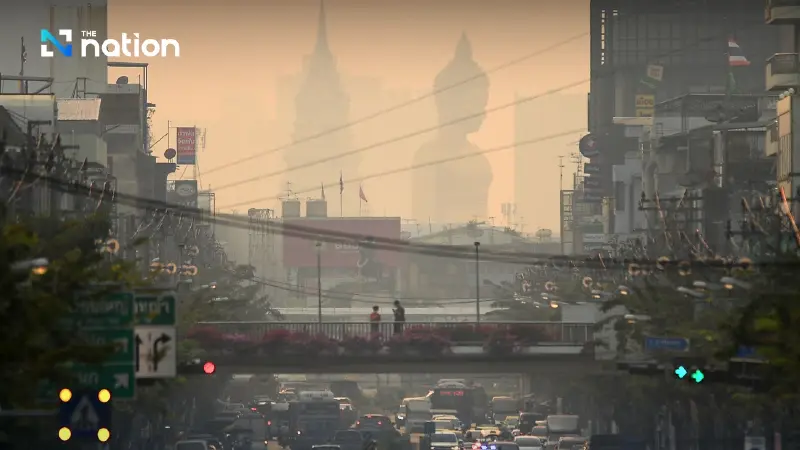


Senators are due to vote on Monday on a bill that retains measures to reduce burning and provides for international cooperation on cross-border air pollution.
- Thailand's House of Representatives unanimously approved the revised Clean Air Management Bill with all 430 votes in favor; it now awaits a Senate vote.
- The bill establishes provincial clean air committees chaired by governors, mandates public information disclosure, and encourages public participation.
- Key provisions include the creation of a Clean Air Fund, increased maximum fines of up to THB 50 million for serious offenses, and mechanisms for international cooperation on cross-border pollution.
- A proposed requirement to measure pollution on farmland was dropped from the bill due to technical constraints and potential costs to farmers, though local burning reduction measures remain.
Thailand’s House of Representatives approved the Clean Air Management Bill with all 430 votes cast in favour.
The Senate is due to vote on the revised text on Monday (November 30, 2026).
Anurak Chureemas, a Bhumjaithai Party MP for Roi Et who chaired the joint parliamentary committee, said the review considered public health, measures to prevent and tackle air pollution, and enforcement.
The committee accepted 54 of the 92 sections amended by the Senate.
Its own revisions covered 50 sections, including new provisions and changes to clarify the wording.
Governors would chair provincial clean air committees, with provincial administrative organisation chiefs serving as vice-chairs.
Decisions at that level on which polluting operations to regulate would take account of their size and local conditions, with the aim of avoiding duplication in approvals and licensing.
The joint committee also said agencies must disclose information and encourage public participation.
Provisions establishing the Clean Air Fund would take effect after one year, giving agencies time to set it up and prepare to run it.
The committee also reviewed how fees would be collected to prevent duplicate charges.
On penalties, it revised two maximum fines to THB25 million and THB50 million to keep them proportionate to the seriousness of the offence and deter violations.
The committee dropped a proposed requirement to measure pollution on farmland, citing technical constraints and potential costs to farmers.
Local pollution controls and measures to reduce burning would remain.
The cross-border provisions would cover workers and allow for mechanisms for international cooperation, with the Ministry of Natural Resources and Environment and the Ministry of Foreign Affairs coordinating with other agencies.
Karndee LeoPairote, a party-list MP for the Democrat Party, said her party unanimously backed the bill.
She urged the government and parliamentarians to expedite at least three further bills to support enforcement.
The first concerns reporting and disclosure of the release and transfer of toxic substances into the environment.
Karndee called for the circular economy bill, which would support deposit return measures, to come into force as soon as possible.
The third would establish a mechanism for interim and emergency protection in air pollution cases.
Fellow Democrat MP Chuan Leekpai said Trang had been singled out as the province with the best air quality because local people had worked together to plant trees.
