
Why travellers still pay Bhutan’s US$100 nightly fee
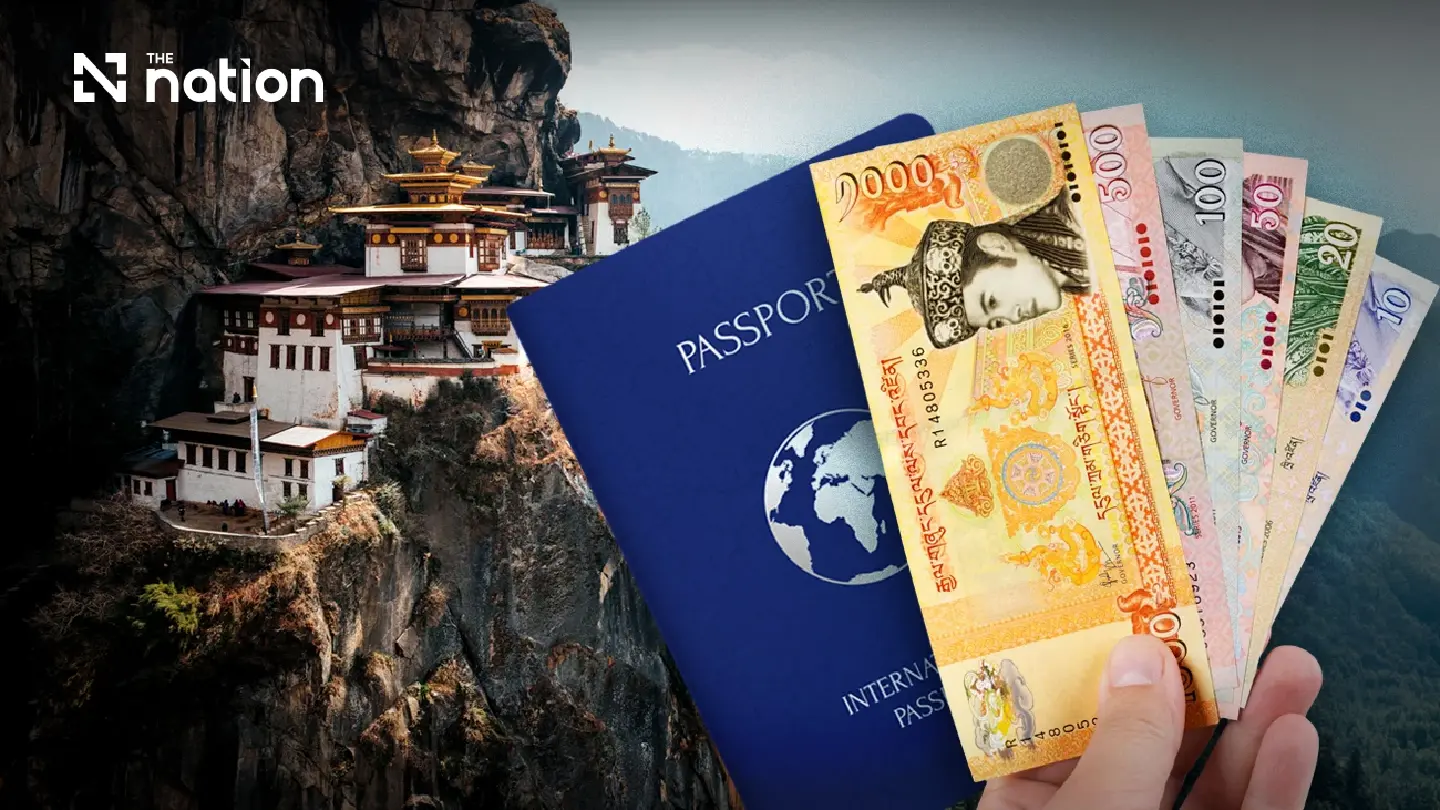


Bhutan charges most foreign visitors US$100 a night, using the levy to support public services, conservation and its low-volume tourism model.
- Travellers pay the fee in exchange for access to a unique destination with preserved culture and uncrowded landscapes, deliberately protected from over-tourism and uncontrolled development.
- The US$100 per night Sustainable Development Fee (SDF) is a direct contribution to Bhutan's national development, funding public services like free healthcare, education, and environmental conservation.
- The fee is a key part of Bhutan's "High Value, Low Volume" tourism policy, which attracts visitors who are willing to pay a premium for a carefully managed and authentic experience.
Bhutan imposes one of the world’s highest tourism levies, yet visitors continue to pay for access to the Himalayan kingdom’s distinctive combination of preserved culture, uncrowded landscapes and tightly managed tourism.
Most international adult visitors are charged a Sustainable Development Fee (SDF) of US$100 per person per night, in addition to accommodation, transport and other travel expenses. The rate was reduced from US$200 and is scheduled to remain at US$100 until August 31, 2027. Children aged six to 11 pay US$50 a night, while those under six are exempt. Indian nationals are subject to a separate rate of Nu/INR1,200 per person per night.
Thai travellers fall under the standard international rate and must therefore pay US$100 for every night spent in Bhutan.
What is Bhutan’s Sustainable Development Fee?
The SDF is paid directly to the Bhutanese government and is separate from tour packages, hotel bills and air fares.
Travellers normally pay the fee in advance when applying online for a visa. A licensed tour operator or hotel may also submit the application on their behalf. Most visitors must additionally pay a one-off, non-refundable visa application fee of US$40.
Bhutan’s approach reflects its longstanding “High Value, Low Volume” tourism policy. Rather than pursuing the largest possible number of arrivals, the country seeks visitors who value its culture and environment and whose spending can contribute meaningfully to national development.
The small Himalayan kingdom is renowned for using Gross National Happiness as a national development philosophy alongside conventional economic indicators. About 70% of its land remains under forest cover, while its constitution requires forests to cover at least 60% of the country at all times.
How the SDF supports national development
The SDF is not held in a separate tourism account earmarked for one specific purpose. Under Bhutanese law, it is deposited with other taxes, fees and levies into the government’s Consolidated Account.
That account finances regular government operations, while remaining revenue supports development programmes. Bhutan’s official tourism authorities say these include schools, free healthcare, youth training, forest and wildlife conservation, drinking-water supplies, infrastructure and the restoration of historic dzongs, or fortress-monasteries.
The fee is therefore intended to make tourists contributors to the country’s wider social, environmental and cultural development rather than consumers of tourism services alone.
Bhutan argues that the SDF helps protect cultural traditions, improve infrastructure, create opportunities for young people and maintain the environment on which its tourism appeal depends.
Why tourists are still prepared to pay
For many visitors, the cost is part of an exchange: they pay more but enter a destination deliberately protected from excessive tourism, uncontrolled construction and severe overcrowding.
Bhutan’s tourism proposition is not based on being inexpensive. It offers comparative tranquillity, living cultural traditions, Himalayan scenery, historic monasteries and an experience shaped by strict environmental and development policies.
The fee also helps filter demand towards travellers who are prepared to spend more for a carefully managed experience. In that sense, the SDF is not merely a revenue tool but part of Bhutan’s national tourism identity.
The model depends on the country offering sufficient quality, authenticity and environmental protection to convince travellers that the additional cost represents a contribution to preserving the destination.
Could Thailand follow the Bhutan model?
Thailand could adopt parts of Bhutan’s approach, but copying it nationwide would carry considerable economic risks.
Bhutan’s tourism sector was built around relatively limited visitor numbers from the outset. Thailand, by contrast, has a mass-tourism economy supported by an extensive supply chain of hotels, restaurants, transport operators, guides, shops, entertainment businesses and community enterprises.
Introducing a Bhutan-style nightly fee across Thailand could sharply affect price-sensitive markets and reduce income for small businesses and workers dependent on high visitor volumes.
A more practical approach would be to apply higher, clearly targeted charges in environmentally fragile or heavily congested locations, such as sensitive islands, marine parks, national parks or heritage areas.
Any such charge would need transparent administration, publicly disclosed spending and a clear connection between the money collected and improvements experienced by visitors and local communities.
Thailand could therefore borrow Bhutan’s principle — requiring visitors to contribute to conservation and local development — without adopting the same US$100-per-night rate or attempting to suppress tourism numbers nationwide.
Eight examples of high tourism levies
Tourism taxes vary widely because some are imposed per person, some per room, some as a percentage of accommodation costs and others as one-off entry charges. They should therefore not be treated as a precise global ranking.
1. Bhutan
Most foreign adults pay an SDF of US$100 per person per night. The fee is paid alongside the visa application and applies throughout most of the country.
2. Amsterdam, the Netherlands
Amsterdam charges an overnight tourism tax equivalent to 12.5% of the accommodation price, excluding VAT. Cruise operators also pay a day-visitor tax of €15 per passenger.
3. New Zealand
Most eligible international visitors pay the International Visitor Conservation and Tourism Levy of NZ$100. It is a one-off charge collected when travellers apply for a visa or New Zealand Electronic Travel Authority.
4. Greece
Greece’s Climate Crisis Resilience Fee ranges from €0.50 to €15 per room or property per night, depending on the type of accommodation and the season.
Cruise passengers who disembark also pay between €1 and €20 per person per port, with the highest peak-season rates applying in Mykonos and Santorini.
5. Iceland
Iceland charges ISK800 for each taxable night at hotels, guest houses and similar accommodation. Campsites, motorhome pitches and passengers on domestic cruises are charged ISK400 per taxable unit.
6. Venice, Italy
During its 2026 trial, Venice charged day visitors €5 when payment was made in advance and €10 for later bookings on designated dates. The year’s trial period ended on July 27, after which the access fee no longer applied pending decisions on any future scheme.
7. Barcelona, Spain
Barcelona and the Catalan authorities raised tourism charges in 2026. Under the approved framework, hotel guests can face combined charges of up to €15 per person per night, while the maximum for holiday-rental guests can reach €12.50. A quarter of the additional revenue is intended to support housing policies.
8. Edinburgh, Scotland
Edinburgh introduced Scotland’s first visitor levy on July 24, 2026. The charge is 5% of the accommodation-only price and applies to the first five consecutive nights of a stay.
Bhutan remains distinctive because its levy is charged per person for every night and forms part of the country’s overall tourism philosophy, rather than functioning simply as a municipal hotel tax.
Its experience shows that travellers may accept a high fee when the destination offers something genuinely scarce and demonstrates how visitor contributions support public services, cultural preservation and environmental protection.
For Thailand, the principal lesson is not that higher charges automatically produce higher-quality tourism. It is that any visitor levy must have a clear purpose, transparent management and visible benefits if it is to retain public and traveller confidence.
Source: Spring News
