
Another leaked US-Iran draft reveals 12-point framework


A newly leaked 12-point draft agreement between the United States and Iran, reported by the New York Post and Israel’s Channel 12, could mark a major turning point in the Middle East, with the text reportedly opening the way for Iran and Gulf Arab states to play a role in managing shipping through the Strait of Hormuz.
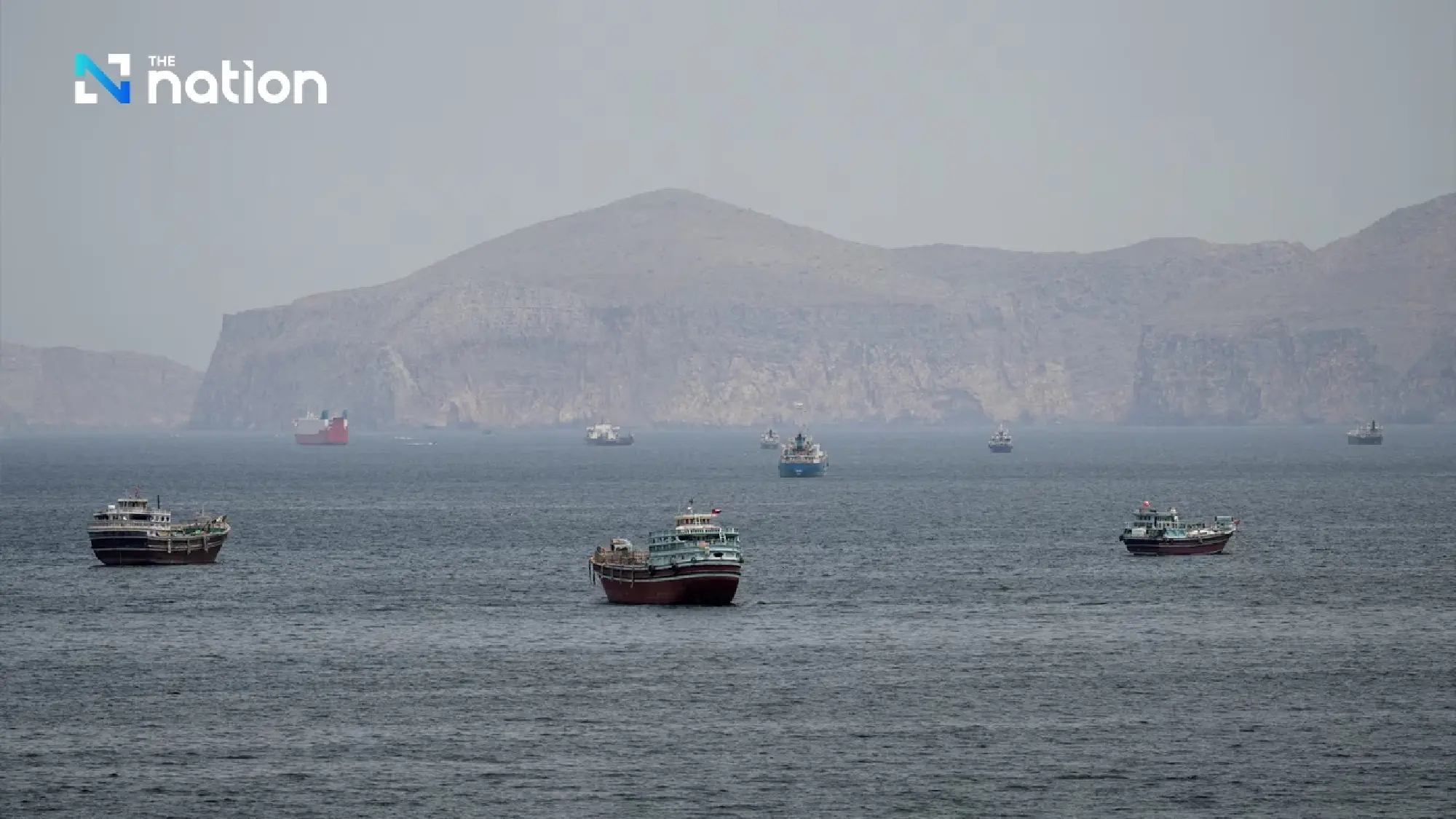
The Strait of Hormuz is one of the world’s most important oil-shipping routes, and any change in its management would carry major implications for global energy markets and regional security.
Earlier, Iranian media published what it described as a 14-point draft US-Iran agreement. However, the latest version reported by the New York Post and Channel 12 sets out 12 points and is described as a revised document that could serve as a basis for further negotiations.
The 12 points were first revealed by Barak Ravid, an Axios reporter who also works with Israel’s Channel 12, according to the New York Post.
The reported 12-point draft is as follows:
1. End to regional fighting
Iran, the United States and the allies of both sides would end hostilities across the region, including in Lebanon.
2. Iran reaffirms nuclear pledge
Tehran would reaffirm its commitment not to build nuclear weapons.
3. Talks on enriched uranium stockpile
The United States and Iran would hold discussions on how to deal with Iran’s stockpile of enriched uranium.
4. Talks on future uranium enrichment
Both sides would open negotiations on Iran’s future uranium enrichment activities and its nuclear-energy needs.
5. Nuclear programme kept in its current state
Iran would maintain its nuclear programme in its “current state”, which has already been heavily damaged, while negotiations continue.
6. US to lift naval blockade
The United States would lift its naval blockade, delay further sanctions and refrain from sending additional troops to the region.
7. Strait of Hormuz passage guaranteed for 60 days
Iran would guarantee safe navigation for commercial vessels through the Strait of Hormuz for 60 days, without charging tolls.
8. Some frozen Iranian assets to be released
Washington would release a portion of Iran’s frozen assets, with the value not yet specified, once the memorandum of understanding comes into effect.
9. US troop withdrawal if final deal is reached
If a final agreement is reached after the 60-day negotiation period, the United States would withdraw its troops from the region within 30 days and lift all sanctions on Iran.
10. US$300bn Iran reconstruction fund
The agreement would open the way for the establishment of an Iran reconstruction fund worth US$300 billion, or almost 10 trillion baht.
11. Iran allowed to resume oil exports
The United States would allow Iran to resume oil exports through temporary sanctions waivers.
12. New maritime security framework
Iran, Oman and Gulf Arab states would negotiate a new cooperation framework for shipping and maritime security in the Persian Gulf.
Oman and Iran have reportedly already begun discussions on the issue, with the aim of charging fees for services provided to vessels using the route, according to senior regional sources cited by the New York Post.
However, the White House has not confirmed the details of this reported draft. President Donald Trump has said the full details will be released after a signing ceremony scheduled for Friday, June 19, in Switzerland.
Under the proposed agreement, Iran, the United States and their respective allies would be required to halt all fighting in the region, including in Lebanon. Lebanon remains a key battlefield involving Israel, a US ally, and Hezbollah, which is backed by Iran.
The memorandum also requires Iran to repeat its pledge not to develop or seek nuclear weapons. This echoes the core principle of the 2015 nuclear deal reached under the Obama administration, before Trump withdrew the United States from the accord in 2018.
However, other conditions related to Iran’s nuclear programme do not impose new binding obligations or require Iran to immediately change policy. Instead, the draft would allow both sides to continue talks on unresolved nuclear issues.
According to the reported document, the United States and Iran would discuss uranium enrichment and Iran’s nuclear needs during the negotiation period.
At the same time, the “current status” of Iran’s nuclear programme would be maintained throughout the 60-day talks. This would allow Tehran to argue that it has not abandoned its nuclear programme, even if progress has been set back after US strikes damaged several key nuclear facilities during Operation Midnight Hammer.
The reported text also does not state whether Iran would reduce, dilute or destroy its enriched uranium stockpile stored at underground facilities. It says only that the United States and Iran would commit to finding a solution to the issue.
The draft would also offer major economic relief to Iran.
The United States would lift its naval blockade, refrain from imposing additional sanctions and promise not to expand its military presence in the region during the 60-day negotiation window. A US troop withdrawal would take place only if a final agreement is reached at the end of that period.
Washington would also issue temporary sanctions waivers to allow Iran to export oil while talks continue. Reuters also reported that a US official said the deal would allow Iran to sell oil upon signing, although the memorandum has not yet been made public.
Another key provision would allow Iran to access and use some frozen assets once the memorandum takes effect.
One of the most significant elements of the reported draft is the proposal for Iran to manage navigation through the Strait of Hormuz during the 60-day negotiation period, without charging tolls.
However, the document also refers to future negotiations between Iran and Oman, with Gulf states joining, to establish an agreement on navigation and maritime services.
Several regional sources told the New York Post that, under this framework, Tehran may push for some form of service charge or fee for maritime services after the initial period.
Although the draft is being viewed as a potential roadmap for a major reset in US-Iran relations, several conditions remain highly sensitive.
These include Iran’s nuclear programme, sanctions relief, the withdrawal of US forces, and the proposed US$300-billion reconstruction fund.
The reported terms are expected to face tough questions from US politicians, Middle East allies and international security experts, particularly because the document has not yet been officially confirmed by either Washington or Tehran.
Source: New York Post
