
Thailand must act now to secure its future as climate talks stall
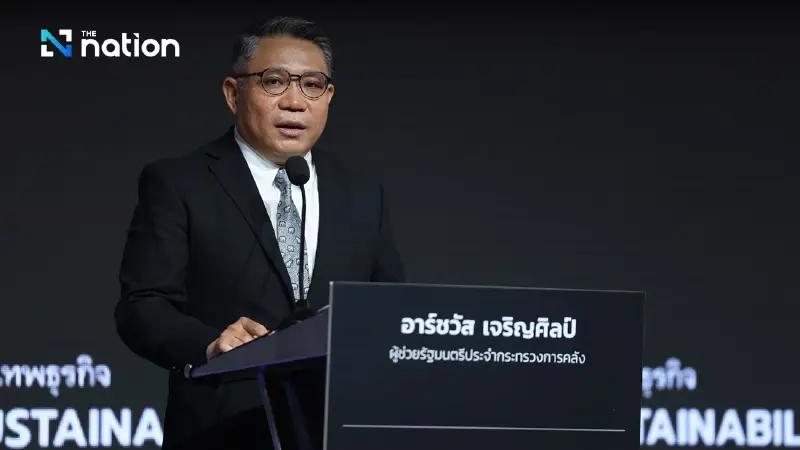


Vice Minister for Finance Archawat Chareonsilp urges Thailand to act now on climate change, protect its economy and accelerate the green transition after COP31.
- Thailand's Vice Minister for Finance has warned the country cannot rely on stalled international climate negotiations, such as the recent COP31 summit, and must act independently.
- The government is being urged to take immediate action to strengthen the nation's resilience against global warming to protect its economy and people, rather than waiting for a global consensus.
- A new 'STI' strategic framework has been developed, focusing on stabilising the economy, transitioning to clean energy, and investing in future infrastructure and skills.
- Climate action is being framed as an economic necessity to maintain competitiveness, secure export opportunities, and attract investment under a new 'Made with Thailand' vision.
Thailand cannot entrust its economic future and the security of its people to international climate negotiations alone and must take immediate action to strengthen its resilience to the effects of global warming, Vice Minister for Finance Archawat Chareonsilp warned on Wednesday (November 25).
Delivering a keynote address at the “Sustainability Forum 2027 – The Race Against Global Warming”, hosted by Bangkokbiznews, Archawat stressed that while international cooperation remains essential, competing national interests continue to hinder collective climate action.
He pointed to the recent COP31 climate summit in Antalya, Türkiye, where countries failed to reach an overarching agreement amid divisions over the transition away from fossil fuels and how to share the financial burden of the transition.
Countries seeking to accelerate the transition faced opposition from those concerned about energy security, energy costs and the economic capabilities of smaller nations.
The outcome demonstrated that while countries may share common goals, their readiness to act collectively differs as each government must consider its own national interests.
Archawat emphasised that Thailand should not abandon international cooperation but must recognise that it cannot afford to wait for global consensus before taking action to safeguard its economy and protect its people.

Global warming a race against time
Archawat described the fight against global warming as a race between humanity and time, rather than a competition between individuals or nations.
He noted that, according to the World Meteorological Organization (WMO), the 11 years from 2015 to 2025 were the hottest on record, with the global average temperature in 2025 approximately 1.43°C above pre-industrial levels.
Although the increase may appear relatively small, its repercussions are far-reaching, disrupting agricultural production, threatening food security, driving up living costs and contributing to increasingly frequent natural disasters.
The impact, however, is not felt equally. Those with greater financial resources can adapt more quickly, while low-income households and vulnerable groups face greater difficulties and bear a disproportionate share of the consequences.
Global warming is therefore not merely an environmental concern but a serious threat to people's livelihoods and Thailand’s long-term economic growth, he emphasised.
Three pillars of sustainability
Archawat outlined the Finance Ministry’s approach to sustainability, which extends beyond environmental protection to encompass three interconnected dimensions:
- Quality of life: The energy transition must not drive up energy bills and living costs to the detriment of vulnerable households, leaving them with fewer resources for education and investment in their future.
- Fiscal sustainability: Investment in infrastructure, flood prevention and disaster preparedness must deliver value for money without imposing excessive financial burdens or diverting resources from essential public services such as healthcare and education.
- Economic sustainability: Thai businesses must reduce carbon emissions to remain competitive. Failure to adapt could jeopardise export opportunities and exclude businesses from global supply chains, while a successful transition could attract fresh investment, create high-quality jobs and raise incomes.
“All three dimensions are directly linked to the environment. If the economy is weak, the government will lack the fiscal space to invest in tackling global warming. Economic growth and sustainability must therefore go hand in hand,” Archawat explained.

STI strategy: Turning commitments into action
To promote sustainable economic growth, Deputy Prime Minister and Finance Minister Ekniti Nitithanprapas has developed the STI strategic framework, known in Thai as “Sati”, meaning mindfulness.
The framework is built around three priorities:
- S – Stabilise Today: Strengthen the resilience of households and businesses against energy price volatility, natural disasters and economic uncertainty through measures to ease the cost of living and preserve the purchasing power of vulnerable groups.
- T – Transition Now: Accelerate the clean energy transition rather than waiting for energy costs to fall. Initiatives include a solar panel installation programme targeting one million households, with the Finance Ministry supporting access to loans through state-owned financial institutions. The programme aims to make clean energy more accessible, reduce long-term household expenses, generate income from the sale of surplus electricity and reduce Thailand’s dependence on imported energy.
- I – Invest for Tomorrow: Build new economic capabilities through investment in infrastructure, emerging industries, innovation and workforce skills. Archawat highlighted the Thailand FastPass mechanism, which is already operational and covers 42 projects representing planned investment of more than 340 billion baht. The initiative aims to remove regulatory barriers and accelerate investment.
He stressed that the effectiveness of any strategy should ultimately be measured by the actions taken, rather than its underlying principles alone.
From ‘Made in Thailand’ to ‘Made with Thailand’
Archawat also outlined Thailand’s ambition to achieve a second economic take-off by redefining its role in the global economy.
During its first take-off some four decades ago, Thailand successfully transformed itself from an agricultural economy into an industrial manufacturing base, building its reputation through the “Made in Thailand” label.
However, that economic model has reached its limits, and relying on its traditional role as a manufacturing hub will no longer be sufficient to drive the country’s next phase of growth.
Under the broader “Made with Thailand” vision, the country must evolve from a manufacturing base into a strategic partner capable of developing technology and creating value in collaboration with international investors.
The ambition is to position Thailand as a “Trusted Connector”, facilitating investment, technology exchange and cooperation between countries with different levels of readiness, while strengthening its own economic capabilities and competitiveness.

Turning climate risks into business opportunities
Archawat urged Thailand to view sustainability as an accessible business opportunity rather than an additional cost.
Investment in climate-resilient infrastructure and water management, for example, may not generate direct financial returns but could prevent substantial economic losses in the future.
He reiterated that although addressing global warming requires international cooperation, Thailand cannot afford to wait for the rest of the world before protecting its people and economy.
“No country can win this race against time alone. Global cooperation remains essential, but Thailand cannot wait until every country reaches an agreement. Building resilience and protecting our economy must begin at home, and we must start today,” Archawat concluded.
