
Japanese defence officials turn to X for rapid information response
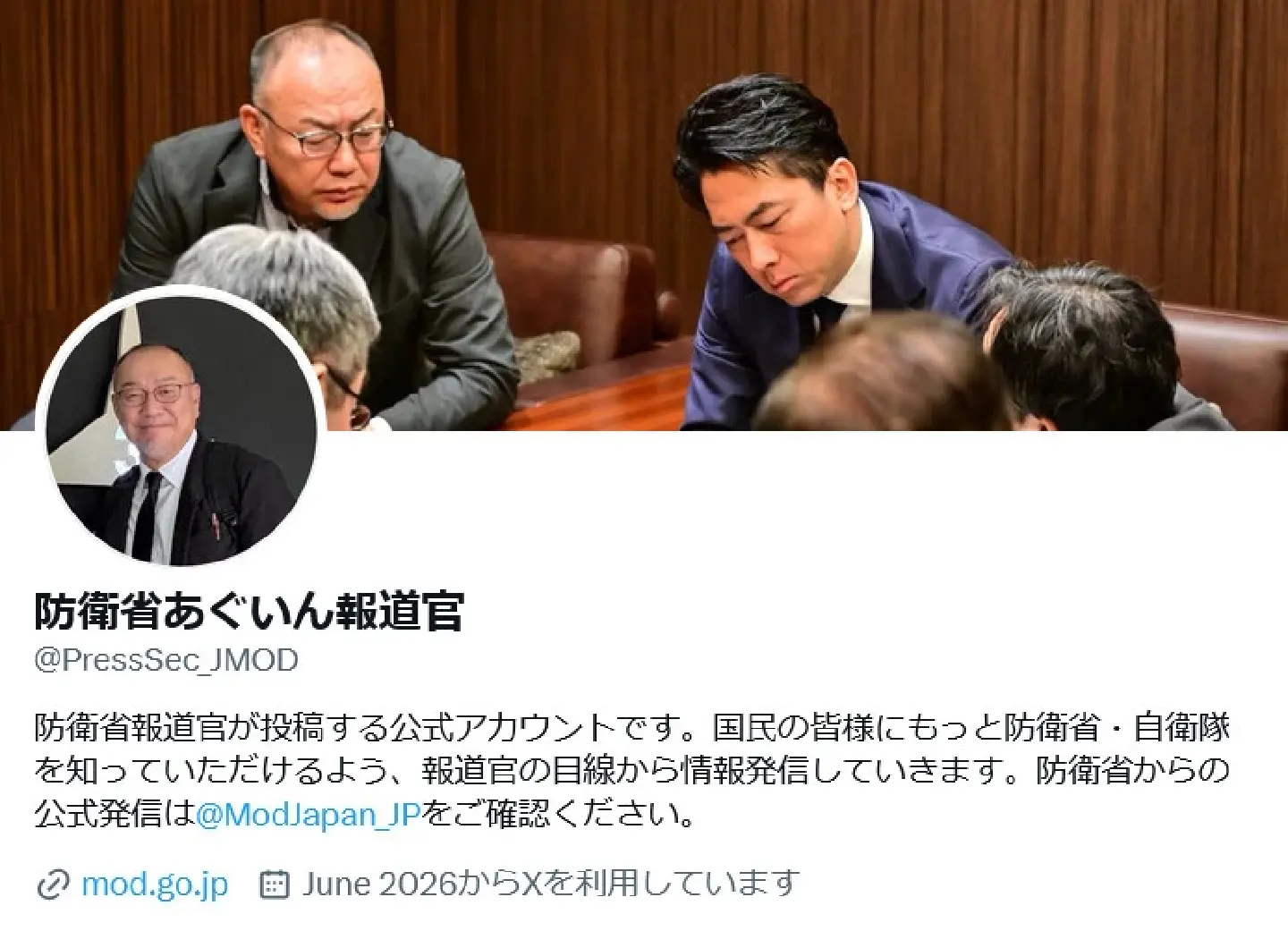


Senior Japanese defence figures are using personal X accounts for rapid rebuttals, as experts stress consistency, credibility and care over sensitive information.
- Senior Japanese defence officials, including the ministry spokesman and top uniformed officer, have created personal X accounts for rapid information dissemination.
- The primary goal is to counter what Japan considers Chinese cognitive warfare by quickly circulating accurate information and directly challenging false claims.
- This strategy is driven by the need to combat disinformation, a lesson reinforced by Russia's invasion of Ukraine, and to prevent falsehoods from being accepted as truth.
- Officials are using their accounts to share information on military exercises and issue rebuttals to Chinese accusations in multiple languages.
Senior figures from Japan’s Defence Ministry and Self-Defence Forces are turning to X, formerly Twitter, to circulate accurate information rapidly and push back against what Tokyo regards as China’s cognitive warfare.
Ministry spokesman Kimihito Aguin opened his account on June 26, an uncommon step among Japanese defence personnel.
General Hiroaki Uchikura, Japan’s top uniformed officer and chief of staff of the Joint Staff, followed one week later.
Each account has since gained more than 30,000 followers.
The initiative followed a series of one-sided assertions from China.
Shortly after joining X, Aguin challenged the Chinese Defence Ministry’s accusation that Japan was pursuing “new militarism”, writing: “It contains claims not based on facts.”
He subsequently published English and Chinese versions of the response.
Uchikura has adopted a more measured approach.
Most of his updates share material from the Joint Staff’s official X account with additional explanations.
These have included footage of ships and aircraft involved in multilateral exercises, as well as a photograph showing a letter of appreciation being presented to a naval officer who had served as defence attaché at the Australian Embassy in Tokyo.
Russia’s invasion of Ukraine has reinforced the SDF’s focus on countering cognitive warfare.
Such operations use disinformation and manipulated impressions to affect people’s judgment, shape public opinion and create divisions within society.
Defence Minister Shinjiro Koizumi underlined the risks during Thursday’s meeting of the House of Councillors’ Foreign Affairs and Defence Committee.
“If we just remain silent, even lies can come to be considered the truth,” he told the upper chamber.
Although the ministry and the SDF already operate official websites and social-media accounts, a ministry official emphasised the value of creating more channels through which accurate information can be distributed.
The official also called for a system capable of responding swiftly as advances in artificial intelligence accelerate the spread of disinformation.
Takahiro Tsuchiya, a professor at Kyoto University of Foreign Studies, identified immediate rebuttals and regular communication as essential elements of any response to cognitive warfare.
He stressed that the ministry and the SDF must steadily build public confidence in the reliability of the information they release.
At the same time, Tsuchiya warned that the chief of staff and the ministry spokesman must take care not to reveal sensitive material or internal decision-making processes inadvertently.

[Copyright The Jiji Press, Ltd.]
